

Demystifying the 50/30/20 Budget Rule: Your Simple Guide to Smarter Money Management
Ever feel like your money just disappears? You get paid, bills get paid, and then suddenly, you’re wondering where the rest went. If that sounds familiar, you’re not alone. Today, we’re diving deep into a super popular and effective way to get a handle on your finances: the 50/30/20 budget rule. Think of it as your friendly roadmap to financial planning, designed to help you save money and reach your goals without feeling like you’re depriving yourself.
Why Everyone’s Talking About This Budgeting Approach
Lately, there’s been a huge buzz around the 50/30/20 budget rule, and for good reason. In a world that often feels financially uncertain, people are actively searching for straightforward methods to manage their money better. This rule stands out because it’s not overly complicated. It offers a balanced approach, acknowledging that you need to cover your essentials, enjoy your life, and still build a secure future. It’s this blend of practicality and aspiration that makes it so appealing for budgeting for beginners and seasoned money managers alike.
A Little History: Where Did This Idea Come From?
The 50/30/20 budget rule isn’t some brand new, complicated financial instrument. Its roots can be traced back to the concept of dividing your income into distinct categories to ensure a healthy financial life. While the exact origin is a bit fuzzy, it gained significant traction thanks to Elizabeth Warren, a Harvard law professor and consumer advocate, who popularized a similar framework in her book, “All Your Worth: The Ultimate Lifetime Guide to Managing Your Money.” Her idea was to simplify budgeting by creating clear percentages for different types of spending, making it accessible to everyone. It’s a principle that has stood the test of time because it aligns with fundamental principles of responsible financial planning.
How This Simple Rule Can Transform Your Financial Life
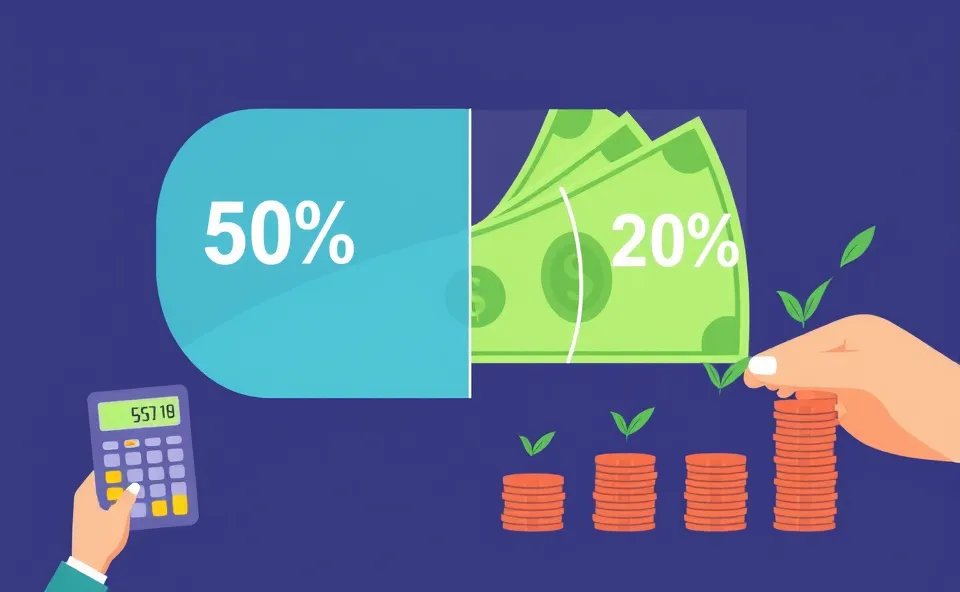
So, what exactly does the 50/30/20 budget rule mean for you? In essence, it’s a guideline for how to allocate your after-tax income. It breaks down your money into three clear segments:
- 50 percent for Needs: This is the non-negotiable stuff. Think of your essential expenses that keep a roof over your head and food on your table.
- 30 percent for Wants: This is where you get to enjoy the fruits of your labor. It covers everything that makes life enjoyable but isn’t strictly necessary.
- 20 percent for Savings & Debt Repayment: This is your future self speaking. This portion is dedicated to building wealth, paying down debt faster, and securing your financial goals.
The impact of applying this rule is profound. For individuals, it offers clarity and control over their spending, reducing financial stress. It helps you understand where your money is going, identify areas where you might be overspending, and make conscious choices about your income allocation. Businesses also benefit indirectly as consumers become more financially stable and educated, leading to more predictable spending patterns. It’s a foundational step in effective personal finance management.
Applying the 50/30/20 Rule Step-by-Step
Ready to put this into action? It’s simpler than you might think. Here’s how to get started:
- Calculate Your After-Tax Income: First things first, figure out how much money you actually take home after taxes, deductions, and any other withholdings. This is the number you’ll be working with.
- Determine Your “Needs” Category (50%): List all your essential expenses. This typically includes:
- Housing costs (rent or mortgage)
- Utilities (electricity, water, gas)
- Groceries
- Transportation (car payments, gas, public transport)
- Insurance (health, car, home)
- Minimum debt payments (just the required amount, not extra)
If your needs are more than 50% of your income, don’t panic. We’ll touch on that later.
- Allocate for “Wants” (30%): Now for the fun part. This category includes anything that isn’t a need but adds joy to your life. Think about:
- Dining out
- Entertainment (movies, concerts, streaming services)
- Hobbies
- Travel
- New clothes (beyond what you absolutely need)
- Gym memberships (if not essential for health reasons)
- Prioritize “Savings & Debt Repayment” (20%): This is your golden ticket to financial freedom. This 20% should go towards:
- Building an emergency fund
- Investing for retirement
- Saving for big goals (down payment on a house, a new car)
- Paying down extra on high-interest debt (credit cards, personal loans)
This category is crucial for long-term financial health and achieving your financial goals.
- Track Your Spending: The key to any budget is consistent tracking. Use apps, spreadsheets, or a simple notebook to monitor where your money is going throughout the month. This helps you stay accountable and make adjustments as needed.
Navigating Common Budgeting Pitfalls
While the 50/30/20 rule is straightforward, some common traps can derail your efforts:
- Overestimating Income: Always use your net income (after taxes) as your starting point. Gross income can be misleading.
- Miscategorizing Expenses: Be honest with yourself. Is that daily latte a “need” or a “want”? Proper expense categories are vital.
- Ignoring the “Savings & Debt” Portion: This is where many people stumble. It’s tempting to bump up your “wants” and neglect your future. Resist this urge!
- Rigidity: Life happens. If one month is tight on “needs” because of an unexpected bill, don’t beat yourself up. Adjust for the next month. This is a guideline, not a strict law.
- Not Reviewing Regularly: Your income and expenses can change. Review your budget at least monthly to ensure it still aligns with your current financial situation.
Real-World Examples: The 50/30/20 Rule in Action
Let’s see how this plays out for different income levels. Remember, these are just examples, and your personal numbers will vary.
Example 1: Lower Income ($3,000 Net Monthly Income)
- Needs (50%): $1,500 (Rent, utilities, groceries, minimum loan payments)
- Wants (30%): $900 (Some dining out, occasional entertainment, hobbies)
- Savings & Debt (20%): $600 (Building emergency fund, extra on student loans)
For someone at this income level, the “Needs” category can be tight. This means carefully managing essential expenses and potentially reducing “Wants” to meet savings goals.
Example 2: Mid-Range Income ($5,000 Net Monthly Income)
- Needs (50%): $2,500 (Mortgage, bills, groceries, car payment)
- Wants (30%): $1,500 (More flexibility for dining out, travel, hobbies)
- Savings & Debt (20%): $1,000 (Investing in retirement, aggressive debt repayment)
This income level offers more breathing room, allowing for a comfortable lifestyle while still making significant progress on savings and debt repayment.
Example 3: Higher Income ($8,000 Net Monthly Income)
- Needs (50%): $4,000 (Larger mortgage, higher utility bills, more expensive groceries)
- Wants (30%): $2,400 (More extensive travel, premium entertainment, luxury items)
- Savings & Debt (20%): $1,600 (Maxing out retirement contributions, significant investments, paying off mortgage early)
With a higher income, you have the potential to not only live comfortably but also accelerate wealth building and achieve financial independence much sooner.
Looking Ahead: The Future of Your Financial Planning
The 50/30/20 budget rule is a fantastic starting point for anyone looking to improve their personal finance. As your income grows and your financial goals evolve, you might find yourself naturally shifting these percentages. For instance, you might aim for a higher savings rate as you get closer to retirement or when you want to pay off your mortgage early. The core principle of mindful income allocation remains, making it a flexible tool for long-term financial planning. It encourages proactive money management rather than reactive spending, setting you up for a more secure and fulfilling financial future.
Frequently Asked Questions About the 50/30/20 Budget Rule
What if my essential expenses are more than 50% of my income?
If your “Needs” category exceeds 50%, don’t despair. It often means you’ll need to reduce spending in the “Wants” category. This might involve finding cheaper alternatives for entertainment, cutting back on dining out, or even looking for ways to reduce your core expenses like housing or transportation over the long term. The goal is to gradually bring your needs closer to that 50% mark if possible, or at least ensure your savings portion is as robust as it can be.
How do I decide what counts as a “Need” versus a “Want” in the 50/30/20 budget rule?
Think about what is absolutely necessary for your survival and basic well-being. Needs are things you cannot live without, like shelter, food, essential utilities, basic transportation to work, and minimum debt payments. Wants are things that improve your quality of life but aren’t essential, such as subscriptions, hobbies, vacations, and dining out. It’s about making honest choices regarding your expense categories.
Is the 50/30/20 budget rule good for someone trying to save money quickly?
Yes, the 50/30/20 budget rule is excellent for saving money. The dedicated 20% for savings and debt repayment is specifically designed for this purpose. If you’re aiming to save money rapidly, you can even consider temporarily increasing the savings portion to 25% or 30% by slightly reducing your “Wants” category, provided your “Needs” are manageable.
How does the 50/30/20 budget rule help with financial planning and debt repayment?
This budgeting strategy inherently supports financial planning by ensuring a portion of your income is consistently set aside for future goals and debt reduction. The 20% allocation directly tackles debt repayment by encouraging you to pay down more than the minimums, thereby saving on interest and becoming debt-free faster. It’s a structured approach to achieving your financial goals.
Can I use the 50/30/20 budget rule if I have a variable income?
Yes, the 50/30/20 budget rule can still be applied with a variable income. The key is to base your percentages on your lowest average monthly income over a period, or to average your income over several months. When you have a higher-income month, you can allocate more to savings or debt repayment. Budgeting for beginners with variable income might require more diligent tracking and flexibility.











