

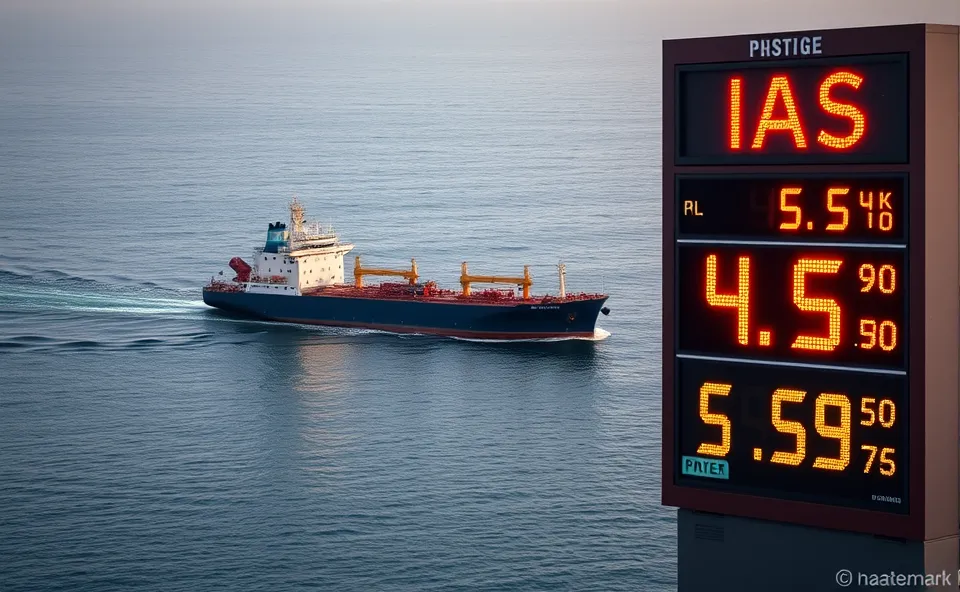
Hey there! Let’s chat about something that’s been on a lot of minds, especially when we think about our wallets at the pump: the Strait of Hormuz and its connection to gas prices. You might have heard some chatter about it, and it’s not as straightforward as you might think, even when big geopolitical shifts happen. We’re going to break down why an open Strait of Hormuz doesn’t automatically mean immediate drops in oil prices, and what that really means for all of us.
What’s the Big Deal with the Strait of Hormuz Anyway?
So, what exactly is this Strait of Hormuz we keep hearing about? Imagine a really, really important water highway. That’s pretty much what it is. It’s a narrow channel connecting the Persian Gulf to the open ocean. Why is it so crucial? Because a massive chunk of the world’s oil supply travels through it every single day. We’re talking about roughly 20-30% of global oil production and a significant portion of liquefied natural gas (LNG) passing through this vital waterway. Think of it as the world’s busiest, most critical choke point for energy. If anything disrupts traffic there, even for a short while, the ripples are felt all over the globe, especially when it comes to oil prices.
Why Are We Talking About This Now?
You might be wondering why this topic is suddenly gaining traction. Often, these discussions pop up when there are significant shifts in US-Iran relations or when the geopolitical stability of the region is called into question. Even the idea of peace or de-escalation between major players like the US and Iran can trigger conversations about the energy market. People naturally start thinking, “If tensions ease, will oil prices drop?” It’s a logical question because the Strait of Hormuz is so sensitive to conflict. Consumers, businesses, and policymakers are always looking ahead, trying to anticipate how global events will affect fuel costs and, by extension, the entire global economy. This desire to understand the connection between major international developments and our everyday gas prices is what drives the current interest.
A Little History Lesson for Context
To truly understand why an open Strait of Hormuz isn’t an instant fix for high oil prices, we need to look back a bit. For decades, the Strait of Hormuz has been a focal point of geopolitical tension. Its strategic location means it’s frequently caught in the crossfire of regional disputes. We’ve seen periods where threats to maritime traffic have caused spikes in crude oil prices, creating anxiety about supply chain disruptions. The market is incredibly sensitive to any perceived risk. Even if tensions subside, the memory of past disruptions and the underlying vulnerabilities remain. It’s not just about whether the strait is open today, but about the confidence in its continued openness and the stability of the entire region. Countries and companies that rely on this supply route have built contingency plans and hedges based on this reality. So, even in scenarios of improved US-Iran relations, the market doesn’t just flip a switch and assume smooth sailing forever.
So, What Does This Mean for Us and the Energy Market?
Let’s get down to what this actually means for you and me, and for the bigger picture of the energy market. When we talk about the impact of the Strait of Hormuz, it’s all about the flow of crude oil. Even if the strait is officially open and the US and Iran are on friendlier terms, a significant price drop isn’t guaranteed for several reasons.
- Market Psychology and Risk Premium: The oil market thrives on certainty. Even with a peace deal, traders and investors often factor in a “risk premium.” This is essentially an extra bit of cost added because of the historical instability in the region. It takes time for that fear and uncertainty to dissipate.
- Supply Chain Realities: Simply put, getting oil from point A to point B takes time. Even if the immediate threat is gone, rerouting tankers or adjusting production levels isn’t an instant process. The global supply chain is complex and interconnected.
- OPEC’s Role: Organizations like OPEC play a huge role in managing oil production. Their decisions on supply quotas can influence prices more directly than just the Strait of Hormuz being open. If OPEC decides to maintain current production levels, prices might not fall dramatically.
- Underlying Demand: The world’s demand for energy is consistently high. If demand remains strong, and supply adjustments are slow, prices will naturally stay elevated, regardless of Strait of Hormuz conditions.
- Inflationary Pressures: Fuel costs are a major component of inflation. Even a slight decrease in oil prices might not be enough to significantly lower overall inflation if other economic factors are pushing prices up.
For consumers, this means that while there might be some relief, we shouldn’t expect immediate, drastic drops in gas prices. Businesses that rely on transportation and energy will continue to face these costs, impacting everything from shipping fees to the price of goods on store shelves. The global economy is deeply intertwined with energy prices, and any change, even positive ones, requires time to fully integrate into the system.
Looking Ahead: What’s Next for Oil Prices?
Predicting oil prices is famously tricky, but we can look at logical future scenarios. If US-Iran relations genuinely and sustainably improve, and this leads to greater geopolitical stability in the Persian Gulf, we can anticipate a gradual decrease in that risk premium embedded in oil prices. This doesn’t mean prices will plummet overnight, but rather that the upward pressure on oil prices stemming from regional conflict will lessen over time.
Think of it as a slow deflation rather than a sudden burst. The market will watch for concrete actions and sustained peace. If production from countries in the region increases predictably, and if global demand continues to be met without major disruptions, then we could see more stable and potentially lower oil prices. However, the energy market is also influenced by many other factors, including global economic growth, the transition to renewable energy, and the decisions of major oil-producing nations. So, while a peaceful Strait of Hormuz is a significant positive, it’s just one piece of a much larger puzzle that determines fuel costs.
Frequently Asked Questions about Gas Prices and the Strait of Hormuz
What happens to gas prices if the Strait of Hormuz is open?
If the Strait of Hormuz is open and stable, it generally removes a major source of fear and uncertainty from the oil market. This can lead to lower oil prices over time as the “risk premium” that traders add due to potential disruptions decreases. However, immediate, drastic drops are unlikely due to market psychology, supply chain logistics, and other factors influencing oil prices.
Why aren’t gas prices dropping immediately with improved US-Iran relations?
Even with better US-Iran relations, gas prices don’t drop instantly because the oil market needs time to adjust. It takes time to rebuild confidence in supply chain stability, for production levels to change, and for the psychological impact of past tensions to fade. The global economy and energy market operate on a more gradual timescale.
How does the Strait of Hormuz affect the global economy and oil prices?
The Strait of Hormuz is a critical chokepoint for a significant portion of global oil and LNG supply. Any threat to its openness can cause oil prices to spike due to fears of shortages. Conversely, sustained stability there contributes to more predictable oil prices, which helps stabilize the global economy by reducing uncertainty in fuel costs and transportation expenses.
What is the role of OPEC in relation to gas prices and the Strait of Hormuz?
While the Strait of Hormuz is a crucial logistical point, OPEC and its allies have direct control over oil production levels. Their decisions on how much crude oil to pump significantly influence global supply and, consequently, oil prices. Even if the Strait of Hormuz is open, OPEC’s output decisions can either help lower gas prices or keep them elevated.
Could geopolitical stability in the Strait of Hormuz lead to lower inflation?
Yes, increased geopolitical stability in the Strait of Hormuz could contribute to lower inflation. Fuel costs are a major driver of inflation. When oil prices are more stable and potentially lower due to a secure supply route, it reduces the cost of transportation and production for many goods and services, easing inflationary pressures across the global economy.











