

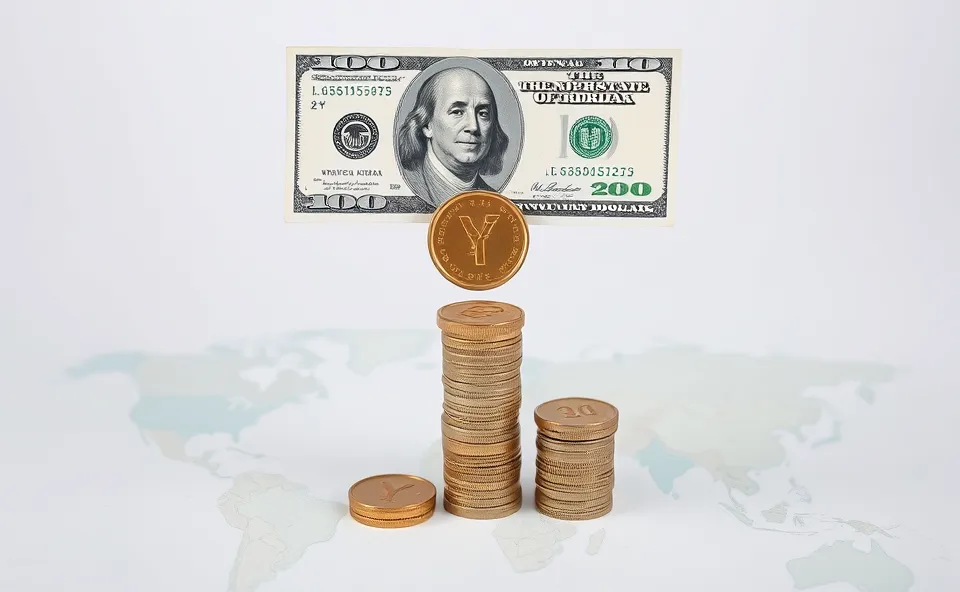
A New Player in the Global Money Game
For a very long time, the rules of global money have been simple. If you wanted to buy oil, if you wanted to trade goods across an ocean, or if you wanted to keep your savings safe, you almost always needed the US dollar. This dominance was not an accident. It was the foundation of how the modern world works. But lately, the script is being rewritten. You might have heard terms like sinodollars or petroyuan popping up in financial news. These are not just fancy new words. They represent a massive shift in how the world thinks about value and power.
Essentially, China is working hard to make its own currency, the renminbi, a central player in global trade. While the US dollar has been the undisputed king, China is building a new path. They are trying to move away from a world where everything must pass through American banks. The idea behind the petroyuan is to allow countries to trade energy, like oil and gas, using Chinese currency instead of the dollar. If China can convince major energy producers to accept their money, the entire structure of global finance begins to look very different.
This is not just about making more money for China. It is about creating a new financial ecosystem. When people talk about sinodollars, they are talking about a vision where the Chinese yuan has the same level of reach, trust, and utility that the US dollar has enjoyed for decades. It is a bold attempt to challenge the existing order and provide an alternative for nations that want more options in their international dealings.
Why the World is Watching the Currency Fight
You might be wondering why this is suddenly the hottest topic in finance. Why are we talking about this now when the dollar has been stable for so long? The answer lies in a combination of politics and a growing desire for independence among many nations. This trend is often called de-dollarization, and it is gaining momentum for several specific reasons.
First, there is the issue of financial geopolitics. In recent years, the US has used its control over the dollar to impose sanctions on various countries. While these are intended to achieve specific political goals, they have sent a clear message to the rest of the world. Many countries now realize that if they rely solely on the dollar, their own economic stability is tied to the political decisions of the United States. This realization has pushed many nations to look for a backup plan.
Second, the rise of new economic powers is changing the math. China is no longer just a factory for the world. It is a massive consumer market and a leading source of investment. As China becomes more central to the global economy, it makes sense for more countries to want to settle their trades in yuan. There are a few key drivers behind this current interest:
- The BRICS Movement: Large emerging economies are looking for ways to strengthen their own financial ties outside of Western-led systems.
- Energy Shifts: As the world looks for new ways to manage energy, the possibility of trading oil in yuan is a massive game changer.
- Digital Innovation: China is a leader in digital currency technology, which makes moving money across borders faster and cheaper without traditional Western intermediaries.
Because of these factors, currency competition is no longer a theoretical debate. It is a real, active struggle happening in the boardrooms and central banks of the world.
How the Dollar Secured Its Crown
To understand why the current shift is such a big deal, we have to look back at how the US dollar became the center of the universe. The era of dollar dominance was largely cemented after the Second World War. During a time of massive global reconstruction, the US emerged as the world’s largest economy with the most stable financial system. Through a series of agreements, the dollar became the primary global reserve currency.
A major part of this success was the creation of the petrodollar system. In the 1970s, an agreement was reached where oil would be priced and sold almost exclusively in US dollars. This created a permanent, global demand for the greenback. Every country that needed oil had to hold large amounts of dollars in their reserves. This, in turn, allowed the US to borrow money more easily and maintain an incredibly high level of influence over the global economy.
For decades, this system worked perfectly for the global economy. It provided a common language for trade and a stable way to measure value. However, the very strength of the dollar also created a single point of failure. If the world is entirely dependent on one currency, any change in that currency’s value or any political shift in the US impacts everyone on the planet. This is the history that China is now looking to challenge.
The Ripples Through Global Markets
The move toward Chinese yuan internationalization is not just a headache for policymakers. It has real consequences for how businesses operate and how markets behave. When the way we settle trades changes, everything from shipping costs to investment strategies can be affected.
One of the biggest impacts is on trade settlement. Currently, if a company in Southeast Asia wants to buy machinery from Europe, they likely use dollars to complete the transaction. This involves multiple banks, fees, and a reliance on the US financial infrastructure. If more trades begin to happen using the yuan or other regional currencies, it changes the flow of capital. It could make trade faster and more efficient for certain regions, but it also creates a more fragmented world where different “financial zones” exist.
For businesses, this means they have to become much more sophisticated. They can no longer assume that the dollar will always be the easiest way to pay. They must learn to manage the risks of multiple currencies and understand the complex world of financial geopolitics. If a company’s main costs are in yuan but their revenue is in dollars, they are at the mercy of the exchange rate between those two giants.
There is also a major impact on the US itself. The US dollar strength is a massive advantage for the United States. It allows the country to run large deficits and maintain a high standard of living. If de-dollarization actually takes hold and fewer countries need to hold dollars, the US might find itself in a position where it has to pay much higher interest rates to attract investors. This could lead to a fundamental shift in the American economy and its ability to project power globally.
What the Next Decade Might Look Like
So, where are we headed? It is important to avoid the trap of thinking that the dollar will disappear overnight. The idea of a sudden collapse is highly unlikely. The US financial system is incredibly deep, transparent, and liquid. Most investors still trust it more than any other system in the world. Breaking that level of trust takes much more than just a few new trade deals.
However, we are likely entering an era of coexistence. Instead of a world with one king, we may see a multi-polar financial system. In this future, the US dollar will likely remain the most important currency, but it will no longer be the only one. The renminbi will undoubtedly grow in importance, especially in Asia and among energy-producing nations. We might see a world where different regions use different primary currencies for different types of trade.
The speed of this change will depend on how China handles its currency. For the yuan to truly compete, it needs to be more than just a tool for trade. It needs to be a currency that people feel safe holding during a crisis. This requires transparency, open capital markets, and a high level of international trust. The competition between these two financial philosophies will be one of the defining stories of the next decade.
Frequently Asked Questions
What is the actual difference between sinodollars and the petroyuan?
While both terms relate to China’s growing influence, they have slightly different focuses. The concept of sinodollars refers more broadly to the attempt to make the renminbi act as a global standard for trade and savings, similar to the dollar. The petroyuan is a more specific term that refers to using the Chinese yuan to settle oil and energy transactions, directly challenging the long-standing petrodollar system.
Is de-dollarization a guaranteed event?
No, de-dollarization is not a certainty. It is a trend driven by political and economic motives, but it faces massive hurdles. The US dollar still benefits from massive liquidity and deep trust in its legal and financial systems. While many countries are looking for alternatives to reduce their dependence on the US, the dollar’s position as the primary global reserve currency is very difficult to break.
How does Chinese yuan internationalization affect global trade settlement?
Chinese yuan internationalization aims to change how businesses pay for goods and services. Currently, the dollar dominates trade settlement. If more countries use the yuan, it could create new, faster trade routes that bypass traditional Western banking systems. This could make trade easier for some nations but also creates more complexity for global companies that must manage multiple currencies.
Will currency competition weaken US dollar strength?
Increased currency competition could certainly put pressure on US dollar strength. If the global demand for dollars decreases because countries are using the yuan or other currencies for trade, the value of the dollar could face downward pressure. This would affect the US government’s ability to borrow money cheaply and could change the overall balance of global economic power.
Why is the renminbi not yet a dominant global currency?
Even with the rise of the renminbi, it faces challenges that the dollar does not. To be a true global leader, a currency needs more than just trade volume. It needs open capital markets where money can flow freely in and out, and it needs a high degree of transparency. Currently, China maintains much more control over its currency movement than the US does, which can make international investors cautious.











