

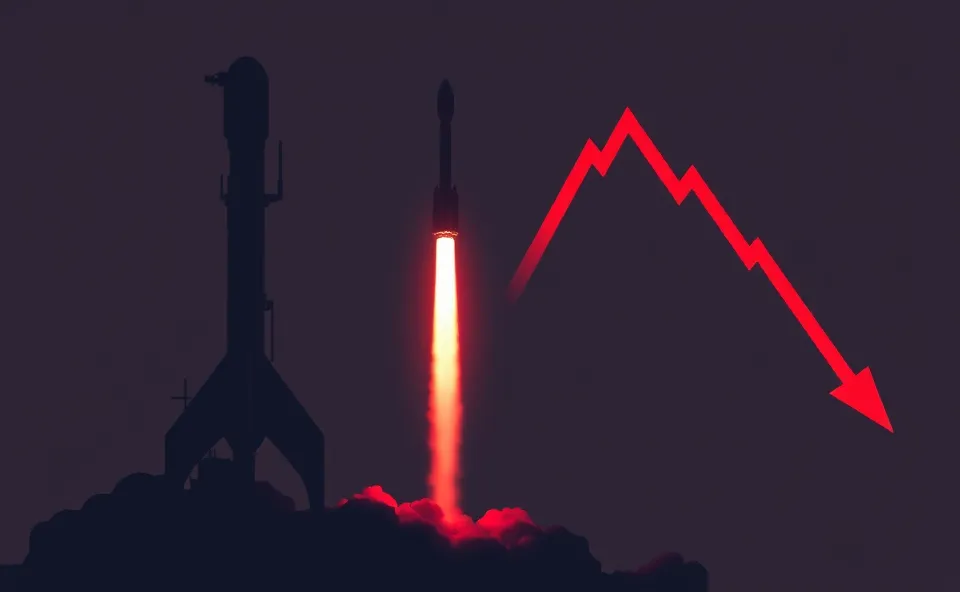
A Big Dip for SpaceX’s Rockets and AI Ambitions
So, you’ve probably heard that SpaceX, Elon Musk’s powerhouse for rockets and artificial intelligence, saw its market value take a pretty significant hit. We’re talking about a drop of around $400 billion, which is a mind boggling number. Essentially, the company’s shares tumbled by about 16%. It sounds dramatic, and for a company with such big dreams, it is. But let’s break down what this means and why it’s causing such a stir.
Why the Buzz Around This Stock Decline?
The reason this SpaceX market value drop is making waves right now isn’t just the sheer amount of money involved. It’s a sign of broader economic shifts that are impacting even the most exciting tech stocks. People are looking at SpaceX shares closely because it’s a bellwether for innovation and a major player in what feels like the future of space exploration and AI. When a company like this experiences such a sharp decline, it prompts a lot of questions about the health of the investment landscape and how these ambitious ventures are valued in the current financial climate.
Setting the Stage for SpaceX’s Journey
To really get a grip on this recent event, it helps to remember where SpaceX has come from. For years, Elon Musk’s rockets group has been revolutionizing space travel, making launches more affordable and paving the way for ambitious projects like Starlink and Mars missions. Alongside this, the AI group within SpaceX is becoming increasingly important, fueled by the same drive for innovation that powers its space ambitions. The company has achieved incredible milestones, and its valuation has soared, reflecting the immense potential investors see in its dual focus on rockets and AI. This rapid growth has made SpaceX shares a hot commodity, attracting significant investment and attention from the stock market.
The Ripple Effect of a Valuation Shift
Now, about that $400 billion drop. The primary driver behind this significant share price tumble is the rise in US bond yields. Think of it this way: when US bonds, considered a safer investment, start offering higher returns, money tends to move away from riskier assets like tech stocks and growth companies. For investors, especially those looking for steady returns, higher bond yields make those safer options more attractive. This makes it harder for companies like SpaceX, with their high growth potential but also higher inherent risk, to maintain their previous sky-high valuations. The economic impact of rising bond yields is far reaching, influencing investment decisions across the entire stock market, particularly affecting those tech stocks that rely on future growth projections for their valuation.
This isn’t just about SpaceX’s specific operations; it’s a signal about how the broader financial environment is affecting investment in ambitious, future-oriented companies. When the cost of borrowing money goes up, and safer investments become more appealing, the appetite for the kind of high risk, high reward plays that have defined the tech boom can diminish. This can lead to a repricing of assets, where investors become more cautious and demand a higher return for taking on that risk. For a company like SpaceX, which is constantly investing in groundbreaking technology and long-term projects, a shift in investor sentiment and risk appetite can have a direct and immediate impact on its perceived market value.
What Comes Next for SpaceX?
Looking ahead, it’s important to see this not necessarily as a permanent setback, but as a recalibration in the current economic climate. SpaceX’s core mission and its technological advancements in both rockets and AI remain incredibly strong. The company continues to make strides in reusable rocket technology, satellite internet, and its pursuit of interplanetary travel, all while pushing the boundaries of artificial intelligence. While the stock market valuation might fluctuate based on macroeconomic factors like bond yields, the fundamental innovation and long-term vision of SpaceX are unlikely to change.
The current market conditions might lead to more scrutiny on financial performance and a greater emphasis on near-term profitability, but the ambitious roadmap of the rockets group and the AI group still holds immense promise. Investors will likely be watching how SpaceX navigates these economic headwinds, balancing its long-term goals with the current financial realities. It’s a testament to the company’s resilience and its commitment to its groundbreaking work. The focus for SpaceX will continue to be on execution and delivering on its ambitious goals, which will ultimately drive its future valuation.
Common Questions About SpaceX’s Market Value
What caused the recent drop in SpaceX market value?
The primary reason for the recent significant drop in SpaceX’s market value, which saw its shares decline by about 16%, is the increase in US bond yields. When bond yields rise, safer investments become more attractive, leading investors to shift capital away from riskier assets like technology stocks and growth companies, impacting SpaceX shares.
How does the stock market react to rising US bond yields?
When US bond yields go up, the stock market often sees a readjustment. Investors tend to favor the increased returns from bonds, which can lead to a sell-off in equities, particularly in tech stocks and companies with high valuations that depend on future growth expectations. This financial news can create a ripple effect across various investments.
What is the significance of the $400 billion drop in SpaceX’s valuation?
A $400 billion drop in SpaceX’s valuation is substantial and highlights the sensitivity of even highly innovative companies to macroeconomic shifts. It reflects a reassessment of risk and return by investors in the current economic environment, impacting the perceived worth of Elon Musk’s AI and rockets group.
How does this affect Elon Musk’s AI group and rockets group?
While the direct impact on the day-to-day operations of Elon Musk’s AI group and rockets group might be minimal in the short term, a lower market valuation can affect access to capital for future expansion or research and development. It also influences investor confidence and the company’s ability to raise funds through equity offerings for its ambitious projects.
Is this a long-term problem for SpaceX shares?
It’s too early to definitively say if this is a long-term problem for SpaceX shares. Market valuations are influenced by many factors, including economic conditions. While rising US bond yields have caused a short-term stock decline, SpaceX’s long-term prospects in space exploration and AI remain strong, and its valuation could recover as economic conditions change or if the company continues to hit its ambitious milestones.











