

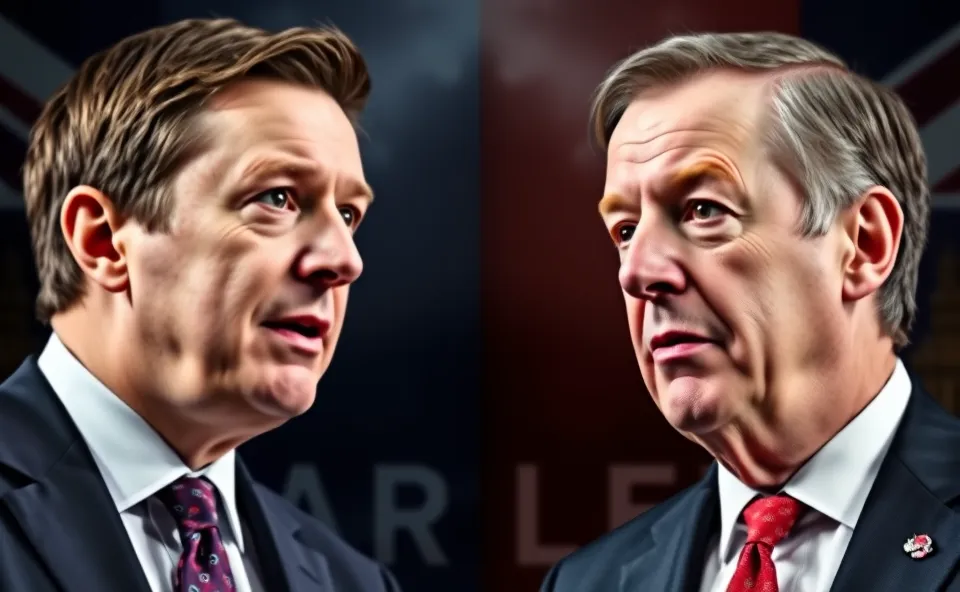
Two different paths for the future of the United Kingdom
If you follow the news in the United Kingdom, you might notice that the political conversation is changing. It is no longer just about the big parties in London. Instead, it is becoming a battle of personalities and very different ideas about how a country should run. At the center of this shift are two men who could not be more different: Andy Burnham and Nigel Farage. While they might not be standing on the same stage right now, they represent the two different directions the country could take.
Andy Burnham has become a massive figure in the North of England. As the Mayor of Greater Manchester, he has built a reputation for being a leader who gets things done at a local level. He is often seen as someone who understands the struggles of everyday people in towns that the central government sometimes forgets. On the other side, you have Nigel Farage. Farage is a master of disruption. He has spent decades shaking up the political establishment and forcing people to talk about topics like Brexit and immigration. He does not care about following the traditional rules of politics, and that is exactly why he is so influential.
When we look at these two, we are looking at a clash of styles. One side is about building systems and working within the structure of the Labour Party leadership to create change. The other side is about breaking the system to force a new kind of conversation. This comparison is not just about two men, it is about the soul of the country and what kind of leadership people want in the years to come.
Why the comparison is heating up right now
You might be wondering why everyone is suddenly talking about these two together. The reason is simple: the political landscape is in a state of flux. With the recent shifts in UK politics, the traditional power structures are being tested. People are looking for leaders who feel authentic. They are tired of the same old political talk and are looking for someone who actually speaks their language.
Nigel Farage has recently returned to the spotlight with a renewed sense of energy. His ability to tap into the frustrations of a large group of voters makes him a constant topic of UK news analysis. Even when he is not in a formal government role, his shadow hangs over every major debate. Meanwhile, Andy Burnham is growing in stature. Many people see him as a potential future leader who could bridge the gap between the traditional Labour Party and the working class voters who have felt left behind.
As the country prepares for more elections and major policy shifts, voters are trying to decide which style they prefer. Do they want the steady, regional strength of a leader like Burnham, or do they want the loud, disruptive energy of a leader like Farage? This tension is driving the search for answers, making this comparison more relevant than ever.
The history and the rise of two different leaders
To understand where we are going, we have to look at where these men came from. Their backgrounds have shaped their political identities and their approach to power. They are not just candidates; they are products of the eras they grew up in and the political movements they helped lead.
Andy Burnham has a deep connection to the mainstream political machine. He has held significant roles, including serving as a Member of Parliament and a Cabinet minister. This experience gave him a front row seat to how the British government works from the inside. However, his move to become the Mayor of Greater Manchester changed his trajectory. It allowed him to step away from the intense scrutiny of Westminster and prove that he could lead a massive, diverse region. He learned how to manage budgets, deal with local businesses, and advocate for his community in a way that felt real to them. This has positioned him as a heavyweight within the Labour Party leadership, even as Keir Starmer leads the national party.
Nigel Farage took a completely different route. He did not start by trying to join the establishment. He started by challenging it. Through his work with UKIP and later Reform UK, he became the voice for those who felt the political elite were out of touch. His strategy was never about winning every single seat in Parliament. It was about making sure certain issues could not be ignored. He used the media to bypass traditional political gatekeepers, talking directly to the people through television and social media. This has made him one of the most significant political rivals to the mainstream parties in modern history.
What this means for the economy and society
The differences between Andy Burnham and Nigel Farage go much deeper than just how they speak. Their policy differences will have a massive impact on how the UK functions, how businesses operate, and how the economy grows. In the world of finance and business, political stability is everything, and these two men offer very different versions of stability.
If you look at the potential impact of an Andy Burnham style of leadership, you see a focus on regional investment and social cohesion. His approach often involves more state involvement to ensure that growth is not just happening in London. This could mean more funding for local infrastructure, better public transport, and more support for regional industries. For businesses, this might mean more local government involvement in planning and development. It is a model that seeks to create a more balanced economy by spreading wealth and opportunity across the country.
On the other hand, Nigel Farage represents a different kind of economic philosophy. His supporters often call for deregulation and a much smaller role for the state. The idea is that by cutting red tape and focusing on national sovereignty, the UK can become more competitive on the global stage. This approach is designed to appeal to entrepreneurs and those who feel that government rules are holding the country back. However, it also brings a higher level of uncertainty. A disruptive political style can sometimes lead to market volatility, as investors try to figure out what the new rules will be.
The choice between these two paths affects everything from tax policies to immigration rules. These are not just political debates; they are the fundamental building blocks of how a nation makes money and how its citizens live their lives. The impact on the markets will depend on whether the country chooses a path of structured regional growth or one of rapid, disruptive change.
Looking ahead at the future of national leadership
As we look toward the future, the big question is whether either of these men can scale their influence to the highest level. Can a regional leader become the next leader of the country? Can a populist outsider become a permanent fixture in the halls of power?
For Andy Burnham, the path to the British premiership is a logical, if difficult, possibility. He has already shown he can win large numbers of votes and manage complex organizations. If the Labour Party leadership decides they need a leader with a stronger connection to the North and a more practical, hands on approach, Burnham could be the natural successor. His challenge will be to maintain his local popularity while building a national brand that appeals to voters in every corner of the UK.
For Nigel Farage, the future is less about holding a specific office and more about his ability to shift the entire political spectrum. He has proven that he can act as a kingmaker. Even if he never sits in the Prime Minister’s chair, he can influence the policies of every major party by shifting what the public demands. His electoral strategy is built on staying relevant and keeping the pressure on the establishment. As long as there are voters who feel unheard, his influence will likely continue to grow.
The next decade will likely see a tug of war between these two styles. We might see a political landscape that is constantly oscillating between the desire for steady, regional-focused governance and the urge for radical, populist change. The winner will not just be a person, but an idea about what the United Kingdom should be.
Common questions about the political landscape
How do Andy Burnham and Nigel Farage differ in their leadership styles?
Andy Burnham tends to use a collaborative and institutional approach, working within existing structures like local government and the Labour Party to achieve goals. Nigel Farage uses a disruptive and populist style, often working outside of traditional political norms to challenge the establishment and force new topics into the mainstream debate.
What role does Keir Starmer play in this political dynamic?
Keir Starmer is the current leader of the Labour Party, and his leadership sets the tone for how figures like Andy Burnham operate within the party. While Starmer focuses on national governance, Burnham provides a strong regional counterweight that can help the party connect with voters outside of London.
How do the policy differences between these political rivals affect the UK?
The policy differences are significant. Burnham often supports increased regional investment and more state involvement to support local economies. Farage generally advocates for deregulation, smaller government, and stricter controls on immigration. These choices affect everything from national economic stability to how local businesses grow.
Does Andy Burnham have a real chance at the British premiership?
Yes, it is a possibility. Because of his success as a mayor and his deep roots in the Labour Party, many see him as a potential national leader. His ability to bridge the gap between different parts of the country makes him a strong candidate if the party looks for a new direction.
What is the main electoral strategy for Nigel Farage in UK politics?
The main electoral strategy for Nigel Farage is to tap into the frustrations of voters who feel ignored by the major parties. By focusing on high impact issues and using direct communication, he aims to shift the political conversation and influence the direction of the country, even without holding a traditional high office.











