

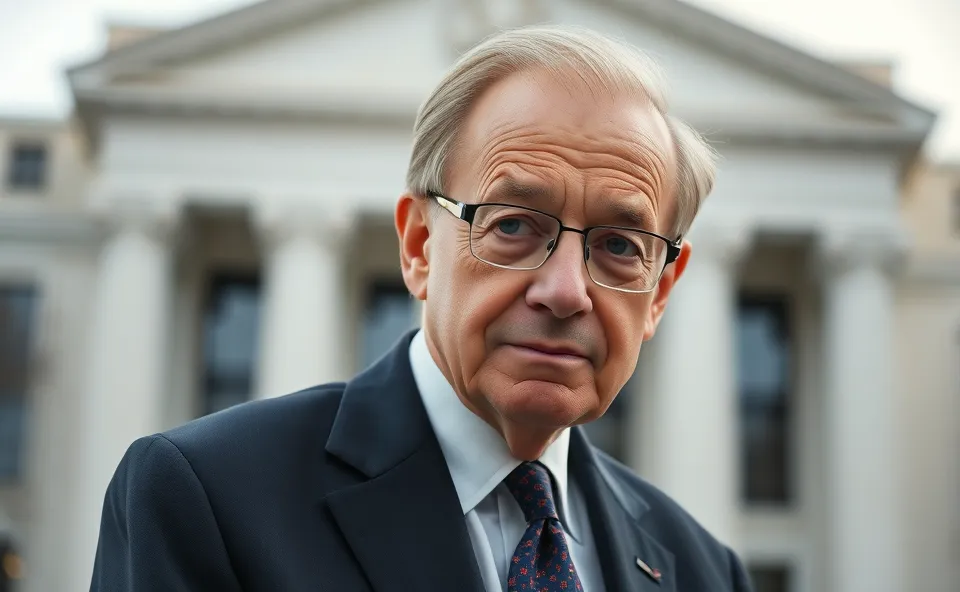
A monumental loss for the global financial world
The news broke today and sent ripples through the halls of power in Washington and the trading floors of Wall Street. Alan Greenspan, the man who guided the United States economy through some of its most turbulent and prosperous years, has passed away at the age of 100. His death marks the end of a profound era in the history of central banking. For decades, he was the face of stability and the most influential voice in the world of finance.
When we talk about the people who shaped the modern world, his name is at the very top of the list. As a former Fed chair, he held a level of influence that few others in history have ever matched. He was not just a government official. He was a thinker and a strategist whose decisions moved trillions of dollars across the globe with just a few words. His passing is more than just the loss of a public figure. It is the closing of a chapter in how we understand money, markets, and the role of the government in our daily lives.
To understand his importance, you have to realize that he was the primary architect of the economic landscape we have lived in for the last thirty years. Whether people loved his approach or criticized it, they could not ignore it. He was the master of the levers of power, and today, the world is pausing to reflect on the immense impact he left behind.
Why the world is talking about his passing
It is no surprise that news of the Alan Greenspan death is trending across every major news platform. From social media to high level financial analysis, everyone is asking what his life meant for us. People are searching for his story because his work directly affected the cost of their mortgages, the value of their retirement accounts, and the stability of their jobs. He was a constant presence in the lives of millions of people, even if they never heard his name spoken aloud.
Media figures like Andrea Mitchell have highlighted how his era defined our current reality. When someone spends decades at the helm of the Federal Reserve, they become a part of the fabric of the nation. His death has triggered a massive wave of reflection. Economists are revisiting his old speeches, and investors are analyzing his past moves to find clues about the future. We are not just mourning a man. We are analyzing a legacy that continues to influence how we think about the US economy every single day.
The reason for this intense interest is simple. We are currently living through a time of significant economic change. As we face new challenges like inflation and shifting global power, people naturally look back to the leaders who managed similar pressures in the past. They want to know what he would have done. They want to understand the foundations he built, because those foundations are what we are currently standing on.
The long journey of a financial giant
To understand how he became so powerful, we have to look at his history. Alan Greenspan did not just stumble into his role at the Federal Reserve. He was a student of the markets from a very young age. He had a deep, almost intuitive understanding of how economic policy works and how human behavior drives prices up and down. He spent years building a reputation as one of the smartest minds in the field, which eventually led him to the most important seat in the country.
He joined the Federal Reserve in the 1970s, a time when the economy was struggling with high inflation and uncertainty. During his long tenure as the leader of the central bank, he oversaw a period of massive expansion. He became known for his ability to balance the needs of growth with the need to keep prices stable. He was a man of deep conviction, often expressing his views with a level of certainty that gave markets confidence, even during times of crisis.
His career was defined by several key elements:
- Deep market knowledge: He understood the psychology of investors as much as the mathematics of money.
- Decisive action: He was never afraid to move interest rates to steer the ship of the US economy.
- A focus on stability: His main goal was often to prevent the kind of chaos that can destroy a nation’s prosperity.
Throughout his time in office, he navigated the world through several recessions and many periods of unprecedented wealth. He was the steady hand at the wheel, a man whose every move was watched by the entire world with bated breath.
How his decisions changed our lives
It is hard to overstate the impact his work had on the average person. When the Federal Reserve changes its monetary policy, it is not just a technical move. It changes how much you pay for a car loan. It changes whether companies hire more workers or freeze their budgets. Because he was in charge for so long, his philosophy became the standard for how the world operates.
One of his most famous concepts was something often called the Greenspan Put. In simple terms, this was the idea that if the stock market took a major hit, the Federal Reserve would step in and lower interest rates to help the market recover. This gave investors a sense of security, but it also changed the way they behaved. Many people began to take more risks, believing that the central bank would always be there to catch them if they fell. This shift in mindset had massive implications for the financial legacy he left behind.
His impact can be viewed from two different sides:
- The era of growth: For many years, his policies helped create a period of stability and increasing wealth that felt like a golden age for the US economy.
- The era of criticism: Some experts argue that his approach to monetary policy was too relaxed. They suggest that by keeping interest rates low for too long, he may have inadvertently encouraged the housing bubble that led to the financial crisis of 2008.
This duality is a core part of his story. He was a man who sought to create prosperity, but in doing so, he also created new risks that the world is still trying to manage today. His work taught us that every economic solution comes with its own set of challenges.
What lies ahead for the world he built
As we move forward, the lessons of the Greenspan era will continue to guide the next generation of leaders. We are unlikely to see another figure who commands the same level of attention or holds the same kind of individual power. The Federal Reserve has become much more transparent and structured since his time, making it harder for any one person to act as the sole architect of the economy.
However, the debates he started are far from over. The tension between encouraging growth and preventing bubbles is a permanent part of central banking. As we face new economic realities like digital currencies and global supply chain shifts, the old questions remain the same. How much should the government intervene? How do we balance the needs of today with the risks of tomorrow? The answers to these questions will continue to be shaped by the history he wrote.
We can expect to see a continued focus on the lessons learned from his tenure. Future policymakers will look at his successes to find models for stability, and they will look at his mistakes to build better guardrails. His life serves as a roadmap for the complexities of managing a modern, interconnected global economy.
Frequently asked questions about Alan Greenspan
Who was Alan Greenspan and why was he important?
Alan Greenspan was a legendary economist who served as the chair of the Federal Reserve for nearly two decades. He was important because his decisions on monetary policy directly influenced the stability and growth of the US economy and influenced global markets for years.
What was the impact of the Alan Greenspan death on the markets?
The Alan Greenspan death has caused a period of deep reflection among investors and economists. While his passing does not change current interest rates, it has sparked renewed debates about the history of central banking and the long term effects of his economic policy.
How did he influence the Federal Reserve?
He shaped the Federal Reserve by introducing a philosophy of market reliance and using interest rate adjustments as a primary tool to manage economic cycles. He helped establish the Fed as a powerful, central force in the modern US economy.
What is the financial legacy of Alan Greenspan?
His financial legacy is a complex mix of long term economic growth and intense debate. While he is credited with guiding the economy through many crises, he is also scrutinized for policies that some believe contributed to later financial instability.
Why is his economic policy still studied today?
His economic policy is still studied because the principles he used, such as managing inflation through interest rates, remain the foundation of modern central banking. Understanding his era helps current leaders navigate the risks and rewards of managing a global economy.











