

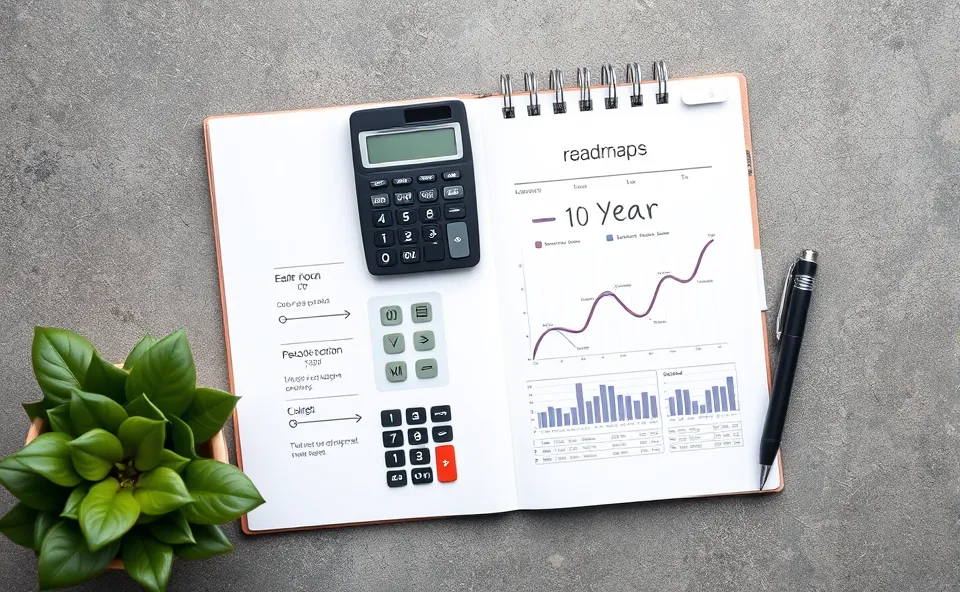
Mapping Out Your Financial Future
Imagine sitting down today and looking at a version of yourself ten years from now. That version of you is more stable, more confident, and more secure because of the decisions you are making right now. Creating a 10-year financial plan is essentially building a bridge between your current reality and the life you want to lead. It is not just a collection of numbers on a spreadsheet or a list of things you want to buy. Instead, it is a strategic roadmap that helps you navigate the ups and downs of life with intention.
A decade might sound like a long time, but in the world of money, it is the perfect window. It is long enough to see the massive benefits of compound interest and significant growth, but short enough that your goals still feel tangible and real. When you have a plan, you stop reacting to financial surprises and start proactively directing your money toward what actually matters to you. Whether you want to buy a home, start a business, or prepare for retirement planning, a ten year perspective changes everything.
Why Planning a Decade Ahead Matters Right Now
You might have noticed that everyone seems to be talking about financial stability lately. It is not just a coincidence. We are living in an era of incredible economic shifts. Inflation, changing job markets, and the rising cost of living have made the old way of doing things feel a bit shaky. People are moving away from the idea of just getting by each month and are instead searching for ways to build real, lasting security.
The search for a 10-year financial plan is growing because people want control. In an unpredictable world, having a personal blueprint provides a sense of calm. People realize that relying on luck or a single paycheck is no longer a viable strategy. They want to know how to turn their current income into long term wealth building. This shift in mindset, from short term survival to long term growth, is one of the most important trends in modern personal finance.
How Financial Responsibility Has Shifted Over Time
To understand why we need these plans today, we have to look at how things used to work. For previous generations, financial security often came in a very specific package. Many people worked for the same company for thirty years and walked away with a guaranteed pension. The responsibility for managing money was largely shared between employers and the government through social safety nets.
That world has changed significantly. Today, the responsibility for building wealth has largely shifted onto the shoulders of the individual. Pensions are becoming rare, and the tools for managing your own money are more accessible than ever. While this gives us more freedom to choose our own path, it also means we can no longer afford to be passive. We have to become the architects of our own financial destiny. This transition is why understanding debt management and asset allocation has become a vital life skill rather than just something for Wall Street professionals.
The Step by Step Guide to Your Financial Roadmap
Building your plan might feel overwhelming at first, but the best way to tackle it is to break it down into manageable pieces. Think of this as building a house. You need a solid foundation before you can start decorating the rooms.
Starting with Meaningful Financial Goals Setting
You cannot reach a destination if you do not know where you are going. This is where financial goals setting comes into play. Your goals should be specific and tied to your values. Instead of saying I want to be rich, try saying I want to have fifty thousand dollars saved for a house down payment in five years.
Divide your goals into three categories:
- Short term goals: Things you want to achieve in the next one to two years, like building an emergency fund or paying off a credit card.
- Medium term goals: Goals for years three to seven, such as saving for a wedding or a major career pivot.
- Long term goals: These are your big picture items for years eight through ten and beyond, like retirement planning or achieving total financial freedom.
Organizing Your Reality with a Personal Budget
A personal budget is not a restriction on your freedom; it is a tool that gives you permission to spend. To build a ten year plan, you must first understand your cash flow. You need to know exactly how much is coming in and exactly where it is going. This clarity allows you to identify leaks in your spending and redirect that money toward your savings goals.
When you look at your budget, focus on the gap between your income and your expenses. The wider that gap, the faster you can build wealth. If your expenses are too high, look for ways to optimize your lifestyle without sacrificing your happiness. The goal is to create a surplus that can be put to work.
Prioritizing Debt Management
High interest debt is like trying to run a race with a heavy backpack. It slows you down and drains your energy. Before you can focus entirely on long term wealth building, you need to address any high interest obligations. Credit card debt, in particular, can compound against you just as quickly as investments can work for you.
Create a strategy to systematically reduce your debt. You might choose to pay off the smallest balances first to gain momentum, or you might target the highest interest rates to save the most money over time. Either way, clearing this path is essential for your future stability.
Developing an Investment Strategy and Asset Allocation
Once you have a handle on your budget and your debt, it is time to make your money grow. A solid investment strategy is what turns savings into true wealth. You do not need to be an expert to start, but you do need to understand the basics of asset allocation.
Asset allocation means spreading your money across different types of investments, such as stocks, bonds, and real estate. This helps manage risk. If one area of the market struggles, your other investments can help balance things out. Over a ten year period, the goal is to participate in market growth while protecting yourself from extreme volatility.
Harnessing the Power of Compound Interest
The real secret sauce of a 10-year financial plan is compound interest. This is the process where your earnings begin to earn their own earnings. In the beginning, the growth might seem slow and almost unnoticeable. However, as time passes, the curve steepens. This is why starting early is much more important than starting with a large amount of money. Time is the most valuable asset you have when it comes to building wealth.
Staying Ready for Whatever Comes Next
While the goal is to create a plan, the most important thing to remember is that a plan is a living document. Life is unpredictable. You might change careers, get married, face an unexpected medical expense, or find a new passion that requires a different kind of funding.
A good financial roadmap should be flexible. Instead of viewing a change in circumstances as a failure of your plan, view it as an opportunity to adjust your course. Review your progress at least once a year. Check in on your savings goals, see how your investments are performing, and make sure your plan still aligns with who you are becoming. The goal is not perfection; the goal is progress and direction.
Common Questions About Long Term Planning
How do I start a 10-year financial plan?
Start by assessing your current financial situation. Write down your total income, your monthly expenses, and your current debts. Once you have a clear picture of where you stand, move on to financial goals setting to decide what you want to achieve over the next decade.
Why is financial goals setting so important?
Without specific goals, it is very easy to lose motivation. Financial goals setting gives your money a purpose. It transforms your savings from a chore into a tool that is actively building the life you want to live.
What is a good investment strategy for beginners?
For many beginners, a simple and effective investment strategy involves low cost index funds and a diversified asset allocation. This allows you to capture market growth without the high risk of trying to pick individual winning stocks.
How does compound interest help long term wealth building?
Compound interest allows your money to grow exponentially. By reinvesting your earnings, you create a cycle where your wealth generates even more wealth. Over a 10-year financial plan, this effect becomes a powerful engine for your net worth.
How can I improve my personal budget?
The best way to improve a personal budget is to track your spending closely for a few months. Use an app or a simple spreadsheet to see exactly where your money goes. This awareness makes it much easier to cut unnecessary costs and increase your contributions to your savings goals.











