

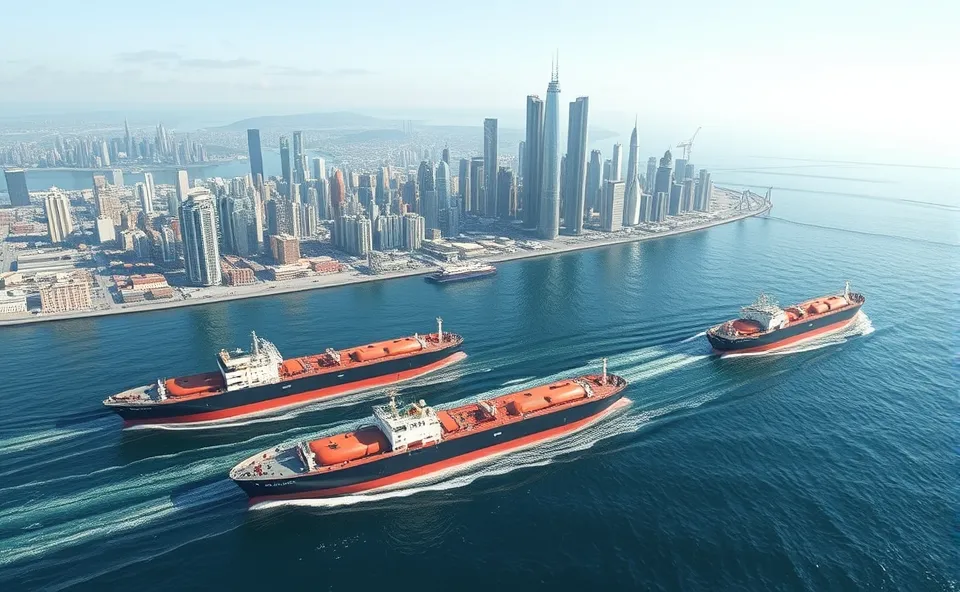
A massive shift in the energy landscape
Imagine looking at a map of the world and realizing that the way we power our homes, our factories, and our cities is about to undergo a huge transformation. While many people believe that the world will switch almost entirely to wind and solar power in the near future, a new report from Shell suggests a much more complex reality. According to their latest projections, LNG demand is set to grow by a staggering 65 percent by the year 2050.
This might sound surprising. We often hear that the era of fossil fuels is coming to an end. We hear about the urgent need for a rapid energy transition. However, Shell is pointing out that the world still has a massive appetite for liquefied natural gas. Even though the world is trying to go green, the transition is not happening overnight. Instead of a sudden jump to renewables, we are looking at a long period where gas plays a central role in keeping the lights on.
This forecast is not just a small tweak to existing numbers. A 65 percent increase represents a massive expansion of the energy market. It means more ships on the ocean, more massive cooling plants on the coast, and a whole new layer of complexity in how countries trade energy. This shift highlights a fundamental truth about our future energy needs: we need reliability just as much as we need sustainability.
Why this news is hitting home right now
You might be wondering why everyone is suddenly talking about this. Why is this specific projection becoming such a major talking point in the business world? The answer lies in the current state of the energy market. We are living through a time of significant market disruptions. From geopolitical tensions to unexpected shifts in supply chains, the stability we once took for granted has vanished.
When energy supplies become unpredictable, nations start looking for ways to secure their own futures. This is where liquefied natural gas becomes a hero. Unlike traditional gas that travels through fixed pipelines, LNG can be loaded onto ships and sent almost anywhere in the world. This flexibility makes it a vital tool for countries that want to avoid being dependent on a single neighbor for their power.
People are searching for these insights because they want to know what happens next. Investors are looking at how this affects the oil and gas sector. Policymakers are trying to figure out how to balance their climate goals with the need to keep electricity prices low. The current chaos in the global market has made the idea of a massive increase in LNG demand feel much more relevant and much more urgent.
There are several reasons why this topic is trending:
- Energy Security: Countries are desperate to find reliable energy sources that cannot be easily cut off by political disputes.
- Economic Uncertainty: As inflation and supply issues hit different regions, understanding the future of energy costs is a top priority for businesses.
- The Transition Gap: There is a growing realization that renewables alone cannot yet meet the total global demand for consistent, base-load power.
Understanding the roots of the gas boom
To understand why Shell expects such high growth, we have to look at the history of how we use energy. For decades, the world has relied heavily on coal to generate electricity. Coal is abundant, but it is also one of the heaviest polluters in the energy market. As the world moves through the energy transition, the first logical step for many nations is to move from coal to gas.
This is often called the bridge fuel strategy. Liquefied natural gas burns much cleaner than coal. It produces significantly less carbon dioxide and fewer harmful pollutants. For a developing nation that needs to grow its economy quickly, switching to gas is a way to provide reliable power without the extreme environmental cost of coal. This creates a natural, steady rise in global LNG demand.
Furthermore, the technology behind liquefied natural gas has improved immensely. We have become much better at cooling gas down to extremely low temperatures, turning it into a liquid that is much easier to transport. This technological leap has opened up new markets in Asia and Europe that were previously unreachable. The ability to move energy across oceans has changed the rules of the game for the oil and gas industry, turning gas from a local commodity into a truly global one.
The ripple effect on global markets and industries
A projected 65 percent increase in LNG demand is not just a statistic for energy companies. It is a signal that will ripple through almost every sector of the global economy. When the demand for a primary energy source grows this much, it changes how businesses plan for the long term.
For the manufacturing and heavy industry sectors, this means they can likely rely on a more stable supply of fuel for decades to come. Industries that require intense heat, such as steel and chemical production, depend on reliable energy. The growth in gas availability provides a level of certainty that helps these businesses invest in new facilities and technology.
However, this growth also brings challenges. The massive expansion required to meet this demand will require enormous amounts of capital. We are talking about billions of dollars spent on:
- Liquefaction plants: Massive facilities that turn gas into liquid.
- Specialized shipping fleets: A huge increase in the number of LNG tankers navigating the seas.
- Regasification terminals: The infrastructure needed to turn that liquid back into gas when it reaches its destination.
There is also a tension within the energy transition itself. As more money flows into gas infrastructure, some worry that this might slow down the transition to even cleaner sources like hydrogen or advanced battery storage. The energy market is essentially trying to run two races at once: one toward a zero-carbon future and another toward securing enough energy to keep the current world functioning.
What the next few decades might look like
Looking ahead, the landscape of future energy will likely be defined by this balancing act. We will see a world where fossil fuels continue to play a major role, but in a much more refined and controlled way. The era of “dirty” energy like coal may fade, while the era of “cleaner” fossil fuels like gas enters its prime.
We can expect to see a more interconnected global grid. As more countries invest in LNG infrastructure, the world will become more dependent on maritime trade routes. This means that the security of the oceans and the stability of shipping lanes will become as important to energy as the pipelines of the past.
We will also likely see technological advancements aimed at making the gas cycle even cleaner. This could include carbon capture technology at the source or using gas to help stabilize the power grids that rely on intermittent solar and wind energy. Instead of gas and renewables competing, they will likely work together in a complex, highly technical dance to keep the world running.
Ultimately, the Shell projection tells us that the path to a green future is not a straight line. It is a winding road that involves using the tools we have today to build the systems we need for tomorrow. The massive growth in LNG demand is a sign that the world is choosing a path of gradual, reliable change.
Common questions about the future of gas
What is the main driver behind the projected Shell LNG demand growth?
The primary driver is the need for a reliable bridge during the energy transition. As countries move away from coal, liquefied natural gas provides a much cleaner and more flexible alternative to meet the growing needs of the energy market.
How do market disruptions affect the global LNG demand?
Market disruptions, such as geopolitical conflicts or supply chain issues, often lead to a sudden increase in the desire for LNG. Because it can be shipped globally, it offers a level of energy security that fixed pipelines cannot match.
Will the rise in fossil fuels stop the energy transition?
Not necessarily. Most experts see the rise in LNG demand as part of the energy transition rather than an obstacle to it. Gas is being used to replace more polluting sources like coal, acting as a stepping stone toward a cleaner future energy mix.
Why is liquefied natural gas considered a bridge fuel?
It is called a bridge fuel because it produces fewer emissions than coal or oil, making it a practical way to reduce pollution while the world builds up the infrastructure needed for a fully renewable energy market.
How will the increase in LNG demand impact the oil and gas industry?
The oil and gas industry will likely see massive investment in new infrastructure, including more liquefaction plants and specialized shipping vessels, to keep up with the 65 percent increase in global LNG demand predicted by Shell.











