

Why the smartest people are not always the best hires
Imagine you are building a team to navigate a massive, unpredictable storm at sea. Do you want the person who read every book ever written about sailing, or do you want the person who has actually survived a shipwreck? For decades, most companies chose the former. They looked for the highest grades, the most prestigious degrees, and the most polished resumes. They believed that academic achievement was the ultimate proof of intelligence.
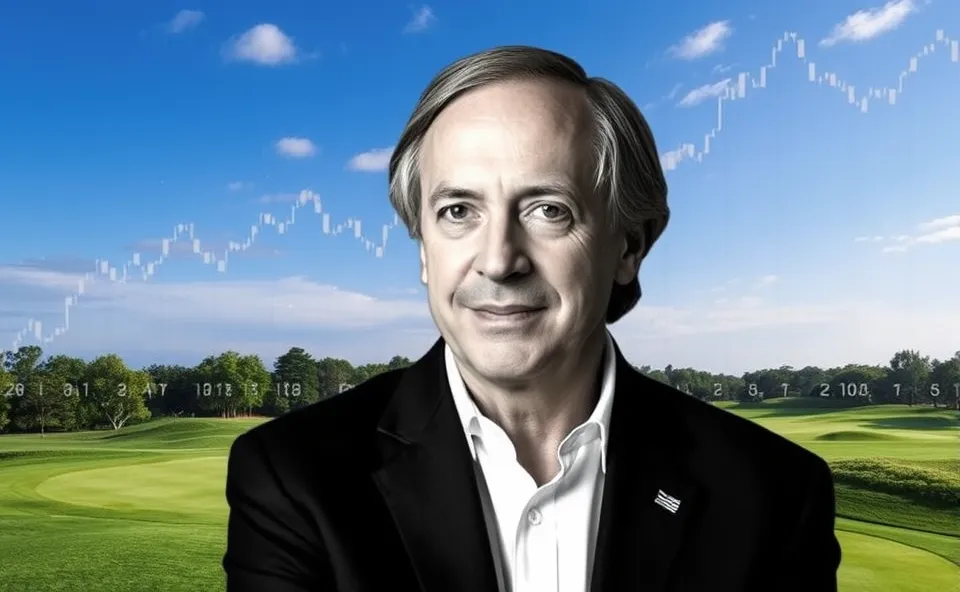
However, Ray Dalio, one of the most successful investors in history, decided to take a completely different path. He realized that knowing the theory of how things work is very different from knowing how to react when everything falls apart. His Ray Dalio, hiring strategy, flipped the script on traditional recruitment. Instead of hunting for the perfect GPA, he began looking for people who had faced real world hardship. He wanted individuals who had struggled, failed, and fought their way back to the top.
This approach might seem strange to a traditional recruiter. Why would you value a messy history over a clean, perfect transcript? The answer lies in the difference between intelligence and resilience. Dalio recognized that in the high stakes world of finance, things rarely go according to plan. When a market crashes or a global crisis hits, a textbook cannot save you. You need people who have developed a certain type of grit through personal or professional adversity. These are the people who stay calm when the pressure is on.
Why everyone is talking about resilience right now
You might be wondering why this conversation is gaining so much momentum today. We are currently seeing a massive shift in global recruitment trends. For a long time, a degree from a top tier university was a golden ticket. It was a signal that you were disciplined and capable. But as the world becomes more complex and automated, that signal is losing its power. Artificial intelligence can now handle many of the technical tasks that once required high academic achievement.
As AI takes over the routine work, the value of human workers is shifting toward things that machines cannot easily replicate. We are moving into an era where emotional intelligence, adaptability, and inventive thinking are the most valuable assets a person can have. People are searching for ways to stand out in a crowded job market, and they are realizing that their struggles might actually be their greatest strengths.
Furthermore, the modern workplace is more volatile than ever. Businesses are no longer operating in stable environments. They are constantly dealing with rapid technological changes, shifting economic landscapes, and global disruptions. Because of this, leaders are looking for talent that can pivot quickly. They are realizing that a candidate who has successfully navigated a personal crisis or a difficult career setback is often much better prepared for a business crisis than someone who has lived a life of constant ease.
The history behind a radical approach to talent
To understand why this philosophy exists, we have to look at the foundation of Bridgewater Associates. Dalio did not build his empire by following the crowd. He built it on a set of principles that prioritize radical truth and radical transparency. He wanted to create a machine that could make the best possible decisions by stripping away ego and focusing on reality.
In the early days of his career, Dalio learned a hard lesson. He realized that many smart people are actually quite bad at making decisions because they are too afraid of being wrong. They prioritize looking smart over being right. This is where the connection between adversity and successful investing comes in. When you have faced failure, you tend to develop a healthy respect for reality. You learn to look at your mistakes objectively instead of hiding them.
Dalio noticed that people who had overcome significant challenges often possessed a unique ability to seek out the truth. They were not afraid of being wrong because they had already dealt with the consequences of failure. This made them perfect for a culture that requires constant learning and adaptation. He saw that academic achievement often rewarded people for following rules, while adversity rewarded people for solving problems. For a firm that relies on finding unique patterns in the markets, the latter was much more valuable.
How this way of thinking changes the business world
The impact of this mindset extends far beyond the halls of a hedge fund. When companies adopt this view of talent acquisition, it fundamentally changes their entire workplace culture. It shifts the focus from perfection to growth. In a traditional company, a mistake is something to be punished or hidden. In a company influenced by Dalio’s ideas, a mistake is seen as a vital data point for professional growth.
This change has several major implications for businesses and employees alike:
- A shift in how we define talent: Companies are starting to look for the adversity quotient rather than just the intelligence quotient. This means valuing grit and persistence as much as technical skill.
- Improved decision making: By hiring people who are comfortable with failure, businesses can foster an environment where people feel safe to take calculated risks and speak the truth.
- Higher levels of innovation: People who have used inventive thinking to get through difficult times are much more likely to bring creative solutions to complex business problems.
- Better employee retention: When a workplace culture values the whole person, including their struggles and how they overcome them, employees often feel more seen and supported.
For the markets, this means that the players who are most likely to succeed are those who can manage their own psychology as well as their portfolios. The ability to remain objective during a downturn is what separates the winners from the losers. By prioritizing character over credentials, the financial world is slowly moving toward a more robust and realistic way of managing risk.
What to expect from the future of recruitment
Looking ahead, we can expect to see a continued evolution in how organizations find and keep great people. The era of the one dimensional resume is likely coming to an end. We will probably see more companies using specialized assessments to measure resilience, adaptability, and problem solving skills rather than just checking for degrees.
We may also see a rise in skill based hiring. As the link between academic achievement and job performance continues to weaken, more industries will create their own ways to verify competence. This could open doors for millions of talented individuals who may not have had access to elite education but have spent years honing their skills in the real world.
Ultimately, the focus will be on how people learn. The most successful individuals in the future will be those who view life as a continuous loop of trial and error. The ability to process failure, extract the lesson, and move forward without losing momentum will become the most sought after skill in the global economy. The philosophy pioneered by Dalio is not just a niche strategy for finance; it is a preview of how the entire world will value human potential in the years to come.
Frequently asked questions
How does the Ray Dalio, hiring strategy, differ from traditional methods?
Traditional methods rely heavily on academic achievement, such as high grades and degrees from prestigious universities. Dalio’s approach focuses on a candidate’s ability to handle adversity and their capacity for honest self assessment. He looks for grit and the ability to learn from failure rather than just theoretical knowledge.
Can someone with only academic achievement still succeed in finance?
Yes, certainly. Academic achievement provides a strong foundation of knowledge and discipline. However, the most successful investing often requires the ability to navigate intense pressure and uncertainty, which is where the lessons learned from overcoming adversity become critical.
How can I use these ideas to improve my own professional growth?
You can apply these ideas by viewing your challenges as training sessions. Instead of fearing mistakes, try to analyze them objectively. Focus on building your resilience and developing inventive thinking when you encounter obstacles. This mindset will make you more adaptable in any career path.
Why is adversity considered a valuable trait in talent acquisition?
Adversity often builds specific psychological traits that are hard to teach in a classroom. These include emotional regulation, persistence, and the ability to stay objective under stress. In talent acquisition, these traits are strong indicators of how a person will perform during difficult business cycles.
Will recruitment trends continue to move away from university degrees?
While degrees will likely always hold some value, the trend is moving toward a more holistic view of talent. As technical skills become easier to automate, companies are placing a much higher premium on the human qualities that come from real world experience and personal character.











