

Why We Cannot Simply Hit Reset on Our Political Clock
Have you ever found yourself scrolling through old photos or reading news clips from ten or fifteen years ago? There is a strange, quiet comfort in looking back at a time that feels simpler. Lately, a lot of people are doing exactly that with American politics. They look at the current state of our national conversation and find themselves wishing for a return to the days before everything felt quite so loud and unpredictable. This deep longing for a return to pre-trumpian politics has become a quiet buzz in offices, dinner tables, and online forums across the country.
But here is the hard truth: history does not have a rewind button. While it is natural to want to go back to what we perceive as a more stable time, the political landscape has shifted in ways that make a total return to the past impossible. Understanding why this is happening is key to figuring out where we go from here, both as citizens and as people trying to make sense of our changing world.
The Rising Tide of Political Nostalgia
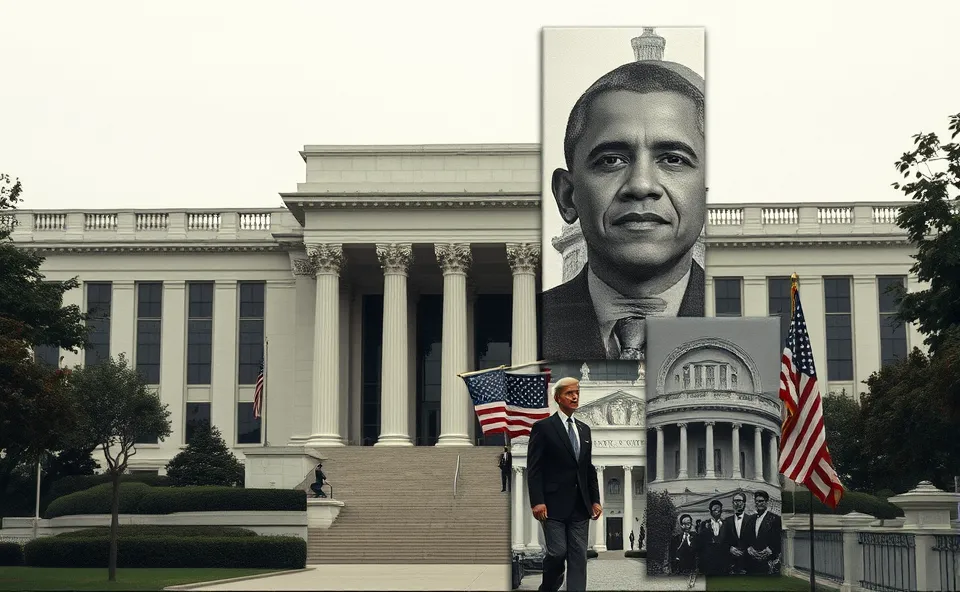
So, why are we seeing such a massive spike in interest regarding the past? Much of this triggered by the ongoing development of the Obama presidential library. As the plans for this site move forward, it acts as a physical and mental anchor for people who feel a sense of political nostalgia. It serves as a reminder of an era that feels distinct from what followed.
It is not just about one leader, though. It is about the feeling of the era. People are searching for that time because the current environment feels fractured. When people are stressed by rapid changes in technology, the economy, and global events, they naturally look for a period that felt more predictable. They are essentially looking for an anchor in a storm. They believe that if we could just find our way back to the way things were before, the friction and the anger would simply evaporate. However, nostalgia often glosses over the very real tensions that existed long before the political climate shifted.
The Reality of Our Historical Perspective
To understand the current appetite for pre-trumpian politics, we have to look at what actually came before. For many, the years between 2008 and 2016 feel like a time when the rules of the game were clear. You had traditional party platforms, a relatively predictable media cycle, and a sense that institutions were generally moving in a steady direction.
But if you look at the historical perspective, you realize that the foundation for our current era was actually being laid during those years. The rise of social media, the changing nature of the global economy, and the widening divide in how different communities experience life in America were all brewing under the surface. The transition from one political era to the next was not a sudden explosion, but rather the result of long-term shifts in how we consume information and relate to our neighbors. We did not arrive at today overnight, and that means we cannot simply undo the current reality by wishing for the previous one.
What This Means for Our Future
From a business and societal standpoint, the obsession with the past creates a strange form of paralysis. When we spend our energy trying to reconstruct the past, we often miss the reality of the present. If you are a business leader or an investor, you have to operate in the world as it exists today, not the world you wish it was. The current political environment is defined by high volatility, decentralized information, and deep polarization. This is the new baseline.
The impact of this is profound. Technology has fundamentally changed how politics happens. We are no longer operating in an age of mass communication where everyone sees the same reality. Instead, we live in an era of hyper-niche influence. This means that the political future will likely be even more fragmented. Businesses that assume we are going to return to a standard, predictable environment are often the ones left behind. The companies that succeed are those that understand how to navigate a world where politics is personal, constant, and inescapable.
Navigating the Post Trump Political Landscape
So, where do we go from here? We are currently in the post-trump landscape, but it is better to think of this as a permanent evolution rather than a temporary detour. We are not heading back to the start of the 21st century. Instead, we are moving into a period where the old guard and the new reality are constantly colliding.
Expect to see more of the following in the coming years:
- Increased Decentralization: Traditional political power centers are losing influence to online communities and direct-to-audience platforms.
- Policy Uncertainty: Because the political landscape changes so rapidly, long-term policy predictability will remain low.
- Market Sensitivity: Businesses will continue to be pulled into political debates, whether they like it or not, because consumers expect brands to take a stand.
- Adaptive Strategies: Successful individuals and organizations will prioritize resilience over the desire for things to just go back to normal.
The smartest approach is to stop trying to force the future to look like the past. Instead, we should focus on building systems that can handle the current level of complexity. We need to get better at talking across lines, even when the environment makes it incredibly difficult. The future is not about returning to a specific era; it is about learning how to thrive in the one we have.
Common Questions About Our Political Future
What does the term pre-trumpian politics actually refer to?
It typically refers to the era of American politics before 2016, specifically the period encompassing the Obama administration, characterized by more traditional forms of campaigning, media engagement, and institutional norms.
Why is political nostalgia so common right now?
Many people feel overwhelmed by the current, fast-paced political landscape and the polarization of society. Looking back creates a sense of comfort and stability that feels missing in the present day.
Will we ever return to the political standards of the past?
It is highly unlikely. The way we consume information via social media and the way we interact with technology have fundamentally altered the mechanics of the political landscape. We have moved into a new era rather than a temporary phase.
How does the Obama presidential library influence this discussion?
The library serves as a tangible symbol of a previous time. It invites people to reflect on those years and, for many, acts as a trigger for comparison between the current political future and the accomplishments of the past.
What should we watch for in the post-trump political landscape?
Keep an eye on how technology continues to disrupt traditional institutions and how voters engage with digital platforms rather than mainstream media. The focus should be on how these shifts continue to redefine the American experience rather than waiting for a return to the past.











