

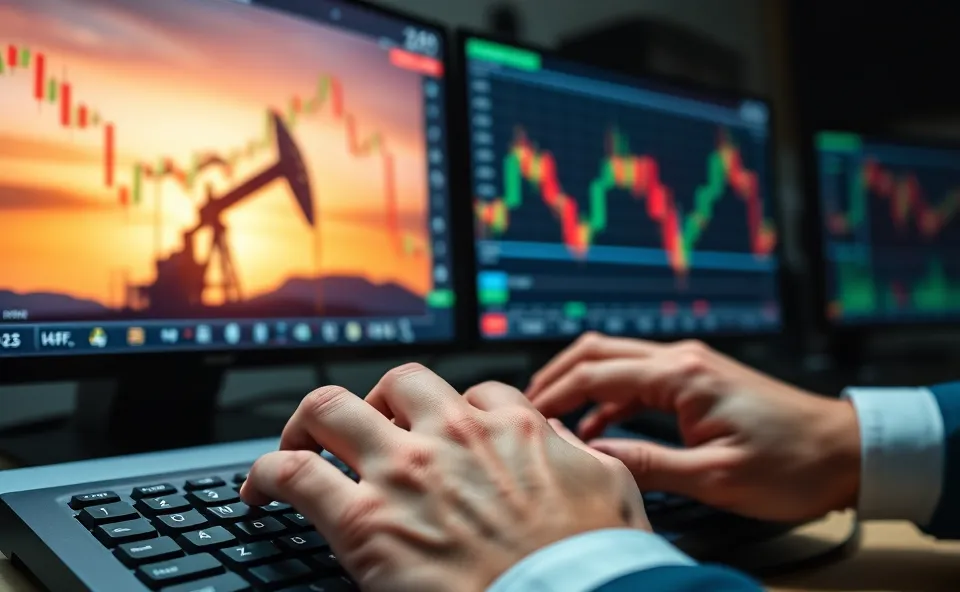
A new way to play the energy market
For a long time, the world of oil trading felt like a private club. If you wanted to trade crude oil futures, you usually needed a massive amount of capital and a seat at a very large table. Most of the action was driven by giant banks, massive hedge funds, and massive energy companies. If you were an individual investor with a few thousand dollars, the oil market was mostly something you watched on the news rather than something you actually participated in.
That is all starting to change. The CME Group recently introduced something that shifts the landscape quite a bit. They launched a new 10-barrel contract. To put that in perspective, the standard crude oil futures contracts are often much larger, sometimes involving 1,000 barrels. Moving from a massive contract to a tiny 10-barrel contract is like moving from buying a whole house to just buying a single brick. It makes the entry point much lower and much more accessible for the average person.
This move is a direct response to the changing face of finance. We are seeing a massive surge in retail traders oil market activity across many different sectors. People are no longer just trading tech stocks or crypto. They are looking for ways to hedge against inflation or simply catch the momentum of global events. By creating this smaller 10-barrel contract, the CME Group is essentially opening the doors to a whole new group of participants who were previously locked out due to the sheer size and cost of traditional contracts.
Why everyone is talking about small oil contracts
You might be wondering why this is suddenly a hot topic. The answer lies in how much the world is moving. We live in a time where news travels instantly, and a single headline about a shipping lane or a political decision can cause crude prices to swing wildly. Because these shifts happen so fast, people want to be able to react quickly. However, reacting to a massive, expensive contract is risky for someone who is not managing billions of dollars.
There are a few key reasons why this trend is gaining so much steam right now:
- Accessibility: The ability to trade smaller amounts means you do not need a huge bank account to get started in commodity trading.
- Risk Management: Smaller contracts allow people to test the waters. You can learn how the energy market moves without risking your entire life savings on a single trade.
- Global Uncertainty: With constant news about supply chains and geopolitical impact, oil has become one of the most watched commodities in the world.
- Digital Evolution: Modern trading platforms have made it incredibly easy to execute trades from a smartphone. This makes the 10-barrel contract a perfect fit for the mobile-first generation.
When people see the volatility in the news, they want to know if they can participate. The 10-barrel contract gives them a way to do that without the overwhelming financial barrier that used to exist. It turns a complex, institutional game into something that feels much more relatable to the modern individual investor.
The history of the big players and the small gap
To understand why this is such a big deal, we have to look at how things used to work. Historically, the energy market was built for scale. When you deal with millions of barrels of oil, the math works differently. The big institutions were looking for liquidity and stability in massive blocks. They were not looking to trade ten barrels at a time. Because of this, the tools available were designed specifically for their needs.
As trading technology improved, we saw a massive shift in how people interact with the markets. First, it was the big hedge funds using high-speed algorithms. Then, it was the rise of the day traders using professional software. Eventually, it reached the retail crowd through standard stock brokerage apps. The stock market became democratized, but the commodity market lagged behind. It remained a place where the “small guy” could watch, but rarely play.
The gap between the institutional world and the retail world was wide. You had these massive price swings driven by global events, but the average person had no way to benefit from those moves or even protect themselves from them. The introduction of smaller futures contracts by the CME Group is essentially the final piece of that democratization puzzle. It bridges the gap between the massive scale of global energy production and the individual scale of a person managing their own portfolio.
How this changes the game for the markets
When you add more people to a market, things change. This is not just about people making money or losing money; it is about how the market itself functions. The rise of retail traders oil market activity brings several important implications for crude prices and market behavior.
First, let’s talk about liquidity. In simple terms, liquidity is how easy it is to buy or sell something without causing a massive price jump. By bringing in thousands of smaller traders, you increase the number of people constantly buying and selling. This can lead to a more active and fluid market. However, it is a double-edged sword.
The second major implication is market volatility. Retail traders often have different motivations than large banks. While a bank might be trading oil to hedge a massive shipping business, a retail trader might be trading based on a social media trend or a sudden news break. When a large number of small traders all try to move in the same direction at the same time, it can create sharp, sudden movements in crude prices. This can make the market more exciting, but it also makes it more unpredictable.
For businesses and technology providers, this is a massive opportunity. Trading platforms are now racing to integrate these smaller contracts so their users can access them easily. We are seeing a shift where the software itself is becoming more intuitive, moving away from complex terminal screens toward cleaner, more user-friendly interfaces that can handle the fast-paced nature of commodity trading.
What to expect as the market evolves
Looking ahead, it is unlikely that we will see a return to the old way of doing things. The genie is out of the bottle. As the 10-barrel contract becomes more common, we will likely see a broader trend of “fractionalization” in the energy market. This means we might see even more specialized and smaller contracts for different types of energy, such as natural gas or even renewable energy credits.
We can also expect the technology behind these trades to get even smarter. As more individual investors enter the fray, the tools used to analyze geopolitical impact and supply data will become more sophisticated and more accessible. We might see AI-driven tools that help retail traders understand how a specific event in one part of the world might ripple through the crude oil futures market.
While the market will certainly become more crowded, it will also become more diverse. The goal is not to replace the big banks, but to add a new layer of activity that makes the entire energy market more robust and more connected to the everyday economy. The era of the “big only” oil market is ending, and the era of the inclusive energy market is beginning.
Common questions about the new oil trading landscape
How does the 10-barrel contract help retail traders oil market participation?
The 10-barrel contract lowers the financial barrier to entry. Because the contract size is so much smaller than traditional ones, individual investors do not need as much capital to open a position. This allows them to participate in the energy market with much lower risk to their total account balance.
Why is CME Group introducing smaller crude oil futures?
The CME Group is responding to the massive growth in retail trading. By offering smaller contracts, they are tapping into a huge new demographic of investors who want to trade commodities but found previous contracts too expensive or too risky for their specific needs.
Can small contracts lead to higher market volatility in crude prices?
It is possible. Because retail traders often react quickly to news and social media, a large group of small traders moving at once can create sudden price swings. This adds a new layer of movement to the energy market that was not as present when only large institutions were trading.
What kind of geopolitical impact should traders watch for?
Since oil is a global commodity, any event that affects supply or demand will move the market. This includes decisions by oil-producing nations, conflicts in key energy regions, and changes in international shipping routes. These events are the primary drivers of movement in the crude oil futures market.
Do I need special software for commodity trading?
While professional traders use high-end terminals, most modern trading platforms are designed to be very user-friendly. Many standard brokerage apps now allow access to various futures contracts, making it easier for individual investors to navigate the energy market without needing a degree in finance.











