

A quiet shift in the world of microtasks
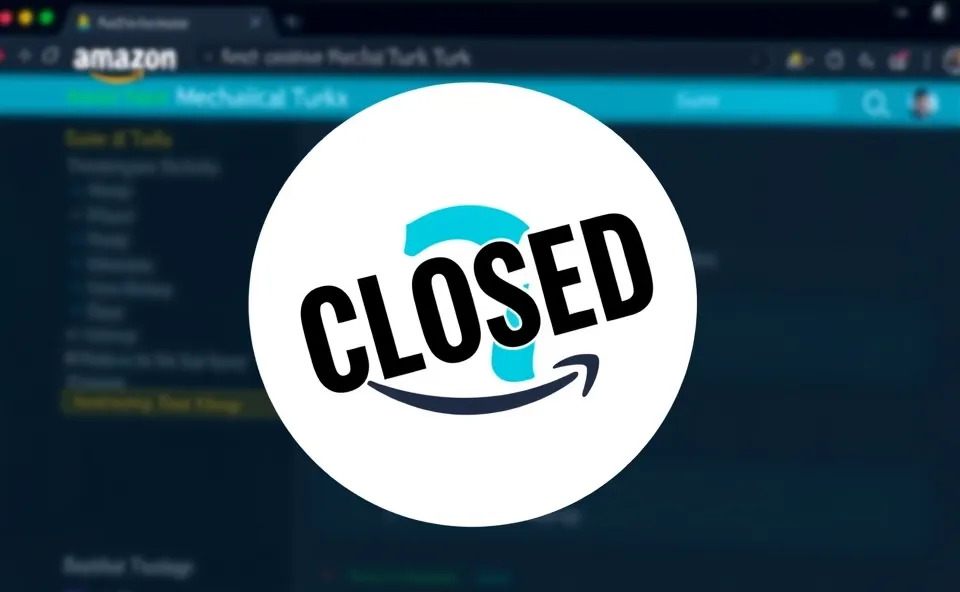
If you have spent any time navigating the landscape of digital labor over the last fifteen years, you are likely familiar with Amazon Mechanical Turk. It has long been the go to spot for businesses looking to outsource small, repetitive tasks that computers struggle with, and for people looking to earn a little extra money on the side. Recently, however, things changed. Amazon quietly stopped accepting new customers onto the platform. This means that if a business did not already have an account, they are officially out of luck.
This decision might seem like a small administrative update on the surface, but it signals a massive shift in how the tech giant views its suite of Amazon services. For a platform that helped pioneer the concept of the modern gig economy, closing the door to new business feels like a significant turning point. It is not exactly a total shutdown, but it is certainly a sign that the service is no longer a core focus for the company.
Why everyone is talking about this change now
The sudden move has caught many by surprise, leading to a spike in interest across professional networks and tech forums. People are wondering why a service that once acted as the backbone for countless data collection projects would suddenly stop growth. Much of this conversation stems from the rise of artificial intelligence. In the past, companies used MTurk to have humans identify images, transcribe audio, or sort data to train early machine learning models.
Now, as sophisticated AI models become the standard, the way we handle data has evolved. Businesses are looking for different types of support, and they are moving toward specialized platforms that offer more automation or niche expertise. The chatter around this topic is driven by a mix of confusion and realization. Users who relied on the platform to get their projects off the ground are now scrambling to find alternatives, while researchers are debating the future of crowdsourcing in an era where AI can do a lot of the heavy lifting alone.
The legacy of the digital workbench
To understand why this move feels so heavy, we have to look back at what Amazon Mechanical Turk actually achieved. When it launched back in 2005, it was revolutionary. It introduced a way to break massive, complex projects into tiny, manageable microtasks that anyone with an internet connection could complete. It essentially created a marketplace for human intelligence.
For nearly two decades, the platform served as a bridge. Companies could upload a batch of work, and thousands of workers around the globe would log in to complete those bits of work for a small fee. It was the original digital gig economy. It powered academic studies, helped build search engines, and gave individuals a flexible way to earn money during their downtime. Because it was so accessible, it became the default choice for anyone needing human-in-the-loop services at scale.
The ripple effect on workers and businesses
The impact of this service closure is being felt on both sides of the screen. For businesses, the loss of access means they have to pivot. If you were a startup planning to use the platform to clean your data sets, you are now forced to explore more expensive or less established alternatives. This shift likely pushes companies toward specialized AI vendors or private labeling firms that offer more control and higher quality standards than a public marketplace.
For the workers, the news brings a sense of uncertainty. While existing accounts remain active for now, the lack of new customers means the pool of available work will likely stagnate or shrink over time. The gig economy relies on constant growth and new demand to keep the system healthy. When you cap the number of companies using the service, the flow of tasks inevitably slows down. This highlights the vulnerability of digital labor, where your primary source of income is tied to a platform that can change its entire business model overnight.
Where the industry goes from here
Looking ahead, it is unlikely that this is the end of crowdsourcing, but it is definitely the end of an era for the platform. The demand for human insight has not gone away; in fact, it is higher than ever. Modern AI models are only as good as the data they are fed, and human verification remains the gold standard for accuracy. However, the industry is moving away from generic, large scale platforms and toward boutique services.
We are entering a phase where quality matters more than speed. Future crowdsourcing will likely be more managed, with companies preferring smaller, dedicated teams of workers who understand specific subject matter rather than an anonymous crowd. Amazon is essentially clearing the deck to focus on its higher margin cloud and AI infrastructure businesses. While it is a tough pill to swallow for those who built their workflows around MTurk, it is a logical step for a company that is increasingly prioritizing specialized AI tools over general crowdsourced labor.
Answers to common questions
What does the limit on new customers mean for Amazon Mechanical Turk?
It means that if you did not have an account set up as a customer before the change, you cannot sign up to post new tasks. The platform is essentially closing off new business growth, even though it continues to function for existing users.
Is this the start of a total platform shutdown for MTurk?
While Amazon has not officially announced a final sunset date, the restriction on new customers is a strong indicator that the service is being phased out of the company’s long term strategy for its core Amazon services.
How will this affect the gig economy and microtasks?
The gig economy for digital microtasks will likely become more fragmented. Instead of one massive site like MTurk, companies will turn to niche platforms that provide more specialized, verified, and high quality human labor.
Are workers still able to earn money on the platform?
Yes, for the time being, existing accounts are still active. However, because no new customers can enter the platform to post new jobs, the long term availability of tasks for workers is expected to decrease over time.
Why are businesses looking for alternatives to MTurk?
Many businesses are moving toward specialized services that offer better data quality, higher security, and more direct management of their workforce. As AI technology advances, the requirements for data labeling have become more complex, requiring more skill than standard microtasks often provide.











