

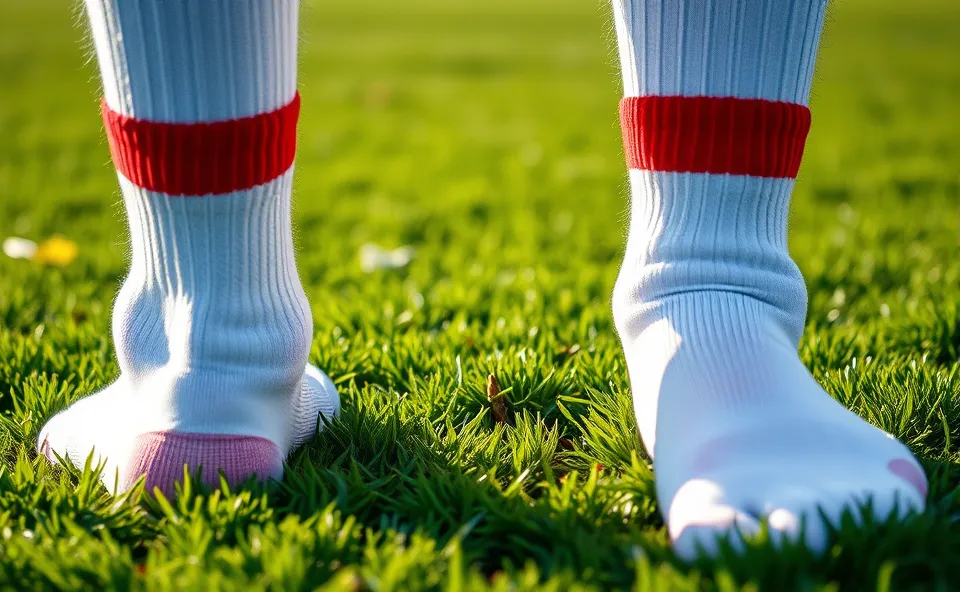
A strange new look on the pitch
If you have been watching elite football matches lately, you might have noticed something odd about the players. Look down at their calves, and you will see holes, jagged edges, or even sections completely missing from their socks. It looks like they had a rough game or perhaps a minor wardrobe malfunction. However, this is not a mistake or a sign of poor equipment quality. It is a deliberate choice made by some of the best athletes in the world.
Players are intentionally cutting their socks to change how their gear fits. By slicing through the fabric, they are modifying a standardized piece of clothing to suit their individual needs. This trend has moved from the training grounds of private clubs to the global stage, leaving fans and casual viewers wondering why professional athletes would ruin perfectly good kit before a match.
The hunt for comfort in a high pressure game
The curiosity around why soccer players cut their socks has exploded as we head toward the World Cup 2026. Fans see their favorite stars on television and immediately jump online to figure out what is happening. It has become a hot topic of conversation because it challenges the traditional image of the uniformed footballer. In a world where every detail of a player’s performance is monitored, this DIY approach to equipment feels like a rebellion against the strict standards of professional kits.
As the biggest tournament in the sport approaches, sports science and fan interest are colliding. People want to know if this is just a fashion statement or if there is a real scientific advantage. When you watch a match, it is easy to spot these modifications, and the visual curiosity is driving the search for answers. Everyone wants to know if their own gear can be improved by following the habits of these pros.
The science behind the scissors
To understand why soccer players cut their socks, we have to look at the biomechanics of soccer. Modern professional socks are often made from thick, tight synthetic materials designed to keep shin guards firmly in place. While this is great for protection, it can be a nightmare for circulation and muscle comfort.
The calf muscle is a powerhouse. During a ninety minute match, it swells as blood pumps through it. If a sock is too tight, it creates significant pressure on the calf. Players often feel that this tightness restricts their movement or even leads to cramping. By cutting the socks, players can relieve that pressure while still keeping their shin guards in place. They usually cut the lower part of the sock off entirely and wear a separate, breathable grip sock underneath. This combination allows for a customized fit that standard, mass produced gear simply cannot provide.
It is all about player perception. If a player feels restricted, their confidence drops. By modifying their kit, they feel more agile and in control of their body. It is a simple hack, but for an athlete playing at the highest intensity, even a tiny change in comfort can lead to better focus on the game.
How this trend changes the game for gear manufacturers
The impact of this trend goes beyond just a few players with scissors. It is sending a clear message to the companies that manufacture football player gear. For years, brands have focused on high compression and sleek aesthetics, but athletes are now demanding more flexibility and personalization.
We are seeing a shift in how sports brands approach athletic sock cutting. Some companies have started to produce sleeves that mimic the look and function of cut socks. They are realizing that if their professional clients are taking scissors to their products, then the product design itself needs to evolve. This is forcing a rethink in the sports technology industry. It is no longer enough to make a garment that fits everyone; the future of sports apparel lies in modular design.
Businesses that can offer breathable, high performance gear that allows for muscle expansion without losing the necessary grip are going to win the market. This shift shows how player habits are driving innovation in ways that traditional research and development departments might have missed. It is a classic case of the user finding a better way to use a tool than the creator intended.
Looking ahead to the next big tournament
As we look toward the future, we can expect to see more customization in professional sports. The days of rigid, one size fits all uniforms are numbered. The biomechanics of soccer are becoming better understood every day, and players are becoming more empowered to demand equipment that fits their specific physiological needs.
In the coming seasons, especially during the World Cup 2026, we will likely see fewer players using actual scissors and more players using specialized, modular gear designed to give them the same benefits. Brands will likely lean into this aesthetic, creating products that offer the compression where it is needed and breathability where it is not. The jagged, cut-up look might eventually disappear, replaced by sleek, engineered versions of the same concept. The goal remains the same: maximizing performance by removing any friction between the player and their equipment.
Common questions about player gear
Why soccer players cut their socks during matches?
Players cut their socks to reduce pressure on their calf muscles. Professional socks are often very tight to hold shin guards in place, which can restrict blood flow and lead to discomfort or cramping during intense matches.
Is athletic sock cutting allowed under official rules?
While there are rules about the color and appearance of team kits, most leagues allow players to modify their socks as long as the color matches the rest of the team’s uniform. It is a common practice at the professional level.
How does the biomechanics of soccer relate to gear choice?
The biomechanics of soccer involve constant movement and muscle engagement. As calf muscles swell during a game, tight gear can become restrictive. Players use custom gear choices to maintain comfort and agility throughout the match.
What are the benefits of using grip socks instead of standard ones?
Grip socks provide better traction inside the boot, which prevents the foot from sliding. When paired with cut-off team socks, players get the benefit of a professional uniform look combined with the superior grip and comfort of modern athletic technology.
Will we see this trend continue at the World Cup 2026?
Yes, the trend is expected to continue as more players prioritize comfort and performance. You will likely see many athletes at the World Cup 2026 using specialized, modular sock designs that mimic the benefits of the DIY cut socks popularized by players today.











