

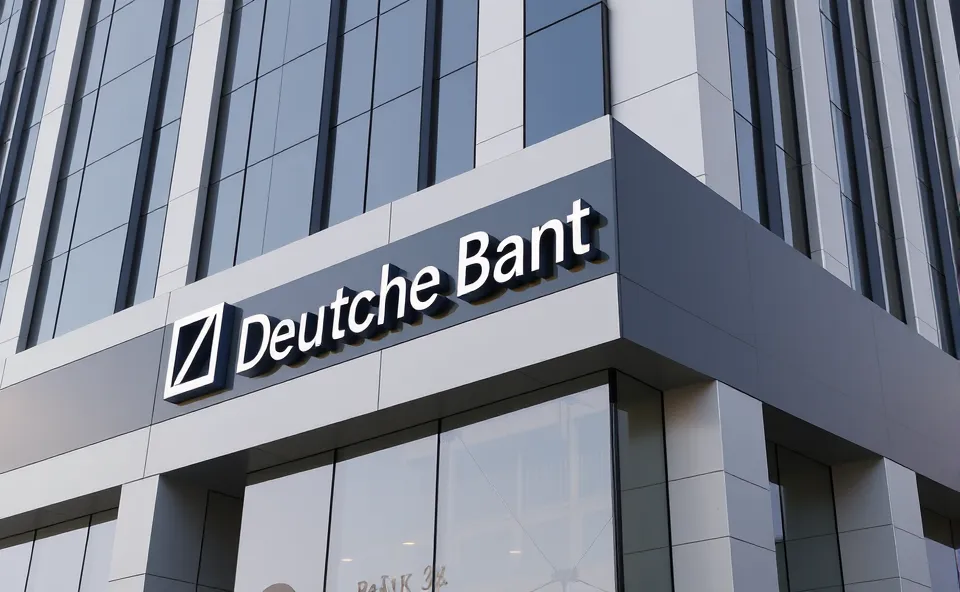
A Big Move for Deutsche Bank in the Middle East
You might have noticed a shift in how global money moves lately. One of the biggest updates in the financial world is that Deutsche Bank has officially secured a regional headquarters license in Saudi Arabia. If that sounds like a lot of corporate speak, let me break it down simply. Basically, the bank has received the legal green light to set up its main base of operations for the region right in the heart of the Kingdom.
This is not just about opening another branch or hiring a few more people in a new city. A regional headquarters license is a strategic tool. It means Deutsche Bank is positioning itself to manage its Middle East expansion from Riyadh. Instead of running things from a distant city or a different country, they are planting their flag firmly in the Kingdom of Saudi Arabia. This allows them to be closer to the decision makers, the biggest projects, and the fastest growing markets in the area.
When a massive player in international banking makes a move like this, it is usually a signal. It tells us that they see a massive opportunity for growth and that they are willing to commit their resources to capture it. For the bank, it is about efficiency and access. For the region, it is a vote of confidence in the local economy.
Why Everyone is Talking About This Right Now
You might wonder why this specific news is trending. After all, banks open offices all the time. But this is different because of the timing and the specific rules of the game in the region. The Kingdom of Saudi Arabia has been very clear about its goals. They want to move away from being an economy that only relies on oil and instead become a global hub for business and financial services.
To make this happen, the government introduced a program that encourages foreign companies to move their regional headquarters to the country. Here is the catch: the government has indicated that companies without a regional HQ in the Kingdom might find it harder to win government contracts. Since the government is the biggest spender in the country, this is a huge incentive.
People are searching for this news because it shows that the strategy is working. When a giant like Deutsche Bank jumps on board, it creates a ripple effect. Other companies start asking, “If they are moving, should we move too?” It turns a theoretical plan into a real trend. It is no longer just a government goal; it is a business reality.
The Road That Led to This Decision
To understand why this is happening, we have to look at the bigger picture. For decades, most international banks operated in the Middle East through a hub and spoke model. They would have a massive office in a place like Dubai or London and then run smaller satellite offices in other cities. This worked for a while, but the landscape is changing.
The Kingdom of Saudi Arabia launched Vision 2030, which is essentially a massive blueprint to modernize the entire country. They are building futuristic cities, investing in tourism, and diversifying their industries. This has created a sudden and huge demand for corporate finance and investment banking.
In the past, a bank might have handled a Saudi project from an office in another country. But as projects become more complex and the volume of work increases, being physically present becomes a competitive advantage. Deutsche Bank has always had a presence in the region, but moving to a formal regional headquarters model is a step up. It shows they are shifting from being a visitor to being a permanent resident in the Saudi business ecosystem.
How This Changes the Financial Game
So, what does this actually mean for the markets and the people involved? The impact is felt in a few different ways.
First, it boosts the local financial services sector. When a major international bank sets up shop, they don’t just bring money; they bring expertise. They bring global standards of investment banking and a network of international clients. This helps local businesses get better access to global capital and more sophisticated financial advice.
Second, it creates a huge opportunity for talent. A regional headquarters requires high level executives, analysts, and support staff. This means more high paying jobs for locals and an influx of international experts who will share their knowledge with the local workforce.
Third, it streamlines corporate finance for the projects within the Kingdom. Whether it is a new infrastructure project or a tech startup, having a major bank on the ground makes it easier to arrange funding, manage risk, and execute large scale deals. Here are some of the primary areas where we will see the impact:
- Faster Deal Execution: Being in the same time zone and city as the clients makes everything move quicker.
- Stronger Relationships: Business in the Middle East is often built on trust and face to face interaction.
- Market Stability: More international banks mean a more liquid and stable financial market.
- Diversification: It helps the Kingdom move its money into new, non oil sectors more effectively.
Where the Money is Heading Next
Looking ahead, we can expect this to be the start of a larger wave. Deutsche Bank is a bellwether. When they move, others usually follow. We will likely see more European and American banks seeking similar licenses to ensure they don’t lose their edge in the region.
We can also expect to see a tighter integration between traditional international banking and the rising fintech scene in Saudi Arabia. The Kingdom is investing heavily in digital payments and banking technology. A physical headquarters gives a bank a perfect vantage point to partner with local tech firms and innovate.
Logically, the next step will be a deeper dive into specialized services. We will probably see an increase in green finance and sustainable investment banking as the Kingdom pushes for more eco friendly urban developments. The goal is not just to have a bank in the city, but to have a bank that is deeply woven into the fabric of the national economic strategy.
Common Questions About This Expansion
Why did Deutsche Bank choose Saudi Arabia for a regional headquarters?
The move is primarily driven by the Kingdom’s Vision 2030 and the government’s requirement for foreign firms to have a local HQ to secure government contracts. It also allows the bank to be closer to the massive growth happening in the Saudi economy.
What is the difference between a branch and a regional headquarters?
A branch typically handles local transactions and client services. A regional headquarters, however, is the nerve center for an entire area. It handles strategy, management, and high level decision making for multiple markets in the Middle East.
How does this affect investment banking in the region?
It increases the availability of global expertise and capital. With Deutsche Bank operating from within the Kingdom, local companies can more easily access investment banking tools to grow their businesses or go public on the stock market.
Will this move help with corporate finance for local businesses?
Yes. Having a major player in corporate finance based locally means better access to loans, better structuring of debt, and more opportunities for local firms to connect with international investors.
Is this part of a larger trend for international banking?
Absolutely. Many global firms are realizing that the Kingdom of Saudi Arabia is no longer just an oil producer but a major economic hub. This move is part of a broader trend where global companies are shifting their focus toward the Middle East to capture new growth.











