

The New Reality of Robotic Support in Eastern Europe
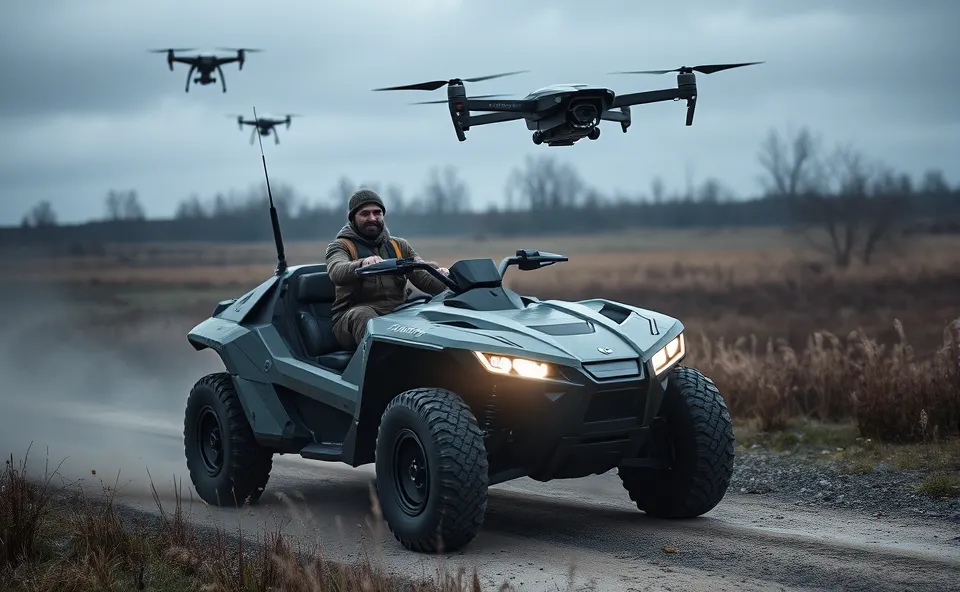
The modern battlefield is changing faster than many experts ever predicted. Recently, the defense tech firm Forterra made headlines by deploying over 100 autonomous vehicles into Ukraine. These are not massive tanks or flashy fighter jets, but rugged, self-driving ATVs designed to handle the most difficult terrain imaginable. By taking over dangerous supply routes and evacuation missions, these machines are doing work that was previously left to human soldiers, effectively changing how ground vehicles operate in active conflict zones.
Forterra developed these systems to navigate environments where GPS might be jammed or blocked. Using a sophisticated sensor suite, these ATVs move independently, reacting to obstacles and choosing paths in real time. This deployment marks one of the most significant real-world tests for AI in warfare. It shows that autonomous systems are no longer just concepts for the future, but practical tools that are helping people on the ground today.
Why Everyone Is Talking About Autonomous Tech Right Now
There is a massive surge in interest regarding autonomous vehicles in Ukraine for a few specific reasons. First, the war has become a proving ground for new technology. People are watching because they want to know how well these robots actually perform when the stakes are high. It is one thing to run a test on a smooth, controlled track in a desert, but it is entirely different to operate in muddy, crater-filled, and dangerous regions where mistakes could be costly.
Furthermore, the global conversation around defense innovation has shifted. Nations are realizing that having human-operated gear is not always the best strategy for high-risk logistics. When a vehicle breaks down or gets hit in a hot zone, you do not want to send more people into harm’s way to fix it or recover supplies. By automating the most repetitive and hazardous tasks, militaries can keep their personnel safer and more focused on complex decision-making rather than simple transportation.
The Evolution of Remote Ground Operations
To understand why Forterra’s work is so important, we have to look back at how we reached this point. For years, ground vehicles used by militaries were almost exclusively driven by humans. Remote control systems existed, but they were clunky and often required a constant, stable signal to function. If a signal dropped, the vehicle was essentially a brick.
Forterra shifted the paradigm by focusing on autonomy rather than just remote control. Instead of needing a pilot to steer every turn, the vehicle acts like a self-driving car that can “see” the world around it. This is a massive leap forward. Years of research into robotics and computer vision have finally trickled down into hardware that is durable enough to survive the rough conditions of Eastern Europe. The goal was never to replace human soldiers, but to provide a layer of support that doesn’t need to eat, sleep, or worry about its own safety.
What This Means for the Future of Technology
The impact of this deployment goes well beyond the current situation in the region. We are witnessing a fundamental shift in how supply chains work in extreme environments. Businesses and defense agencies are watching these ATVs closely because they represent a blueprint for the future of robotics. If these machines can handle the chaos of a conflict zone, they can certainly handle dangerous mining, forestry, or search-and-rescue operations in other parts of the world.
Here are a few ways this technology is reshaping the industry:
- Reduced Risk: Moving supplies through contested areas without a driver minimizes the chance of losing human lives during logistics missions.
- Increased Efficiency: Autonomous systems can operate around the clock without getting tired, ensuring that medicine, food, and ammunition get where they are needed faster.
- Better Data: These vehicles serve as mobile sensors, gathering data about the terrain that can help inform better strategies and safer routes for other units.
- Scalability: With over 100 units already in the field, we are proving that these systems can be produced and deployed at scale, not just as prototypes.
Where Do We Go From Here
Looking ahead, it is clear that AI in warfare will continue to move toward higher levels of independence. We are likely to see more collaboration between autonomous ground vehicles and aerial drones, creating a “smart” network that shares information about the battlefield. The next phase will likely focus on improving battery life and increasing the speed at which these vehicles process complex scenarios.
However, the future is not about robots fighting wars on their own. It is about building a better partnership between human judgment and robotic endurance. As the technology matures, we will likely see these systems used in humanitarian relief efforts, bringing aid to disaster zones where roads have been destroyed or areas are deemed too risky for rescue workers. The lessons learned in Ukraine are paving the way for a safer, more efficient way to move through difficult places.
Common Questions About Robotic Defense Systems
How are autonomous vehicles helping in the conflict in Ukraine?
These autonomous vehicles are primarily used for logistics. They deliver food, water, medical supplies, and ammunition to front-line positions. By using self-driving ATVs, military units can avoid putting drivers at risk during these dangerous supply runs.
What makes Forterra’s technology different from other ground vehicles?
Forterra focuses on high-level autonomy. Unlike simple remote-controlled cars, these ground vehicles can navigate complex, unknown, and changing environments on their own. This allows them to function even when communication signals are jammed, which is a common challenge in modern conflict zones.
Are these robots used for direct combat?
No, the current deployment of these autonomous ATVs is focused on logistics and support roles. They are designed to improve efficiency and safety for soldiers by handling the heavy lifting and dangerous transit tasks, rather than participating in direct tactical combat.
Why is defense innovation moving toward robotics so quickly?
Defense innovation is accelerating because technology has finally become reliable and affordable enough to deploy at scale. As countries see the tactical advantages of keeping soldiers away from the most dangerous tasks, the demand for smart, rugged robotics in conflict zones has grown exponentially.
What is the biggest challenge for AI in warfare today?
The biggest challenge is reliability in unpredictable environments. Navigating a standard road is easy for AI, but navigating a battlefield filled with rubble, craters, and changing weather is extremely difficult. The progress made by firms like Forterra is proving that these systems can handle the chaotic nature of the real world, not just a lab environment.











