

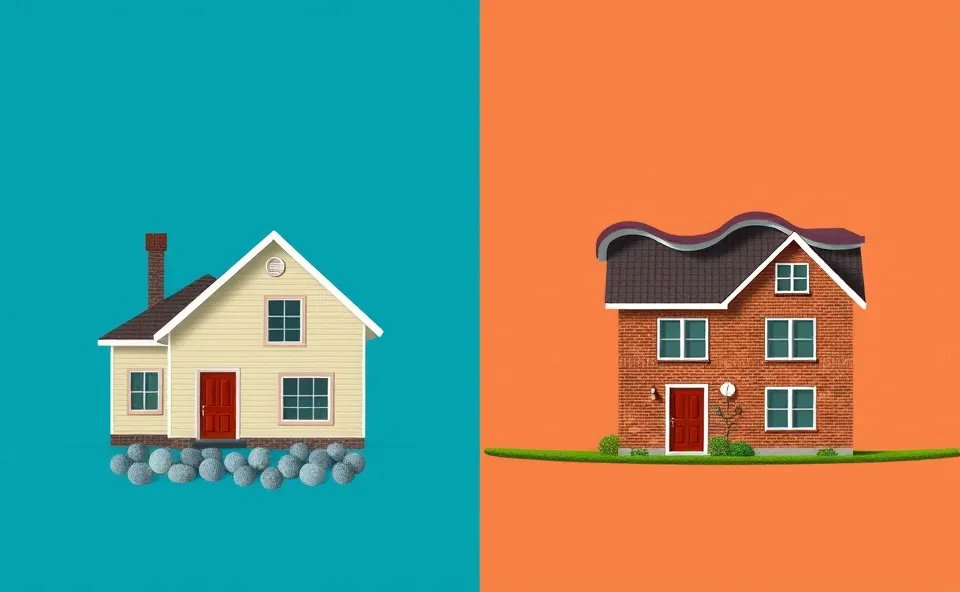
Thinking about buying a home? That’s exciting! One of the biggest decisions you’ll make is choosing the right mortgage. It’s not just about the amount you borrow; it’s about how you pay it back over many years. Two of the most common mortgage types are fixed-rate mortgages and adjustable-rate mortgages. Let’s break down what these mean, so you can figure out which one might be your perfect match.
Unpacking the Mortgage Basics: Fixed vs. Adjustable
At its core, a mortgage is just a loan to buy property. The main difference between a fixed-rate mortgage and an adjustable-rate mortgage lies in how your interest rate behaves over the life of the loan.
With a fixed-rate mortgage, the interest rate you lock in when you first get the loan stays exactly the same for the entire loan term, usually 15 or 30 years. This means your principal and interest payment will never change. It’s like setting it and forgetting it when it comes to that part of your monthly bill.
An adjustable-rate mortgage, often called an ARM, is a bit different. It usually starts with an introductory interest rate that’s fixed for a set period, like 5, 7, or 10 years. After that initial period, the interest rate can change periodically, usually once a year, based on market conditions. This means your mortgage payment can go up or down.
Why the Buzz Around Mortgage Types Now?
You’re probably hearing a lot about mortgage types because interest rates have been doing their dance. When interest rates are high, many people start looking for ways to potentially lower their monthly payments, making adjustable-rate mortgages seem more appealing for their initial lower rates. On the flip side, when rates are expected to go down, or when stability is paramount, the predictability of a fixed-rate mortgage shines. Homebuyers are always trying to get the best deal and the most stable financial future, so understanding these loan options is top of mind.
A Little History: How We Got Here
Mortgages have been around for centuries, but the specific structures we see today really took shape in the 20th century. The fixed-rate mortgage became a standard, especially in the United States, offering a sense of security and predictability that was attractive to homeowners. ARMs emerged as a way for lenders to manage the risk of rising interest rates. If rates went up, their earnings would too, and if they went down, they could adjust. Over time, different variations of both fixed-rate and adjustable-rate mortgages have been developed to cater to a wider range of borrower needs and market conditions.
What This Means for Your Home Buying Journey
Choosing between a fixed-rate mortgage and an adjustable-rate mortgage has a significant impact on your budget and your financial peace of mind.
The Perks and Pitfalls of a Fixed-Rate Mortgage:
- Pros: Predictability is the king here. You know exactly what your principal and interest payment will be every single month for the entire life of the loan. This makes budgeting much simpler and shields you from potential interest rate hikes. It’s a great choice if you plan to stay in your home for a long time and value stability.
- Cons: Typically, the initial interest rate on a fixed-rate mortgage is slightly higher than the introductory rate on an ARM. This means your initial monthly payments might be a bit higher. If interest rates drop significantly after you’ve locked in your rate, you might need to refinance to take advantage of the lower rates, which involves closing costs.
The Upsides and Downsides of an Adjustable-Rate Mortgage:
- Pros: ARMs often come with a lower initial interest rate and therefore a lower initial mortgage payment. This can be very attractive if you’re looking to maximize your buying power or if you plan to sell or refinance before the initial fixed-rate period ends. It can also be beneficial if you expect interest rates to fall in the future.
- Cons: The big unknown is the future. After the fixed period, your interest rate can increase, leading to higher monthly mortgage payments. This could strain your budget if you haven’t planned for it. There are usually caps on how much the interest rate can increase per adjustment period and over the life of the loan, but payments can still become significantly higher than what you’re used to.
So, who is each type best for?
Ideal Scenarios for a Fixed-Rate Mortgage
A fixed-rate mortgage is generally a fantastic choice if:
- You plan to stay in your home for many years, possibly for the entire duration of the loan.
- You prefer the certainty of a predictable monthly payment for easy budgeting.
- You are concerned about interest rates potentially rising in the future.
- You value financial stability and want to avoid any surprises in your mortgage payment.
When an Adjustable-Rate Mortgage Might Make Sense
An adjustable-rate mortgage could be a good fit if:
- You plan to move or sell your home before the initial fixed-rate period ends.
- You anticipate interest rates will decrease in the future and you might want to refinance.
- You can comfortably afford potentially higher mortgage payments if interest rates rise.
- You are looking for a lower initial monthly payment to help with upfront home buying costs or to afford a slightly more expensive home.
It’s also important to remember that your mortgage calculator is your friend when comparing these options. Inputting different interest rates and loan terms can give you a clearer picture of how your monthly mortgage payment might differ.
Looking Ahead: What’s Next for Mortgage Options?
The landscape of mortgage types is always evolving. We might see more hybrid products that blend features of both fixed and adjustable-rate mortgages, offering borrowers more tailored solutions. As technology advances, loan applications and approvals could become even more streamlined, making the process of securing a mortgage faster and more transparent. The focus will likely remain on providing homeowners with options that align with their financial goals and risk tolerance, especially as the economy continues to shift.
Frequently Asked Questions About Mortgages
Can I get a fixed-rate mortgage if interest rates are high?
Yes, you can always get a fixed-rate mortgage, regardless of current interest rate levels. However, if rates are high, the fixed rate you lock in will also be high, meaning your monthly mortgage payment will be higher compared to a period with lower rates. Some homeowners choose to lock in a higher fixed rate if they believe rates will rise even further in the future or if predictability is their top priority.
What happens if my adjustable-rate mortgage payment increases significantly?
If your adjustable-rate mortgage payment increases, it means your interest rate has gone up. This could affect your budget. Lenders often have caps on how much your rate can increase at each adjustment period and over the loan’s lifetime, but it’s crucial to understand these limits. If the increase makes your payments unaffordable, you might explore options like refinancing, though this often involves closing costs.
How do I compare fixed-rate mortgage and adjustable-rate mortgage options using a mortgage calculator?
When using a mortgage calculator, you can input the same loan amount and term for both a fixed-rate mortgage and an adjustable-rate mortgage. For the ARM, you’ll typically enter the initial fixed rate and then simulate potential future rate increases based on the adjustment caps. This allows you to see the difference in your monthly mortgage payment over time, helping you decide which loan option is best for your financial situation and risk tolerance.
Is refinancing a fixed-rate mortgage ever a good idea?
Refinancing a fixed-rate mortgage can be a good idea if interest rates have dropped significantly since you originally got your loan. By refinancing, you can get a new, lower fixed interest rate, which can reduce your monthly mortgage payment and the total interest paid over the life of the loan. However, remember that refinancing involves closing costs, so you’ll want to calculate if the savings outweigh these expenses.
What are the closing costs associated with different mortgage types?
Closing costs are fees paid at the end of a real estate transaction. For both fixed-rate and adjustable-rate mortgages, these costs can include things like appraisal fees, title insurance, loan origination fees, and attorney fees. The specific closing costs can vary, but they are generally separate from your down payment and loan option itself. It’s important to get a Loan Estimate from your lender, which breaks down all estimated closing costs for any loan options you consider.











