

The end of the kitchen chaos
If your kitchen counter looks anything like mine used to, it was buried under a mountain of paper. There were permission slips, sticky notes about soccer practice, dental appointment cards, and a massive wall calendar that nobody actually looked at. It felt like I was the only person in the house who knew what was happening on any given day. My kids would constantly ask me what was next, and I was constantly checking my phone to see if we had conflicting events. That is until I finally decided to upgrade our system with a Skylight calendar.
The transformation was almost instant. We replaced that clutter of paper with a sleek, interactive touchscreen calendar that sits right where everyone can see it. It is not just a screen. It is a central brain for our home that everyone can touch, read, and understand. By moving our schedule from private apps on our phones to a public, digital planner, we turned family organization into a shared activity instead of a chore that I managed alone.
Why parents are obsessed with this display
You might be wondering why everyone seems to be talking about this specific device lately. Search trends show that parents are tired of the digital divide. We all have smartphones, but those devices are silos. You check your calendar, I check mine, and we hope they sync up. The reason the Skylight calendar is blowing up is that it brings back the shared family experience of a wall calendar but adds the smart features we actually need.
Parents are realizing that modern life is too fast to rely on memory or scattered notebooks. When you put a shared calendar on the wall, it acts as a household hub. It bridges the gap between digital convenience and physical presence. People are tired of feeling disorganized, and they are searching for tools that actually lower their stress levels rather than adding more digital notifications to their already buzzing pockets.
How we survived before the screen
A few years ago, the options for family organization were binary. You either used a traditional paper calendar, which worked until you spilled coffee on it or someone forgot to write down a field trip, or you used a complicated app that required everyone to have a smartphone and a high level of digital discipline. Neither approach was perfect for kids who are too young for phones or for partners who just want a quick glance at the week.
For a long time, the only way to manage a home was to act as the family secretary. I spent my mornings giving updates to everyone. I was the keeper of the schedule. If I was out of the house, the system crumbled. The shift toward a dedicated smart home device changed the dynamic from me being the messenger to the house being the source of truth. It provided a level of transparency that we simply did not have before.
Building independence for the next generation
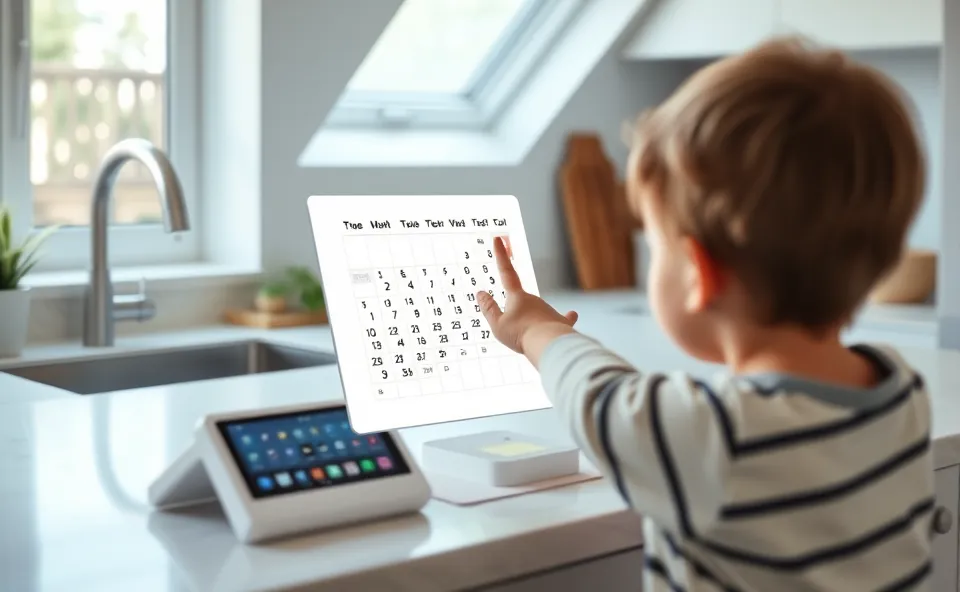
The most surprising outcome of installing this touchscreen calendar was how it changed my kids. At first, I thought it was just for me. I wanted to stop forgetting appointments. But I quickly realized that by making the schedule visible, I was giving my children a sense of agency. They can walk up to the screen, see what is happening after school, and know exactly what they need to prepare for.
When kids can see their own activities, they start to take ownership of their time. They see their piano lessons, their playdates, and their chores. This shift has massive benefits for family dynamics:
- Better time management: Kids learn to look ahead and prepare their bags or gear the night before.
- Reduced friction: There is no more guessing about what is happening on Saturday morning. It is all right there.
- Shared responsibility: Even younger kids who cannot read well yet can recognize the icons or the colors assigned to their activities.
- Less nagging: Because the information is visible, I do not have to be the one constantly reminding everyone of their commitments.
By treating them as active participants in the schedule, the household runs more like a team. They feel more in control of their lives, and I feel significantly less like an overworked air traffic controller.
The future of the connected home
As we move forward, the role of dedicated hardware in our homes is only going to grow. We have spent the last decade staring at small screens, but there is a clear trend toward ambient computing. This means technology that is there when you need it but stays in the background when you do not. A calendar that hangs on the wall is the perfect example of this.
I expect we will see these devices become even more integrated with other aspects of our lives. Imagine a calendar that talks to your grocery delivery app, your smart lights, and your home security system. The goal is to keep things simple. The future of family tech is not about adding more complexity; it is about creating a calm, transparent environment where every member of the family can participate. We are moving away from the era of information silos and toward a future of shared, accessible intelligence.
Common questions about smart scheduling
How does a Skylight calendar improve daily family organization?
It creates a central point of truth in your home. Instead of information being locked away on individual phones, a touchscreen calendar puts the schedule in a public space where every family member can see it, helping to keep everyone on the same page.
Can kids effectively use a digital calendar?
Absolutely. Because the interface is a touchscreen, it is intuitive for children. By visualizing their own family activities, kids start to understand time management and gain a sense of agency over their own schedules.
Is this smart home device easy to set up for non-tech users?
Yes, the setup is designed to be straightforward. Most users find that syncing their existing calendars, like Google or Outlook, takes only a few minutes. Once it is connected, the device updates automatically, so you do not have to mess with it again.
What makes a touchscreen calendar better than a mobile app?
A mobile app is personal and often ignored, while a wall-mounted touchscreen calendar is social and unavoidable. It becomes a shared household hub that requires no extra effort to check, making it much more effective for keeping a household running smoothly.
Does using a digital planner help with long-term planning?
It certainly does. By using a digital planner that is always visible, families can easily see the upcoming month at a glance. This helps in spotting conflicts early, planning vacations, or managing busy seasons without the stress of missing important dates.











