

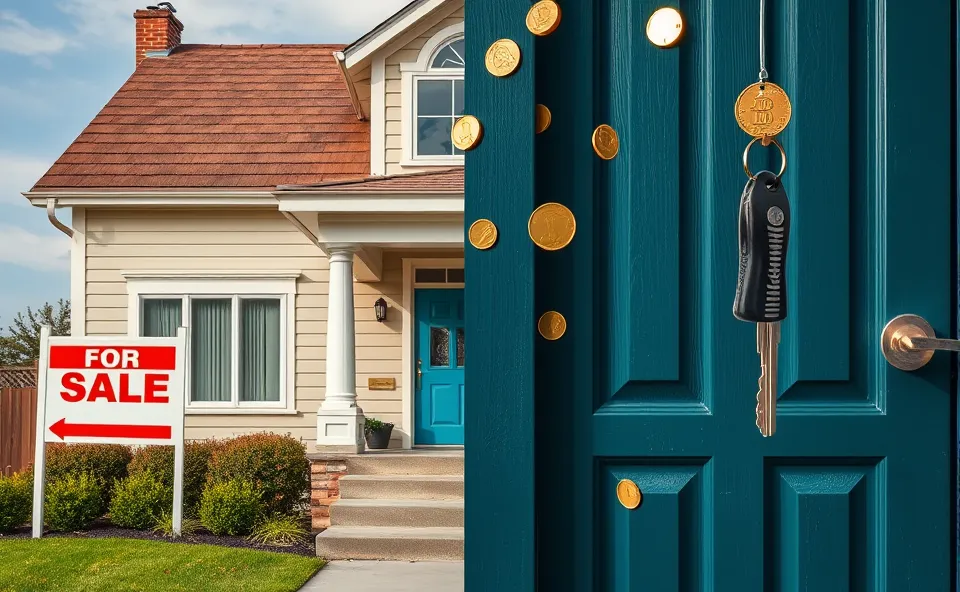
The Hidden Price of Choosing One Path Over Another
When most people think about the choice between renting vs buying, they focus on the monthly payment. They look at a mortgage payment and compare it to a monthly rent check. If the mortgage is cheaper, they buy. If the rent is lower, they stay put. But there is a silent factor that often changes the entire math of the equation. That factor is opportunity cost.
In simple terms, opportunity cost is the value of what you give up when you choose one option over another. It is not a bill you pay to a bank or a landlord. Instead, it is the potential gain you miss out on because your resources are tied up elsewhere. Think of it as the road not taken.
When you apply this to housing, the opportunity cost is usually tied to your cash. To buy a home, you typically need a significant down payment. If you put 50,000 dollars into a house, that money is now locked in the walls and the land. The opportunity cost of that 50,000 dollars is whatever that money could have earned if you had invested it in the stock market, a business, or a high yield savings account instead.
On the flip side, renting has its own opportunity cost. When you rent, you are not building equity. You are paying for a place to live, but you do not own the asset. The opportunity cost of renting is the potential growth in home value and the eventual ownership of a paid off property.
Why Everyone Is Rethinking the American Dream
For a long time, the standard personal finance advice was simple: buying a home is an investment, and renting is throwing money away. However, a lot of people are starting to question that logic. This shift is happening because the modern cost of living has changed dramatically.
Home prices in many cities have climbed much faster than average wages. At the same time, interest rates have fluctuated, making mortgages more expensive than they were a few years ago. When the entry price to homeownership becomes too high, the opportunity cost of that massive down payment becomes harder to ignore.
People are now realizing that locking a huge chunk of their net worth into a single investment property can be risky. If the market dips or if they need to move for a job, that money is not easily accessible. The current rental market offers a level of flexibility that is highly valued by a younger, more mobile workforce. This has led to a surge in interest regarding how to actually calculate the true cost of these real estate decisions.
How We Got Stuck in the Buy vs Rent Debate
To understand why this conversation is so heated, we have to look at the history of homeownership. For decades, the house was seen as the primary vehicle for wealth building for the middle class. In the post war era, stable jobs and affordable housing made the choice easy. Buying a home was a guaranteed way to force yourself to save money while benefiting from steady appreciation.
But the world has shifted. We now live in a gig economy where people change careers and cities more frequently. The old way of thinking did not account for the ability of the stock market to potentially outperform real estate over long periods. It also ignored the hidden costs of owning a home, such as property taxes, homeowners insurance, and the endless cycle of repairs.
In the past, the narrative was that renting was a waste. But when you look at the math through the lens of financial planning, renting can actually be a strategic move. It allows a person to keep their capital liquid and invested in diversified assets. The debate is no longer about which one is better in a vacuum, but which one fits a specific person’s life goals and risk tolerance.
How This Shift Changes Your Financial Planning
Understanding opportunity cost changes how you look at your bank account. It turns a simple comparison of monthly payments into a broader strategy for wealth. When you weigh the rent or buy decision, you have to look at the total financial picture.
For a buyer, the impact is felt in liquidity. If all your wealth is tied up in your primary residence, you are house rich but cash poor. This means you might struggle to fund other goals, like starting a business or investing in a diverse portfolio. The impact is a concentration of risk. If the local neighborhood declines, a huge portion of your net worth declines with it.
For a renter, the impact is felt in stability and equity. You are paying for a service, and that service provides you with the freedom to move without worrying about selling a property in a down market. However, the impact here is the lack of a forced savings mechanism. Many people who rent do not actually invest the money they save on a down payment. They simply spend it. For those who do invest the difference, the opportunity cost of not owning a home is often offset by the gains in their investment accounts.
To make a smart choice, consider these factors:
- Maintenance Costs: Homeowners pay for every leak and broken appliance. Renters do not.
- Tax Implications: In some regions, mortgage interest can provide tax breaks, while renters get none.
- Market Growth: How much is the local real estate market likely to grow compared to a global index fund?
- Time Horizon: If you plan to stay in one place for less than five years, the costs of buying and selling often outweigh any equity gained.
The New Way to Look at Housing Costs
Looking ahead, we will likely see a move away from the one size fits all approach to housing. The idea that everyone must own a home to be financially successful is fading. Instead, more people will treat their living situation as a lifestyle choice rather than just a financial one.
We can expect a rise in hybrid strategies. Some people may choose to rent their primary residence to maintain flexibility while buying a separate investment property to build wealth. This decouples where they live from how they grow their money.
Technology will also play a role. Better tools for calculating long term housing costs will make it easier for people to see the actual opportunity cost of their decisions in real time. As the economy continues to evolve, the focus will shift from owning a deed to owning a diversified set of assets. The goal will not be simply to own a home, but to optimize the total return on every dollar spent.
Common Questions About Renting and Buying
How do I calculate the opportunity cost of a down payment?
To find this, look at the amount you would use for a down payment. Research the average annual return of a diversified investment, like an S&P 500 index fund. Multiply your down payment by that percentage. That annual gain is what you are giving up to own the home. Compare this to the expected annual appreciation of the home and the equity you build each month.
Is renting really throwing money away?
Not necessarily. While you do not build equity, you are paying for a place to live and the convenience of not handling repairs. If you invest the money you would have spent on home maintenance and a larger mortgage, you may end up with more wealth than a homeowner over the same period.
When does buying a home make more sense than renting?
Buying usually wins when you plan to stay in the home for a long time, typically seven to ten years or more. This allows you to ride out market dips and recover the high costs associated with buying and selling. It also makes sense if you value the stability of a fixed monthly payment over the rising costs of the rental market.
How does inflation affect the renting vs buying decision?
Inflation generally helps homeowners because the value of the home rises and the real value of the mortgage debt shrinks. For renters, inflation is often a challenge because landlords typically raise the rent to keep up with the rising cost of living.
Can an investment property be better than a primary residence?
In many cases, yes. An investment property is bought based on the numbers and the potential for cash flow, whereas a primary residence is often bought based on emotion and location. By renting your home and investing in real estate separately, you can choose a property that is more profitable while living in a neighborhood that suits your lifestyle.











