

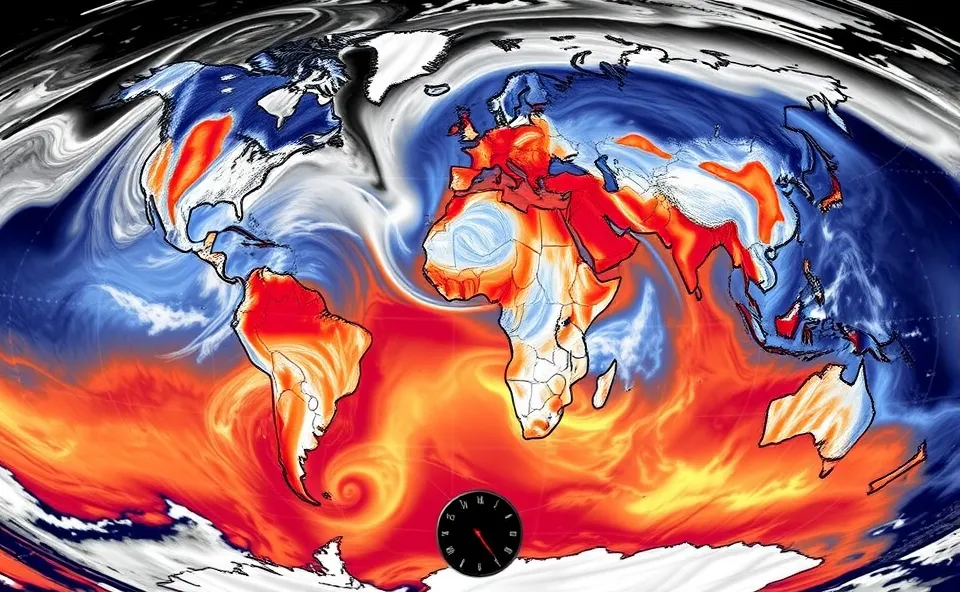
The Ocean is Warming Up: What’s the Buzz About El Niño 2026?
Hey there! You might have been hearing some chatter lately about something called El Niño 2026. It sounds a bit like a weather forecast, but the science behind it is pointing to some pretty significant shifts globally, and it’s got a lot of people talking. So, what’s the deal? Simply put, El Niño is a natural climate phenomenon where sea surface temperatures in the central and eastern Pacific Ocean warm up more than usual. This isn’t just a little warm spell; it’s a massive shift that can ripple across the entire planet, influencing weather patterns far and wide.
What’s got scientists and many of us paying closer attention now is the prediction that the El Niño event expected around 2026 could be a big one. We’re talking about the potential for it to be one of the strongest on record. When El Niño is particularly intense, its effects are amplified, meaning we could see more pronounced changes in weather than during weaker events. Think about how a small ripple can turn into a big wave when the conditions are just right. That’s sort of what scientists are anticipating with this upcoming El Niño 2026.
Why All the Fuss About El Niño 2026 Now?
It makes sense to wonder why this is a hot topic. The science predicting potential El Niño events, especially strong ones, takes time and sophisticated modeling. Researchers are constantly observing the ocean and atmosphere, crunching data, and running simulations to get a clearer picture of what’s coming. These predictions aren’t pulled out of thin air; they’re based on years of understanding how these complex climate systems behave. As these models become more refined and the data points toward a significant El Niño for 2026, the conversation naturally picks up.
Furthermore, we’re living in an era where climate change is a constant backdrop. The effects of atmospheric warming mean that natural climate cycles like El Niño can interact with human caused warming in complex ways. This interaction can potentially supercharge the impacts we see. So, when scientists talk about a strong El Niño 2026, it’s not just about a natural cycle repeating itself; it’s about how that cycle might play out on top of an already warming planet. This makes understanding the potential global temperature spike and its knock on effects even more critical for businesses and communities worldwide.
A Quick Look Back: Understanding El Niño
To grasp the importance of El Niño 2026, it helps to know what it is and how it’s been in the past. El Niño is part of a larger cycle called ENSO, the El Niño-Southern Oscillation. ENSO has three phases: El Niño, La Niña, and neutral conditions. During a neutral phase, trade winds blow steadily across the Pacific, pushing warm water westwards, leaving cooler water along the coast of South America. In an El Niño phase, these trade winds weaken or even reverse. This allows warm surface water to slosh back eastwards towards South America.
This change in ocean temperature has a huge impact. It affects where rain falls and where it doesn’t, and it influences air pressure patterns thousands of miles away. For example, strong El Niño events have been linked to:
- Increased rainfall in some parts of the Americas, leading to floods.
- Droughts in other regions, like Australia and parts of Asia and Africa.
- Changes in hurricane activity in the Atlantic.
- Warmer winter temperatures in parts of North America.
We’ve seen strong El Niños before, like the one in 1997-1998, which was one of the most powerful on record and caused widespread disruption. Understanding these past events gives us a benchmark for what a potent El Niño 2026 could potentially bring.
The Ripple Effect: What a Strong El Niño 2026 Could Mean
When we talk about a potentially record strongest El Niño in 2026, the implications are vast, touching everything from our daily lives to global markets. The most direct impact will be on weather. A strong El Niño 2026 could mean a significant global temperature spike. Even though El Niño is a natural cycle, its warming effect on the planet adds to the ongoing trend of atmospheric warming driven by climate change. This can push global average temperatures to new highs.
For businesses and economies, this isn’t just about talking points; it translates into real economic losses and opportunities. Think about agriculture. Shifts in rainfall and temperature can devastate crop yields in some regions, leading to food shortages and price hikes. Conversely, other areas might see improved growing conditions. The insurance industry often braces for impact, as extreme weather events like floods, droughts, and storms become more frequent or intense, leading to higher claims.
Technology plays a crucial role in both understanding and responding to these shifts. Sophisticated weather modeling and climate forecasting technologies are vital for predicting the patterns associated with El Niño 2026. Businesses can use this information to adapt. For instance, companies reliant on specific weather conditions might diversify their operations or invest in more resilient infrastructure. In energy, demand can shift dramatically. Warmer winters might reduce heating fuel consumption, while hotter summers could increase demand for air conditioning, straining power grids.
Supply chains are another area where the impact can be felt. Disruptions due to extreme weather events can delay shipments, increase transportation costs, and create shortages of goods. This is where technology like advanced logistics software and real-time tracking becomes even more important for navigating these choppy waters. The interconnectedness of the global economy means that a significant climate phenomenon like El Niño 2026 can create a domino effect, impacting everything from commodity prices to the cost of goods on store shelves.
Looking Ahead: What to Expect After El Niño 2026
Predicting the exact aftermath of any El Niño is complex, and a strong El Niño 2026 is no different. Typically, after an El Niño event fades, there’s often a transition period. Sometimes, this can lead to a La Niña phase, which is the opposite of El Niño, characterized by cooler than average sea surface temperatures in the Pacific. This flip can bring its own set of weather patterns, sometimes leading to drought in areas that experienced floods during El Niño, and vice versa.
The long-term outlook, however, is heavily influenced by the overarching trend of climate change. Each El Niño event, especially a strong one, contributes to pushing global temperatures higher. This means that even as natural cycles like El Niño and La Niña play out, the overall trajectory of atmospheric warming continues. The challenge for the future is not just managing the fluctuations of ENSO but also adapting to a planet that is progressively getting warmer.
For individuals and businesses, this means a continued need for resilience and adaptability. Investing in technologies that help monitor environmental changes, developing sustainable practices, and building infrastructure that can withstand more extreme weather events will be key. The science of climate change and natural cycles like El Niño 2026 provides us with valuable information to prepare, innovate, and build a more sustainable future in the face of these evolving challenges.
Your Questions About El Niño 2026 Answered
What is the scientific prediction for El Niño 2026?
Scientific models are indicating a strong possibility of an El Niño event forming around 2026. Current projections suggest it could be one of the most intense El Niños recorded, meaning its impact on global weather patterns could be significant.
How does El Niño 2026 relate to climate change?
While El Niño is a natural climate phenomenon, its effects are amplified by the ongoing atmospheric warming caused by climate change. A strong El Niño 2026 could lead to a more pronounced global temperature spike by adding its warming influence to the existing warming trend.
What kind of economic impact can we expect from a strong El Niño 2026?
A strong El Niño 2026 can lead to substantial economic losses globally. This includes impacts on agriculture due to altered rainfall and temperatures, increased insurance claims from extreme weather events, disruptions to supply chains, and shifts in energy demand.
What are the predicted weather consequences of El Niño 2026?
The predicted weather consequences include a potential global temperature spike and an increase in extreme weather events. Depending on the region, this could manifest as more intense floods, droughts, heatwaves, or changes in storm patterns, making 2026 weather patterns a subject of close observation.
Is El Niño 2026 expected to be the strongest El Niño ever?
Scientists are predicting El Niño 2026 could be a record strongest El Niño, meaning it has the potential to rival or surpass the intensity of previous powerful El Niño events. However, precise forecasting remains an active area of research.











