

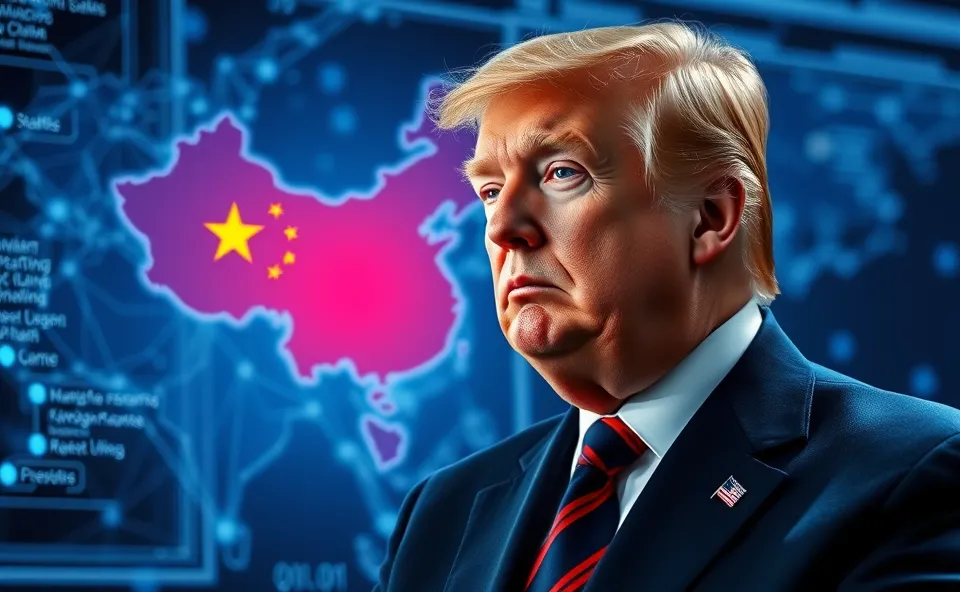
The New Conversation Around AI Governance
There is a lot of buzz lately about the intersection of politics and advanced technology. Specifically, people are starting to pay close attention to how Donald Trump AI controls might shape the future of the digital landscape. It is not just about the usual political back-and-forth anymore. We are seeing a shift where artificial intelligence is moving from a niche tech subject to a central pillar of national security strategy. When leaders discuss these powerful tools, they are not just talking about software. They are talking about the next big stage of the global technology race.
The conversation centers on how much the government should step in to manage or restrict AI development. As models become more capable, the question of who holds the reins becomes vital. By linking AI policy to the broader context of US-China relations, the discourse has moved beyond simple business efficiency and into the realm of global influence and power.
Why Everyone Is Talking About AI Strategy Right Now
The sudden interest in this topic stems from how fast the technology is moving. When you see companies like OpenAI releasing tools that change how we write, code, and think, it gets people’s attention. But the search interest is not just about the cool features. It is about fear and opportunity in equal measure.
People are searching for Trump AI controls because they want to know where the next administration will stand on an industry that is currently moving faster than the law can keep up with. There is a sense that the current rules are being written on the fly. Many are looking for clarity on whether the U.S. will choose a path of strict regulation to ensure cybersecurity or if it will take a lighter approach to avoid slowing down innovation. The tension between wanting to stay ahead of global competitors and needing to manage the inherent risks of powerful algorithms is what keeps this topic at the top of the trending lists.
The Road That Led Us Here
To understand the current climate, we have to look back at the last few years. Technology development used to be seen as a private sector project. However, the rise of powerful AI platforms changed the rules of the game. For a long time, the U.S. led the world in innovation, but countries like China have poured massive resources into closing that gap. This has created a dynamic where tech is no longer just a business issue; it is a matter of statecraft.
Historically, we have seen various attempts at guidelines, but none have fully addressed the scale of modern neural networks. We have seen open-source communities like Hugging Face provide incredible tools to the public, which democratizes innovation but also creates new cybersecurity challenges. The background of this debate is defined by a desire to keep the U.S. in the driver seat while acknowledging that we no longer live in a world where technology development happens in a vacuum. Every decision made in Washington now carries a global weight that impacts the international tech market.
What This Means for Business and Security
If you are running a business or even just using these tools daily, the impact of these policy shifts will be significant. The primary concern revolves around the balance between security and open growth. If the government tightens its grip on AI, businesses might find it harder to access the latest models or open-source libraries. On the other hand, a lack of oversight could expose firms to severe data breaches or intellectual property theft.
- Compliance Costs: Businesses might need to invest more in legal and security teams to keep up with new federal guidelines.
- Innovation Speed: If regulations are too heavy, it could potentially slow down the development of new, life-changing apps.
- Global Competition: Decisions made regarding US-China relations will determine if American companies can operate easily in international markets or if the tech world will be forced into separate, competing zones.
- Cybersecurity Standards: We can expect higher requirements for how AI systems are protected against foreign interference.
For the average person, this means that the software you use today might look very different tomorrow. We are moving toward a reality where AI policy is baked into the very foundation of the internet.
The Path Forward for Global Technology
Looking ahead, we can expect the debate over Trump AI controls to sharpen. It is likely that the future will involve a two-pronged strategy. First, there will likely be a push to secure the domestic supply chain for the hardware required to run these models. You cannot have strong AI if you do not have the chips to power it. Second, we will likely see more specific legislation regarding how AI interacts with sensitive national data.
The most logical outcome is a framework that encourages commercial success while putting “guardrails” around high-stakes areas like military defense and critical infrastructure. The technology race with China will not end; instead, it will evolve into a competition of efficiency and ethics. The country that can safely and reliably deploy the most advanced systems without compromising its core values will have the ultimate advantage. It is a balancing act, and the next few years will define how successfully we pull it off.
Frequently Asked Questions
What are the primary goals of Trump AI controls in a modern business context?
The primary goals involve protecting intellectual property, ensuring that domestic companies remain competitive in the global technology race, and preventing AI tools from being exploited for cyberattacks or foreign influence campaigns.
How does AI regulation affect the open-source community like Hugging Face?
Increased regulation could create reporting requirements or usage restrictions on certain powerful models. While this aims to bolster cybersecurity, some worry it could make it more difficult for open-source researchers to collaborate freely on the next generation of artificial intelligence.
Is the focus on China AI development purely about business?
No, it is deeply tied to national security. Since AI is the engine behind future military, intelligence, and economic power, the competition is about maintaining a strategic edge in the global landscape.
How might current AI policy shift to impact future US-China relations?
Future policy is expected to lean toward more targeted restrictions on high-end hardware and software exports, ensuring that the most advanced computational power remains within the U.S. or its allied nations.
Why is cybersecurity a recurring theme in the debate over AI policy?
Because AI can be used to automate both defense and offense in the digital realm. As businesses and governments integrate AI into their core operations, the risk of vulnerabilities grows, making strong federal policies essential to protect our digital infrastructure.











