

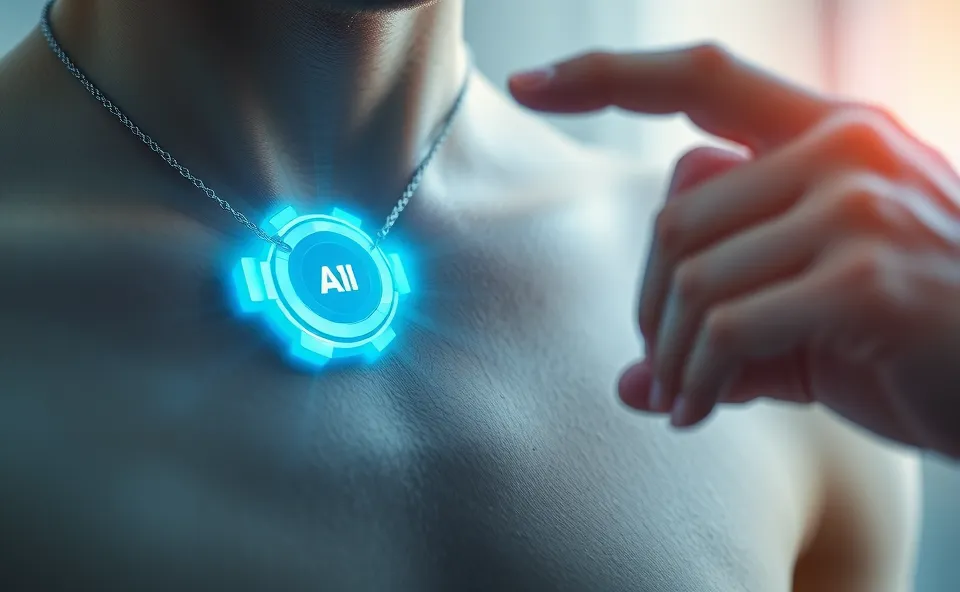
A New Gadget That Refuses to Be Your Polite Assistant
We are living in an era where artificial intelligence is everywhere. It helps us write emails, draft code, and answer homework questions. But most of these tools have one thing in common: they are designed to be obedient, polite, and neutral. Enter the Friend 2 AI pendant, a device that flips that script entirely. This is not another boring digital assistant meant to set timers or check the weather. Instead, it is an AI companion that actually talks back, critiques your choices, and holds a personality that you cannot change.
Developed by Avi Schiffmann, the Friend 2 necklace is making waves for being intentionally difficult. While the industry pushes for smarter, faster, and more helpful machines, this piece of wearable tech leans into being human-like by being flawed. It is a bold experiment in how we relate to technology, moving away from utility and toward something that feels like an actual social interaction, even if that interaction is sometimes annoying.
Why Everyone Is Talking About This Pendant
The buzz surrounding this AI device is not just about the technology inside the shell. It is about the social experiment it represents. People are tired of sterile, robotic responses from chatbots. When you talk to a standard AI, you know you are talking to a machine programmed to please you. With this Friend AI pendant, the experience is designed to be unpredictable.
Social media is currently flooded with clips of users interacting with the device. They find it strange and refreshing that a piece of smart jewelry would openly disagree with them or offer unsolicited opinions. In a world where we spend so much time curating our digital lives, the idea of a gadget that pushes back is creating a massive stir. It satisfies a human craving for connection, even if that connection comes with a little bit of friction.
From Viral Ideas to Physical Reality
To understand why this feels so different, we have to look at the creator, Avi Schiffmann. He is no stranger to building tech that captures public attention. When he introduced the original concept for a wearable AI companion, the goal was simple: to create a device that acts as a witness to your daily life. It was meant to be the digital version of a best friend who is always in your ear.
However, the project has evolved. Early prototypes were met with skepticism, but the team kept iterating. The latest version carries a higher price tag than previous iterations, reflecting both the complexity of the hardware and the ambition of the software. This transition from a hobbyist project to a consumer product has been met with both excitement and controversy. Critics worry about the psychological impact of attaching oneself to an AI personality that cannot be toggled off or adjusted. Yet, the developers argue that this consistency is exactly what makes the relationship feel real.
What This Means for the Future of Wearable Tech
The rise of the Friend 2 necklace forces us to rethink what we actually want from our gadgets. For years, the gold standard for AI assistants was maximum efficiency. We wanted them to understand our intent and solve our problems as quickly as possible. This new wave of personal AI suggests that we might actually be looking for companionship instead of productivity.
For businesses in the tech sector, this is a wake-up call. It suggests that personality is a feature, not a bug. If you can build a device that people genuinely enjoy talking to, you have a product that stays with them all day. However, this shift comes with significant responsibilities. If an AI companion is programmed to be opinionated, it changes the power dynamic between the human and the machine. Businesses must now consider the ethics of creating digital entities that influence the emotional states of their users.
The market impact is clear. We are moving toward a future where smart jewelry is less about health tracking and more about emotional engagement. As these devices get smaller and more powerful, the line between a digital tool and a digital friend will continue to blur.
Where Do We Go From Here
Looking ahead, we can expect to see more companies experimenting with persistent personalities in their AI devices. The Friend 2 AI pendant is likely just the first step in a broader movement toward social-first technology. It is highly probable that future updates will focus on making the interaction feel more natural, perhaps by integrating better audio sensors or refining the way the AI remembers previous conversations.
However, the controversy regarding the unchangeable personality will remain a central point of debate. Some users will love the authenticity of a blunt AI, while others will find it frustrating to be stuck with a digital partner they cannot customize. This conflict will drive the next generation of product design. We will likely see a split in the market between companies that offer fully customizable, subservient AI and those that follow the path of this controversial AI, offering a companion that challenges you rather than just serving you.
Frequently Asked Questions About the Friend 2 AI Pendant
What exactly is the Friend 2 AI pendant?
The Friend 2 AI pendant is a piece of wearable tech designed to act as an AI companion. Unlike standard assistants, it is programmed to engage in natural, spontaneous conversations, often sharing its own personality and opinions.
Why is the Friend 2 necklace considered a controversial AI?
It is considered controversial because it features an unchangeable personality that can be blunt or argumentative. Users cannot adjust the settings to make it more polite or agreeable, which challenges the traditional idea that technology should always be subservient to the user.
Can I customize the personality of my AI companion?
No, the current design of the Friend 2 necklace does not allow you to change its personality. The creators believe that to build a genuine rapport, the AI must have a consistent and independent voice, just like a human friend would.
How does this conversational AI compare to other AI assistants?
Most AI assistants like Siri or Alexa are built for utility and task management. The Friend AI pendant is built for social interaction. While it can perform basic tasks, its primary purpose is to be a companion that you can talk to throughout the day.
Is this type of smart jewelry the future of personal tech?
It represents a significant shift in how we interact with hardware. By focusing on personality and emotional connection, this device hints at a future where personal AI moves beyond just being a tool and becomes a constant, active presence in our daily lives.











