

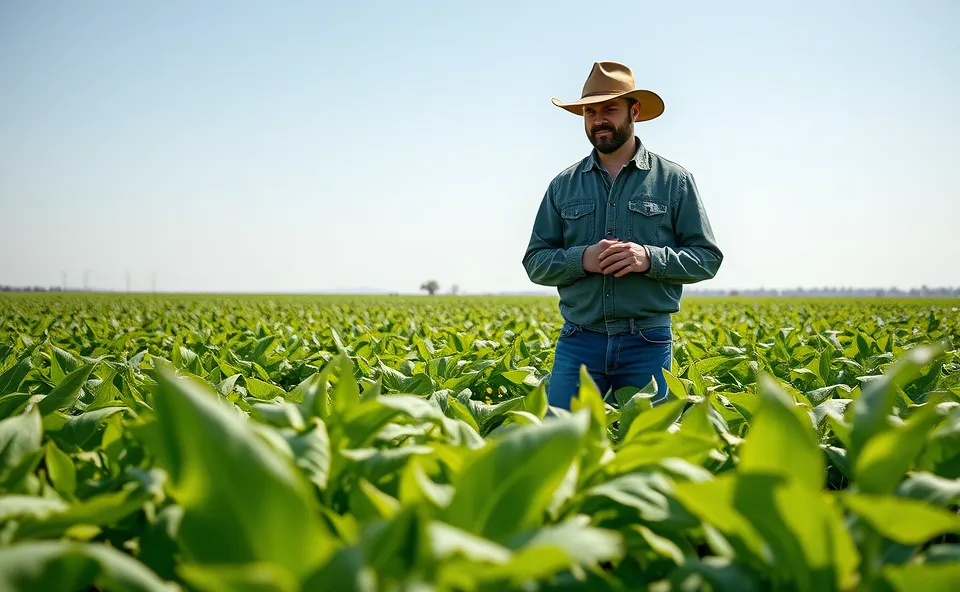
The changing landscape of American soy
If you take a drive through the heartland of the United States, you might notice that the horizon looks a little different than it did a decade ago. Farmers are currently facing a fascinating puzzle. On one hand, the world cannot get enough of what they grow. On the other hand, the physical space available to plant crops is slowly tightening as land gets repurposed for housing, industry, and infrastructure. This is the new reality of US soybean production.
The situation is quite simple yet incredibly difficult to pull off. American farmers are being asked to grow more food on less land. To do this, they are turning away from the traditional methods of the past and embracing a new era of precision. It is not just about working harder anymore. It is about working smarter, using tools that would have seemed like science fiction to the generations of farmers who came before them.
Why the world is hungry for more
You might be wondering why everyone is suddenly talking about soybeans. The reason is that soybean exports have become the backbone of modern global trade. While we often think of soybeans as just a food crop, they are actually an incredible workhorse. They are used in everything from animal feed that sustains the global meat supply to industrial soybean uses like eco friendly plastics, biofuels, and lubricants.
As populations grow and economies in developing nations expand, the demand for these products is skyrocketing. People are searching for answers about this topic because the stability of the global food chain depends on it. When a commodity market as large as the soy industry starts to feel the pressure of limited space, it impacts everyone from the person at the grocery store to the largest global manufacturers. We are living in a moment where efficiency is no longer a luxury for farmers. It has become a matter of survival and national strategy.
How we got here
To understand the current shift, we have to look back at how farming used to work. For a long time, the primary way to increase output was simply to plant more seeds on more acres. If you wanted a bigger harvest, you bought more land. That strategy worked well for decades, but it hit a wall when land availability began to drop. Urban sprawl and the conversion of rural land have made it clear that the era of easy expansion is over.
American farmers realized that if they could not grow horizontally, they had to grow vertically. This shift toward farm efficiency has been brewing for years, but it has only recently hit the level of adoption we see today. They have moved from broad applications of water and fertilizer to treating every individual square foot of soil as its own unique environment. This transition from mass farming to data driven agriculture is the defining story of the modern farm.
The high tech harvest
The impact of this shift is visible everywhere. Today, a farmer is just as likely to be looking at a tablet filled with satellite data as they are to be looking at the field itself. This is the age of agricultural technology, and it is changing the game in several key ways:
- Precision planting: Farmers now use GPS guided tractors that can plant seeds at exact depths and distances to maximize growth potential.
- Variable rate technology: Instead of spraying a whole field with the same amount of fertilizer, machines now adjust the dosage in real time based on the specific needs of the soil in that exact spot.
- Advanced seed genetics: Through careful research, developers have created seeds that are more resistant to heat, drought, and pests, which helps stabilize a crop yield increase even when the weather does not cooperate.
- Drone monitoring: Drones are used to spot crop stress, allowing farmers to fix problems in a corner of a field before they spread to the rest of the harvest.
These strategies do more than just boost output. They also promote sustainable farming by reducing the amount of chemicals that run off into the water supply and lowering the amount of fuel used by heavy machinery. It is a win for the environment and a win for the bottom line.
What comes next for the heartland
Looking ahead, we can expect the gap between global soybean demand and available land to get even tighter. This will likely push technology even further into the driver seat. We are moving toward a future where artificial intelligence and machine learning will play a bigger role in predicting weather patterns and market shifts before they happen.
While the challenges are real, the outlook is steady. US agriculture has a long history of innovation, and the current group of farmers is proving that they are just as creative as their ancestors. We will likely see a continued focus on transparency and quality, as global buyers become more interested in how their soy is grown. The farms that thrive will be the ones that view data as just as important as seeds or soil. The goal is no longer just to grow a crop. The goal is to build a high output system that can withstand the pressures of a changing world.
Common questions about the future of soy
How is US soybean production keeping up with global demand?
American farmers are using advanced agricultural technology, such as precision planting and satellite data, to achieve a consistent crop yield increase. By focusing on growing more on each acre, they are successfully meeting the needs of global markets despite the reality of farmland shrinkage.
Why are industrial soybean uses becoming more popular?
As industries look for ways to move away from petroleum based products, soybeans have become a top choice for renewable alternatives. From bio fuels to sustainable building materials, the versatility of the soybean makes it a key resource for the modern economy.
How does sustainable farming help with farmland shrinkage?
Sustainable farming practices keep soil healthy and productive for longer periods. By using precision tools to reduce waste and prevent erosion, farmers can ensure that their remaining land stays as fertile as possible, which offsets the need to clear new land.
What role do commodity markets play in these farming decisions?
Commodity markets signal to farmers exactly what the world needs and what it is willing to pay. These price signals are a major factor in how farmers allocate their land and decide which technologies to invest in to ensure their farms remain profitable year after year.
Is farm efficiency the only way to save the industry?
While efficiency is the most immediate tool, the future of the industry also relies on research, better seed genetics, and continued investment in infrastructure. A combination of human skill and machine efficiency is what allows the sector to remain competitive in a shrinking land market.











