

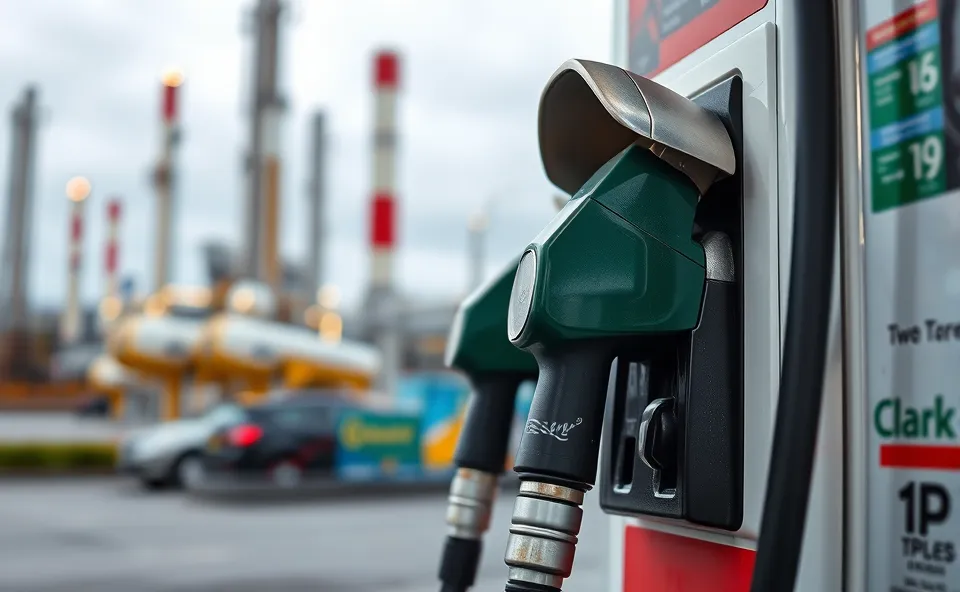
The confusing gap at the pump
If you have filled up your tank lately, you have probably noticed something frustrating. When you hear on the news that the cost of crude oil is dipping, you expect to see cheaper numbers at your local gas station. Yet, often that drop never reaches you. It feels like a broken promise, or perhaps like someone is gaming the system. Darren Woods, the CEO of ExxonMobil, has been speaking out about this exact disconnect. He argues that people are looking at the wrong numbers when they try to predict what they will pay for fuel.
The core of the issue is that oil is not the only ingredient in the fuel you put in your car. While crude oil is the primary raw material, it is not a finished product. Think of it like buying raw flour compared to buying a loaf of bread. If the price of wheat drops, the price of the bread in your bakery does not immediately plummet because you still have to pay for the oven, the labor, the packaging, and the transportation. In the energy market, those extra costs are significant, and they often fluctuate independently of the raw oil price.
Why everyone is talking about fuel costs right now
The curiosity around this topic is reaching a fever pitch because the average person feels the squeeze of market volatility every single week. When inflation hits, every dollar matters, and the price of gasoline is the most visible daily reminder of how the economy is performing. People are searching for answers because they feel like they are being squeezed by forces they cannot control.
There is a lot of distrust out there. When consumers see record profits for companies like ExxonMobil and then see their own credit card bills climbing at the pump, it is natural to look for a villain. Darren Woods has found himself in the position of needing to explain the mechanics of a complex global system to an audience that is understandably tired of paying more. The conversation is less about technical refinery data and more about the gap between corporate balance sheets and the household budget.
The hidden reality of the supply chain
To understand why this happens, we have to look back at how we reached this point. Over the last several years, the global energy industry underwent massive changes. Many refineries that were not profitable during slower economic times were permanently shut down or converted to produce biofuels. When demand roared back after the height of the recent health crisis, the world found itself with less refining capacity than it had before.
This is a crucial detail. Even if we have plenty of oil barrels sitting in storage, we have a limited ability to turn that oil into gasoline, diesel, and jet fuel. Refineries are highly complex machines that require constant maintenance and significant capital investment. When you combine limited refinery capacity with the sudden spikes in demand for fuel, the price of turning oil into gas goes up. This is known in the industry as the crack spread. It is the profit margin between the cost of crude oil and the market price of the petroleum products it produces. When that spread widens, it is usually because the world is struggling to process the crude oil fast enough to keep up with how much we are all driving.
What this means for the average person and the market
This disconnect between crude oil and retail gasoline affects almost everything in our daily lives. When the cost to process fuel is high, it does not just make your personal car commute more expensive. It raises the price of shipping for every business that moves goods by truck, rail, or air. That leads to higher costs for groceries, electronics, and clothing.
For investors, this situation highlights why it is so difficult to bet on energy stocks. If you assume that oil stocks will always move in lockstep with the price of crude, you might be surprised to find that refining margins are actually the bigger driver of short-term profit. Businesses are currently operating in a landscape where supply chains are incredibly fragile. A single unexpected shutdown at a major refinery can cause a localized spike in gas prices even if the global oil market is perfectly calm.
For the average consumer, this means we should expect continued volatility. Until global refining capacity catches up with the massive global appetite for fuel, we are going to see instances where crude oil prices look reasonable, but the price at the pump remains stubbornly high. It is a reality of the current energy market that requires us to be more conscious of how global events hit our wallets.
The road ahead for fuel supply
Looking at the horizon, the path forward is tied to a mix of infrastructure and investment. Darren Woods has suggested that policy needs to catch up to the reality of the energy market. He points out that if we want lower prices, we need a stable environment for energy companies to invest in more capacity. This is a difficult path because the world is also shifting toward alternative energy sources, making it risky for companies to pour billions into infrastructure that might be less needed in twenty years.
We are likely looking at a period where energy prices stay sensitive to supply disruptions. The good news is that markets are usually self-correcting. As prices stay high, the incentive for businesses to find ways to process oil more efficiently or to bring new capacity online increases. However, these are slow, grinding processes. There is no magic switch to bring gas prices down overnight. The future of the energy market will likely be defined by a delicate balance between meeting our immediate need for gasoline and the long-term shift toward a different way of powering our economy.
Frequently asked questions
Why do gas prices stay high when the price of crude oil drops?
Gas prices do not move in perfect sync with oil because refining is a major factor. The cost to transform crude oil into finished fuel depends on how much refining capacity is available. If refineries are running at maximum speed or facing maintenance issues, the cost to produce gasoline increases even if the raw oil cost is low.
What exactly is refining capacity and why does it matter?
Refining capacity is the maximum amount of crude oil that refineries can process into products like gasoline and diesel. If demand is higher than what refineries can process, the price of fuel rises to reflect that scarcity, creating a gap between the price of oil barrels and the price at the pump.
How does Darren Woods explain the current energy market situation?
Darren Woods emphasizes that global fuel supply is constrained by limited refining infrastructure. He argues that the disconnect we see at the gas station is a result of market forces where the ability to process oil is struggling to meet the total consumer demand for gasoline.
Can we expect retail gasoline prices to stabilize soon?
Stability in the energy market depends on several factors, including the health of global refineries and the balance of oil production. While prices tend to fluctuate due to market volatility, there is no immediate fix until global refining infrastructure is better equipped to handle spikes in consumer demand.
How do oil stocks react to changes in the price of gas?
Oil stocks are influenced by both the price of crude oil and the margins refineries make. When the spread between crude oil costs and retail gasoline prices is wide, integrated companies that both extract oil and refine it can see stronger performance, which impacts how investors view their value in the broader market.











