

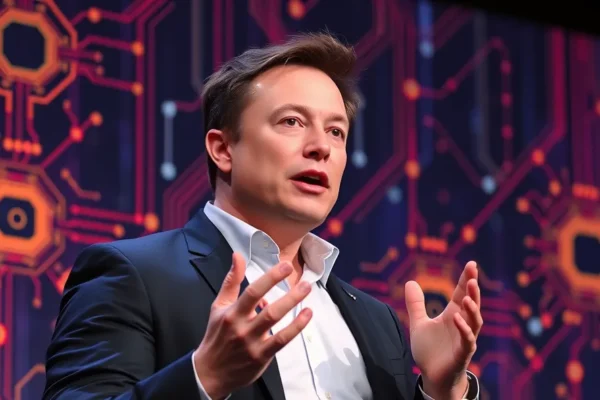
A Surprising Voice Calms the Tech Markets
If you have been watching the stock market lately, you know that tension has been running high regarding the massive amounts of money flowing into artificial intelligence. Investors have been biting their nails, wondering if the industry is spending too much on AI capex. The fear is simple but deep: what happens if everyone builds these massive data centers and buys millions of chips, only to find out there is no real profit at the end of the road? This specific anxiety recently hit semiconductor stocks, leading to a wave of uncertainty across the tech sector.
However, the mood shifted unexpectedly during a recent SpaceX earnings call. Elon Musk, a man who rarely misses a chance to weigh in on the future of technology, offered a perspective that surprised many observers. By focusing on the practical demand for computing power and the realities of infrastructure, Musk managed to lower the temperature for those worried about a bubble in the chip industry. His comments provided a rare moment of clarity in a market that has felt increasingly chaotic.
Why Everyone Is Talking About Memory Chip Stocks
The sudden focus on Elon Musk and memory chip stocks stems from a fundamental question: are we overbuilding? For the past year, tech giants have been locked in a race to secure the best hardware. This has turned chip makers into the darlings of Wall Street, driving prices to record heights. Naturally, whenever a sector grows this fast, investors start looking for the exit signs.
People are searching for answers because they fear a repeat of previous tech cycles where supply far exceeded demand. When companies order too many chips and software adoption lags, the result is usually a sharp drop in valuation for semiconductor stocks. The market is currently obsessed with identifying whether this AI investment is a permanent shift in how our world works or just a temporary frenzy. Because Musk is deeply involved in building some of the most advanced AI clusters on the planet, his take carries a weight that few others can match.
The Long Road to Today
To understand why these comments matter, we have to look at the recent past. The AI boom began with a gold rush mentality. Companies like Nvidia, Micron, and others saw their stock prices soar as demand for GPUs and high-bandwidth memory chips reached unprecedented levels. The supply chain was pushed to its breaking point, and prices skyrocketed. During this time, many analysts argued that the demand for AI was limitless.
As the months rolled on, however, the “show me the money” phase began. Investors started asking the tech giants to prove that these massive data centers were actually generating revenue. This transition from blind optimism to hard scrutiny is exactly where we are now. Market concerns have been fueled by reports of potential oversupply, suggesting that the industry might soon face a glut of hardware that no one really knows how to monetize yet. The industry has been waiting for a signal—either a confirmation of the bubble or a reason to believe the growth is sustainable.
What This Means for the Future of Technology
The impact of this latest conversation is significant. By suggesting that the demand for computing power is still in its infancy, Musk has essentially argued that we are nowhere near a ceiling. For businesses, this means that the infrastructure build-out is likely to continue, but perhaps with more focus on efficiency and genuine utility rather than just brute-force spending.
For the average person, this impacts how we view the rapid evolution of AI tools. If the big players continue to invest in hardware, it signals a long-term commitment to making AI smarter, faster, and more integrated into our daily lives. This is good news for innovation. It implies that the current wave of AI investment is not just about hype but about laying the digital foundation for the next few decades of technology.
- Stability in supply chains: Consistent investment helps manufacturers plan their production cycles more effectively.
- Better software development: With more hardware available, developers have the room to experiment with more complex AI models.
- Market confidence: When key industry leaders speak with conviction, it reduces the panic-selling that often hurts smaller investors.
Looking Ahead at the Chip Landscape
So, where do we go from here? It is logical to expect that we will move toward a period of more calculated growth. We are likely past the phase of unbridled, panicked buying, and moving into a stage where companies will be more selective about how they spend their capital. The focus will shift from simply owning chips to making sure those chips are being used in the most profitable ways possible.
While we might see some volatility as the market adjusts to this new pace, the fundamental need for compute power is not going away. As we move forward, the companies that can bridge the gap between expensive hardware and real-world results will likely come out on top. We should expect to see more partnerships and specialized hardware solutions designed to maximize the performance of existing AI systems. The days of buying any chip at any price may be ending, but the era of meaningful AI progress is just getting started.
Common Questions About the Chip Market
How is Elon Musk influencing the current performance of memory chip stocks?
Elon Musk helps stabilize sentiment by offering real-world context on AI capacity needs. His comments during the SpaceX earnings call act as a reality check, suggesting that demand remains strong enough to justify current AI investment, which helps calm nervous investors who fear a sudden drop in chip prices.
Are we facing an immediate risk of oversupply in the semiconductor sector?
While market concerns about oversupply are common, recent industry signals suggest that the infrastructure demand for AI is still high. The industry is currently moving from a chaotic rush to buy chips into a more strategic phase of usage, which helps balance supply and demand.
Why is AI capex such a hot topic for investors right now?
AI capex represents the massive financial commitment companies are making toward AI infrastructure. Investors are closely monitoring this because if the returns on these investments do not materialize, it could lead to a crash in the valuations of major semiconductor stocks and tech companies alike.
What should long term investors know about AI investment in the chip industry?
Long term success in the chip industry is tied to the actual utility of AI. Investors should look for companies that are not just selling hardware but are part of the ecosystem that allows AI to solve real problems for businesses and consumers.
How do SpaceX earnings calls impact wider semiconductor stocks?
Because SpaceX is a massive consumer of advanced computing technology, their operational outlook serves as a bellwether for the rest of the industry. When a leader like Musk expresses confidence in the long-term need for advanced hardware, it provides a sense of security for the entire semiconductor sector.











