

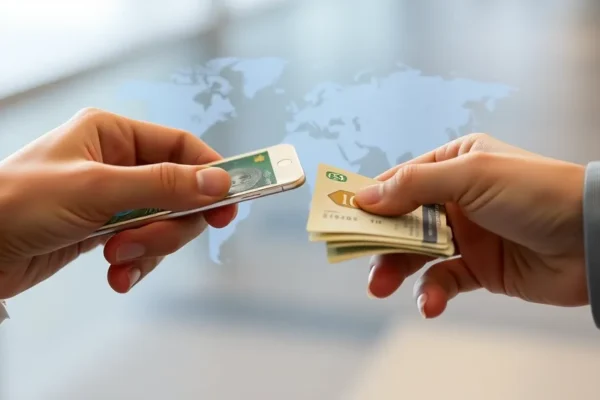
How money moves across borders to keep families connected
At its simplest level, a remittance is just a transfer of money. When someone works in one country and sends a portion of their earnings back to their home country to support their relatives, that transaction is a remittance. It sounds like a basic banking move, but it is actually the heartbeat of a massive, global network of support. For millions of people, this is not just a financial transaction. It is a way to pay for school tuition, healthcare, home repairs, or daily groceries for loved ones living thousands of miles away.
The process usually involves three key steps. First, the sender provides funds to a service provider. This might be a traditional bank, a dedicated money transfer shop, or a digital app on a smartphone. Second, the service provider converts that money into the local currency of the recipient. Third, the recipient collects the cash at a local branch, receives it directly into their bank account, or even gets it sent to a mobile wallet. While the mechanics seem straightforward, the hidden layers of exchange rates and service charges mean that every transfer is a balancing act between speed, cost, and security.
Why this topic is top of mind right now
You might be hearing more about remittances lately because the world of digital finance is changing at a breakneck pace. For a long time, sending money abroad was a slow, expensive, and opaque process. People had to visit physical locations during business hours, fill out paper forms, and often pay high fees that ate into their hard-earned wages. Today, the rise of fintech has turned this on its head.
People are searching for better ways to manage these payments because costs have become more visible. With the internet, anyone can now compare exchange rates in seconds. Migrant workers are becoming much more savvy about how they manage their family financial support, looking for platforms that offer transparency. Furthermore, as more families rely on this income to deal with global inflation, the pressure to find the most efficient way to send funds has never been higher. It is a topic that sits right at the intersection of personal struggle and technological innovation.
The history behind the global flow of money
To understand the current landscape, it helps to look at how we got here. Historically, international money transfers were the domain of a few large companies with physical storefronts. If you were a worker living far from home, you were largely at the mercy of their pricing. This was known as diaspora finance before the internet simplified it. It was a lifeline that was often difficult to access.
For decades, cross-border payments were a “black box.” You sent money, you hoped it arrived, and you hoped the fees were not too high. However, the last decade has seen a shift toward digital-first banking. Mobile technology changed everything. Suddenly, you didn’t need to visit a storefront to send money to a village on the other side of the planet. You just needed an app. This shift has democratized access to financial services, allowing people to take control of their budgets and ensure that more of their money actually makes it into the hands of their family members rather than being lost in excessive processing fees.
The real world impact on immigrant families
The economic impact of these transfers is profound. For many immigrant families, remittances are not just extra cash. They are a primary source of survival. In some developing economies, these inflows of capital represent a significant chunk of the entire nation’s gross domestic product. It is a private-to-private flow of wealth that acts as a social safety net, reaching families that government programs might miss.
However, the impact goes beyond just paying bills. This money allows children to stay in school, helps families invest in small businesses, and provides a buffer during times of crisis, such as natural disasters or health emergencies. When you look at the macro level, global remittances stabilize entire communities. When you look at the micro level, it is a personal promise kept by someone working hard abroad to ensure their parents or children back home are secure. It is arguably one of the most powerful tools for global development, driven entirely by the love and responsibility people feel for their relatives.
Looking ahead at the future of cross-border support
What comes next in this space? We are moving toward a future of instant, near-zero cost transfers. As competition between service providers intensifies, we will likely see more integration between digital wallets and traditional banking systems. This will make it easier for people in rural areas to receive money instantly on their phones, even if they do not have a traditional bank account.
Transparency is the other big trend. Regulations are tightening to ensure that companies clearly display their total costs, including the margin on exchange rates. This is a win for consumers. As technology improves, we might see the rise of blockchain or other decentralized platforms that further lower the barrier to entry for cross-border payments. The goal for the future is to ensure that geography and international borders become less of a hurdle for family financial support. The easier and cheaper it becomes to send money, the more impactful that money becomes for the people who need it most.
Common questions about international money transfers
What exactly are remittances and why do they matter?
Remittances are funds that migrant workers send to their home countries. They matter because they provide a vital economic lifeline for families, helping cover costs like food, housing, and education while simultaneously supporting the economies of developing nations.
How can immigrant families reduce the cost of sending money abroad?
Families can save money by comparing different service providers to find the best exchange rates and lowest service fees. Many people now use digital-first apps that offer more transparent pricing than traditional high-street banks or physical money transfer bureaus.
What should I look for in a reliable money transfer service?
Look for providers that are fully transparent about their total fees, offer competitive exchange rates, and have strong security measures in place. It is also helpful to choose services that offer convenient payout options for your recipients, such as direct bank deposits or mobile wallet credits.
How does financial planning for immigrants work with remittances?
Effective planning involves treating these transfers as a regular line item in your monthly budget. By automating these payments and keeping an eye on market fluctuations, you can ensure your family gets the support they need without overextending your own personal finances in your current country of residence.
Are digital remittances safer than traditional methods?
Digital remittances are generally very secure and often safer because they create an instant, traceable digital paper trail. Most reputable platforms use high-level encryption to protect your data and funds, reducing the risks associated with carrying large amounts of cash or using unofficial channels.











