

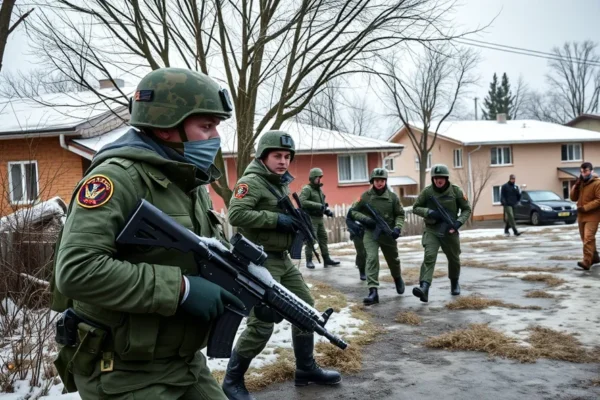
The changing face of life in Moscow
If you have been following the news from abroad, you might have noticed a shift in how the conflict is playing out on the home front. Lately, there has been a noticeable spike in stories about Russian authorities conducting sudden raids to find people for military enlistment. These are not just isolated incidents. Instead, they represent a high-pressure approach to gathering new soldiers for the war in Ukraine.
In many neighborhoods across Moscow and other major cities, it has become common to see officials appearing at construction sites, subway stations, or even at large residential buildings. Their goal is clear: they are looking for men who can be processed into the armed forces. For those living there, this has turned the simple act of walking to work or grabbing a coffee into a source of significant anxiety. It is a stark reminder that even thousands of miles away from the front lines, the war has a way of finding people where they live.
Why everyone is talking about this now
You might wonder why this is surfacing in search trends and international conversations at this exact moment. The reason is simple: the math of the battlefield is changing. As the conflict drags on, the demand for personnel remains incredibly high. Putin and his government are facing a constant need to replace those who have been lost or exhausted in the fighting.
People are searching for this information because it signals a desperation that was not present in the early days of the conflict. When recruitment moves from volunteer-based systems or traditional draft notices to street-level raids, it catches the world’s attention. It tells us that the state is willing to bypass standard procedures to keep the machinery of war moving. For observers and analysts, this is the primary indicator of how much pressure the Russian military is under to sustain its current position.
How we got to this point
To understand the current environment, we have to look back at how the approach to military recruitment has evolved. When the invasion first began, the messaging was focused on contract soldiers and professional units. The authorities were careful not to disrupt the daily lives of people in big cities too much. They wanted to keep the war at arm’s length for the average citizen.
However, that changed when the scale of the losses became clear. The state eventually moved toward a more forced form of conscription. Over the last year or so, the laws governing how men can be summoned have been tightened significantly. Digital databases were linked to local enlistment offices, making it harder for individuals to ignore or avoid notices. These raids are essentially the next step in that tightening process. It is a transition from a system that relies on paperwork to one that uses active physical presence to ensure the quotas are met. The state is no longer asking for help; it is proactively reaching into the civilian population to secure the numbers it needs.
What this means for the broader landscape
The impact of these actions goes far beyond the military sphere. When a government starts pulling workers out of the civilian economy, it creates a ripple effect that touches every part of the local business environment. Construction, manufacturing, and even tech sectors are feeling the pinch as labor becomes scarce.
For businesses operating in the region, the unpredictability is the biggest challenge. You cannot plan for the future when your workforce could be reduced by a surprise visit from officials. This leads to several immediate consequences:
- Reduced productivity: When workers are worried about their safety, their output drops.
- Talent flight: Many young, skilled workers are choosing to relocate or hide, which drains the local economy of its most valuable human capital.
- Supply chain disruptions: Industries that rely on manual labor are struggling to keep up with existing contracts.
- Increased operational costs: Businesses are forced to spend more to retain staff or find creative ways to operate with fewer hands.
Ultimately, this approach creates a cycle of instability. It sends a message to the workforce that their current job security is secondary to the needs of the state. This creates a fearful environment where long-term investment becomes almost impossible for small and medium enterprises.
The path forward
Looking ahead, it is unlikely that this pressure will dissipate anytime soon. As long as the war in Ukraine continues to demand new resources, the authorities will likely maintain these high-pressure tactics. The logical next step is a continued reliance on technology to track individuals, combined with these physical sweeps to ensure no one slips through the cracks.
We might also see a shift toward even stricter regulations on movement. If the authorities cannot find enough people through current methods, they might increase the barriers to travel or restrict the movement of young men across regional borders. For the average person in Russia, the future looks increasingly constrained by the state’s need for more manpower. The goal for the administration is to sustain the war effort for as long as possible, and they have shown that they are willing to bear the social and economic costs of doing so.
Frequently Asked Questions
Is it true that Putin is personally ordering these raids for soldiers?
While the strategy comes from the top, individual raids are usually carried out by local military enlistment offices. These offices are under immense pressure from the central government to meet specific recruitment quotas, which trickles down into the aggressive tactics seen on the streets.
How are these raids affecting the local economy in Russia?
The raids are causing a significant labor shortage. Many businesses are struggling to keep operations running as workers are pulled into military enlistment. This has led to lower production levels and increased anxiety among employers who cannot guarantee a stable workforce.
Why is military enlistment becoming so aggressive in Moscow?
Moscow is a massive population center, making it the most efficient place to find large numbers of people quickly. Because the war in Ukraine requires a constant rotation of soldiers, the pressure to find people in big cities has intensified significantly over the past year.
Are these raids a sign that the war is not going well for Russia?
Observers view these tactics as a clear sign of strain. When a military has to use raids to find soldiers, it suggests that the initial supply of volunteers has dried up and that the state is struggling to maintain its force levels through standard recruitment channels.
What can someone do if they are worried about being caught in a raid?
Many people are choosing to limit their time in public spaces or are finding ways to avoid areas where they know military enlistment checks are common. However, with the government digitizing records and tightening oversight, it is becoming increasingly difficult for individuals to navigate daily life without interacting with these new systems.











