

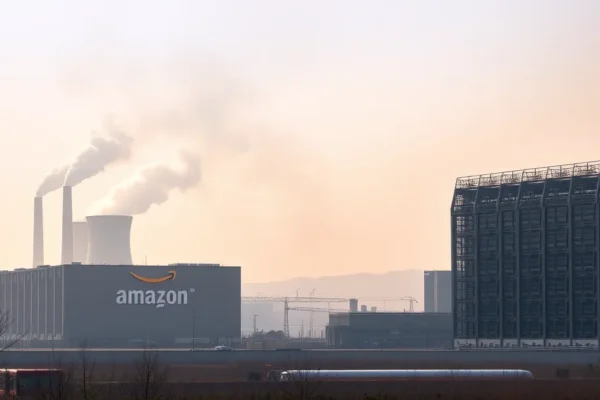
The Tech Giant’s New Texas Powerhouse: A Green Question Mark
You’ve probably heard about Amazon’s massive growth, especially with the rise of things like artificial intelligence and cloud computing. To keep all that digital magic running, they need a ton of electricity. Recently, there’s been a lot of buzz around a new Amazon data center in West Texas, and it’s not just about the technology. It’s about how it’s being powered, and that’s raising some serious environmental eyebrows.
This new facility isn’t just any data center. It’s part of Amazon Web Services AWS, the engine behind a huge chunk of the internet’s infrastructure. But the real story here is the adjacent power plant, a facility that burns natural gas to keep those servers humming. Reports suggest this plant could be one of the country’s largest emitters of greenhouse gases, specifically carbon dioxide. This immediately sparks a conversation: can a tech leader pushing the boundaries of innovation also be a significant contributor to pollution?
Why the Sudden Spotlight on This Power Plant?
So, why are people talking about this right now? It’s a perfect storm of factors. Firstly, the demand for cloud computing and AI-driven services is exploding. Businesses and consumers alike are relying more and more on powerful data centers. This means companies like Amazon are building them faster than ever.
Secondly, there’s a growing global focus on environmental impact and climate change. Consumers, investors, and governments are all paying closer attention to how big corporations manage their carbon footprint. When a company known for innovation also operates a facility that could have a substantial environmental impact, it’s bound to attract attention. The sheer scale of Amazon’s operations means that any energy choices they make have big consequences. This particular Amazon data center and its associated polluting power plant are now at the center of that scrutiny.
A Look Back: Powering the Digital Age
To understand the current situation, we need a little background. For years, the tech industry has grappled with its energy consumption. Data centers are notoriously power-hungry beasts. They need constant electricity to run the servers, keep them cool, and ensure everything is always on. Historically, many of these facilities have relied on the cheapest and most readily available power sources, which often meant fossil fuels.
The energy landscape in Texas is also a crucial piece of the puzzle. The Texas power grid is largely independent and heavily reliant on natural gas. While it offers reliability, it’s also a significant source of greenhouse gas emissions. Companies setting up shop in Texas often tap into this existing infrastructure. Amazon’s decision to build a data center there, and to power it with a natural gas plant, fits into this broader context of energy needs and regional power generation. The debate is about whether this reliance on fossil fuels is still acceptable in an era where renewable energy options are increasingly viable.
The Ripple Effect: What This Means for Everyone
This situation has several layers of impact. For the environment, the primary concern is the increase in greenhouse gas emissions. Burning natural gas releases carbon dioxide, a major contributor to climate change. If this plant is indeed one of the largest emitters, it represents a significant step backward in the fight against global warming. This is especially concerning given the push for companies to adopt more sustainable practices.
For Amazon, it presents a reputational challenge. As a company that often positions itself as forward-thinking, operating a large fossil fuel-powered plant complicates its image. It could affect customer loyalty, investor confidence, and the company’s ability to attract talent who are increasingly concerned about corporate responsibility.
For the broader technology sector, this raises questions about the future of energy for data centers. With the surge in artificial intelligence and other computationally intensive tasks, energy demand will only grow. This event highlights the urgent need for more sustainable energy solutions for these facilities. Relying on fossil fuels, even natural gas, is becoming a less defensible long-term strategy. We’re seeing a growing tension between the insatiable energy needs of cutting-edge technology and the imperative to reduce our collective carbon footprint.
Looking Ahead: The Path Forward for Powering Tech
What happens next? Several scenarios are plausible. Amazon might face increased pressure from environmental groups and the public to find cleaner ways to power its operations. This could mean investing more heavily in renewable energy sources, such as solar and wind power, perhaps even building its own renewable energy farms specifically for its data centers.
Another possibility is that the company will explore innovative energy technologies. This could include advanced energy storage solutions or even exploring the potential of carbon capture technologies for its power plants, though these are still largely in development for widespread use.
We might also see increased regulatory scrutiny. As the environmental impact of data centers becomes more apparent, governments could implement stricter regulations on energy consumption and emissions for these facilities. This would push companies to prioritize cleaner energy solutions. Ultimately, the future likely involves a more diversified and sustainable energy mix for powering the digital world. The success of an Amazon data center will increasingly be measured not just by its processing power, but by its environmental sustainability.
Frequently Asked Questions
Is the Amazon data center in West Texas the only one using natural gas?
While this particular Amazon data center’s power source has drawn significant attention, the use of natural gas to power data centers is not uncommon, especially in regions where natural gas is a readily available and relatively inexpensive energy source, like Texas. However, the scale of this specific plant and its potential greenhouse gas emissions make it a point of concern.
What are the main concerns about this Amazon data center’s polluting power plant?
The primary concern revolves around the substantial greenhouse gas emissions, particularly carbon dioxide, that result from burning natural gas. This contributes to climate change. Critics worry that such a large emitter offsets the environmental benefits of the technologies it supports, like artificial intelligence, and goes against the global push for sustainability and renewable energy.
How does this relate to the Texas power grid?
The Texas power grid is known for its independence and significant reliance on fossil fuels, especially natural gas. Amazon’s decision to build a data center and power plant in West Texas means it is tapping into this existing infrastructure. This highlights the broader challenge of modernizing energy sources within the state to meet growing energy demands from industries like tech while also addressing environmental impact and the pursuit of renewable energy.
What is Amazon’s stance on renewable energy?
Amazon has publicly committed to sustainability goals and has invested in renewable energy projects, aiming to power its operations with 100% renewable energy by 2030. However, the operation of a large natural gas power plant for its data centers presents a contradiction that is being closely examined by environmental advocates and the public.
What is the impact of high energy consumption by data centers on the environment?
High energy consumption by data centers directly translates to a larger carbon footprint if the electricity comes from fossil fuels. This contributes to climate change through the release of greenhouse gases. Beyond emissions, the demand for electricity can strain power grids and increase the need for energy infrastructure, which can also have environmental consequences. The push for artificial intelligence and advanced computing further intensifies this energy demand, making the source of that power critically important for the overall environmental impact.











