

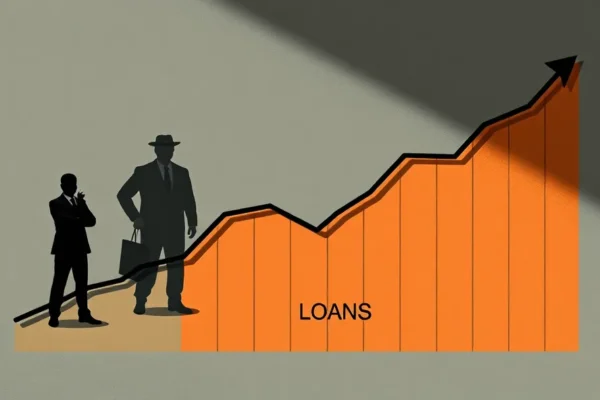
What is Private Credit and Why Does It Matter
To understand the current shifts in the global economy, we must first define private credit. Simply put, private credit refers to loans provided by non-bank lenders, such as private equity firms, investment funds, or insurance companies, rather than traditional banks. While banks are heavily regulated and follow strict rules about who they can lend to, private credit providers operate with more flexibility. They often lend to companies that might be considered too risky or too niche for a standard commercial bank.
Think of it like the difference between a neighborhood library and a specialty bookstore. A library (the traditional bank) follows rigid rules about late fees and who can check out books. A specialty bookstore (the private credit firm) might offer you a rare edition or a custom deal, but they might charge you more for the privilege and require you to sign a stricter contract. When the businesses taking these loans start to struggle, we see what experts call troubled loans. These are instances where a borrower is having a hard time paying back their debt on time.
You should care about this because the private credit market has grown into a multi-trillion dollar industry. When these loans run into trouble, it can send ripples through the entire financial system, potentially affecting everything from your pension fund to the health of the broader job market.
How the Private Credit Lending Machine Works
Imagine a mid-sized company that wants to expand by buying a competitor. They go to a private equity firm to borrow money. The private equity firm agrees to lend them the cash, but because the loan is private, the terms are not public. The company agrees to pay back the loan with interest, typically using their expected future profits as collateral.
In a healthy economy, the company makes enough money to pay the interest, everyone is happy, and the loan is eventually repaid. However, imagine the economy slows down or interest rates rise. Suddenly, the company finds that its profits are shrinking. Now, the company struggles to pay its monthly interest payments. This is the moment a loan becomes a troubled loan.
In recent months, financial analysts have noted that these problems are becoming more frequent. When a private credit provider realizes a borrower cannot pay, they have to decide whether to give the company more time, force them to restructure their debt, or, in the worst case, seize the company assets. This process of managing distressed debt is a key part of how these lenders mitigate investment risk, but it also creates uncertainty for the companies involved and their employees.
Why Market Stress Affects Your Wallet
You might wonder how a struggle between a private firm and a company affects you if you do not own shares or run a business. The impact is indirect but significant. First, many pension funds, university endowments, and insurance companies invest money into these private credit pools to generate higher returns than they could get from a simple savings account.
If private credit markets face a credit crunch—a situation where it becomes very difficult for companies to borrow money—the economy slows down. Companies that cannot get loans cannot hire new workers or invest in new products. This leads to weaker job growth. Furthermore, if these investment pools perform poorly, the institutions managing your retirement savings may see lower returns, potentially impacting your long-term financial planning.
While lenders benefit when times are good by collecting high interest, they bear the brunt of the pain when things go wrong. Conversely, borrowers benefit from easier access to capital initially, but they are the ones who face insolvency—the state of being unable to pay debts—when they can no longer handle their financial obligations.
The Current State of Private Credit and Troubled Loans
The private credit market has exploded in size since the 2008 financial crisis as banks pulled back from lending to smaller businesses. According to an analysis by the Financial Times, the volume of troubled loans in the private credit sector has climbed to levels not seen since 2017. This indicates a growing level of financial stress across the landscape.
This trend is largely driven by the recent era of higher interest rates. When interest rates were near zero, it was cheap for companies to borrow and pay back their debts. Now that central banks have raised rates to combat inflation, the cost of servicing those debts has surged. Many companies that were profitable when rates were low are now finding their profit margins squeezed by the cost of their loans. This shift has turned what was once a steady investment into a source of anxiety for many in the financial sector.
Practical Implications for Your Financial Awareness
When you see headlines about private credit or loan defaults, do not panic, but do stay informed. These reports often serve as a “canary in the coal mine” for the broader economy. If businesses across the country are struggling to pay their debts, it is often a sign that consumer spending is slowing down or that operational costs are too high.
One common misconception is that private credit risks are isolated. In reality, they are interconnected with the banking system and the stock market. If a major lender fails, it can force a fire sale of assets, which can drive down the prices of stocks and bonds more generally.
Actionable insights for the average person include:
- Diversify your investments: Do not rely too heavily on a single asset class. High-yield investments often carry hidden risks.
- Monitor economic indicators: Pay attention to broad reports on corporate earnings and interest rate trends, as these are the primary drivers of loan defaults.
- Focus on stability: In times of market stress, prioritize your own emergency fund and reduce high-interest personal debt to protect your own household balance sheet.
Connecting the Dots to Other Financial Concepts
Private credit does not exist in a vacuum. It is deeply tied to the concept of leverage—the use of borrowed money to amplify potential returns. Understanding how leverage works is vital to grasping why the current market is straining. Furthermore, this topic connects closely to the concept of credit spreads, which is the difference in yield between two bonds of similar maturity but different credit quality. When the market perceives more risk, these spreads typically widen, reflecting the fear of potential defaults.
To deepen your knowledge, you might want to explore how central bank monetary policy influences the cost of debt, or look into the basics of bond markets, which are the more transparent “public” cousins to the private credit market.
Common Questions About Private Credit and Market Stress
What does it mean when we say a loan is distressed or troubled?
A troubled loan is one where the borrower is likely to miss an interest or principal payment. This happens when the company’s financial health declines to a point where their current income is insufficient to cover their debt obligations.
Can individuals directly invest in private credit?
Most private credit opportunities are reserved for institutional investors or high-net-worth individuals, though some newer investment platforms are starting to offer similar products. It is important to remember that these investments generally have higher risk than traditional mutual funds or savings accounts.
How do private credit defaults affect inflation?
While not a direct cause, widespread defaults can lead to reduced business activity and lower consumer spending. This decrease in demand is often what policymakers monitor when trying to assess if the economy is cooling down enough to lower inflation.
What is the difference between a credit crunch and a standard market dip?
A credit crunch is a specific event where banks and other lenders become extremely unwilling to lend money to anyone, making it nearly impossible for businesses to function. A market dip is a temporary decline in asset prices, which is a normal, expected feature of the business cycle.
Are private credit loans protected by government insurance?
No. Unlike standard bank deposits which are often protected by government-backed insurance up to a certain limit, private credit loans are private contracts. If the borrower defaults and the lender goes out of business, the investor can lose their entire investment.
This article is for educational purposes only and does not constitute financial advice. Financial situations vary greatly from person to person, and investment risks, including the potential loss of principal, are real. You should consult with a qualified financial advisor or professional before making any significant financial decisions. Market conditions change rapidly, and past performance is never a guarantee of future results.











