

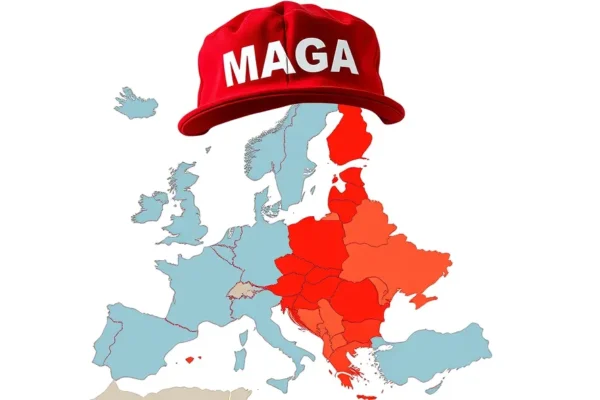
Understanding the Economic Implications of Geopolitical Shifts
When we talk about the movement of global politics, we are really talking about the movement of capital. In financial terms, geopolitics refers to how geography and political power influence the way money flows between nations. When a movement like MAGA Europe takes center stage, it represents a shift in how the United States views its transatlantic alliance. For the average person, this is not just a debate happening on television; it is a shift in the rules that govern global trade, currency strength, and the cost of the goods you buy at the grocery store.
Think of international relations like a massive, global supply chain. If the companies in that chain—the countries—begin to renegotiate their contracts or stop working together, the cost of moving goods increases. Understanding the MAGA Europe agenda means looking at how a change in foreign policy can directly impact the value of your savings, the stability of your investments, and the prices you pay daily.
The Mechanics of Global Policy and Your Money
To understand the US European relations shift, imagine two neighbors who have shared a fence and a business agreement for seventy years. One neighbor, the United States, decides they are no longer happy with the cost of maintaining that fence or the terms of the trade agreement. They start proposing new, stricter rules or threatening to walk away from the partnership altogether. This creates uncertainty.
In the world of finance, uncertainty is the enemy of growth. When the Trump Europe strategy prioritizes different trade terms or challenges existing alliances, financial markets react. Here is the step-by-step mechanism of how this happens:
- Policy Change: A government announces a change in trade tariffs or security funding requirements.
- Market Reaction: Investors, fearing higher costs for companies that do business in Europe, sell off stocks related to international trade.
- Currency Fluctuation: As money leaves one region to seek safety in another, the value of the dollar relative to the Euro shifts.
- Consumer Impact: If the dollar becomes stronger or weaker, the imported goods you buy—like German cars or French wine—change in price almost immediately.
This is not an abstract theory. When policies move toward protectionism—the practice of shielding a country’s domestic industries from foreign competition by taxing imports—global companies often pass those tax costs on to you, the consumer.
Why the Political Landscape Affects Your Personal Finances
Why should a household budget care about the European political landscape? The answer lies in your portfolio and your purchasing power. If you own a retirement fund, you likely own shares in global companies. If those companies face new trade barriers or regulatory hurdles due to shifting political ideologies, their profits can drop. When profits drop, your investment returns may follow.
Furthermore, inflation is often linked to trade policy. If the United States imposes tariffs—which are essentially taxes on imported goods—on European products, the companies bringing those products into the country will raise prices to cover the tax. This contributes to inflation, which is the steady increase in the price of goods and services over time. For a family, this means your dollar does not stretch as far as it did the year before.
Who benefits? Often, local manufacturers who no longer have to compete with cheaper foreign goods see an increase in demand. Who is affected negatively? Consumers who now face higher prices, and international companies that depend on smooth, low-cost borders to maintain their global supply chains.
Historical Context of the Transatlantic Alliance
The relationship between the United States and Europe has been the bedrock of the global economy since the end of World War II. For decades, the strategy was built on the idea that a peaceful, unified Europe was good for American business. This was solidified through institutions like NATO and various free-trade agreements that lowered the costs of doing business across the Atlantic.
However, recent years have seen the rise of right-wing populism, which challenges the status quo. The MAGA movement, or Trump’s New Right, often frames Europe not just as a business partner, but as an ideological battleground. This group argues that the US has been paying too much for the defense of these nations while those countries compete unfairly in trade. According to the Congressional Research Service, the US remains the largest contributor to European defense, a point of significant contention in recent geopolitical strategy. As the political focus shifts toward “America First” policies, we are seeing a move away from the post-war consensus toward a more transactional, nation-by-nation approach to foreign affairs.
Applying Financial Logic to Political News
When you see headlines about the MAGA Europe agenda, it is helpful to look past the political rhetoric and ask: How does this change the cost of business? If you are planning your financial life, keep these three points in mind:
- Diversification is Key: Because geopolitical shifts can hurt specific regions, holding a mix of assets—some domestic, some international—can help protect you from localized shocks.
- Expect Volatility: When large political changes are proposed, the stock market often becomes jumpy. Do not make reactive decisions based on the news cycle.
- Focus on Long-Term Goals: Political cycles usually last four to eight years, but your financial goals, like retirement, span decades. Attempting to “time” the market based on which party is in power is rarely a successful strategy.
A common misconception is that a “stronger” trade policy always leads to a wealthier nation. While it may protect specific jobs in the short term, it can also lead to higher prices for everyone else. Always watch for how trade policies affect the total cost of goods in your local market.
Connecting to Broader Economic Ideas
This discussion of US foreign policy in Europe is fundamentally connected to several core economic concepts. Understanding International Trade is the first step, as it explains how countries benefit from comparative advantage—doing what they do best and trading for the rest. If you want to dive deeper, exploring the concept of Tariffs will help you understand why prices rise when governments interfere with trade. Additionally, studying Currency Markets will clarify why the value of your money changes when political tensions rise between the US and Europe. Linking these concepts provides a clearer picture of how global power dynamics dictate the health of your individual wallet.
Common Questions About MAGA Europe and Your Money
How does the MAGA Europe strategy affect inflation in the United States?
If the US implements higher tariffs on European goods as part of a new trade strategy, the cost of importing those items rises. Companies often pass these costs to the consumer, which can lead to higher prices and increased inflation for household goods.
Does a shift in US European relations mean I should move my money out of international stocks?
Financial professionals generally advise against making drastic changes to your portfolio based on political news. Instead, focus on a balanced, diversified approach that can withstand volatility in any one specific region or sector.
What are the risks of a changing transatlantic alliance for my retirement savings?
The primary risk is market volatility. If global trade slows down due to political tensions, international companies may see lower profits, which could temporarily decrease the value of index funds or mutual funds that hold those stocks.
Can individual investors protect themselves from geopolitical uncertainty?
Yes, by maintaining a diversified portfolio and keeping a long-term perspective. Avoiding emotional reactions to political headlines is one of the most effective ways to manage the risks associated with changing global policies.
How does the ideological conflict in European politics impact the global economy?
Political uncertainty in Europe can lead to less investment in the region and fluctuations in the value of the Euro. When the European economy slows down, it often has a ripple effect on global markets, as the US and Europe are deeply interconnected through trade and financial services.
This content is provided for educational purposes only and does not constitute financial, investment, or legal advice. Every individual’s financial situation is unique, and economic policies affect people in different ways depending on their specific assets, debts, and goals. Before making any major financial decisions, it is recommended that you consult with a qualified financial advisor who can help you navigate your personal circumstances. There are inherent risks in all investment strategies, and past market performance is not a guarantee of future results.











