

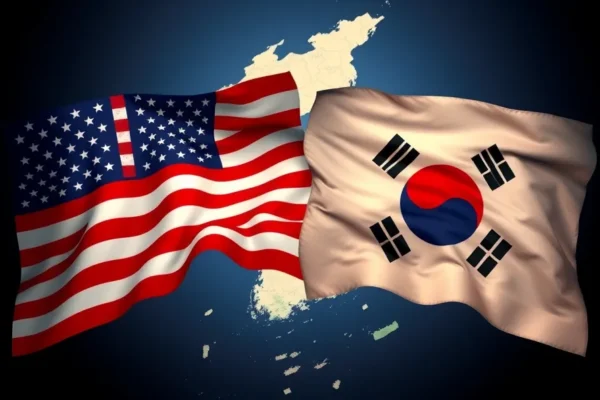
Understanding Geopolitical Shifts in Defense Alliances
In the world of finance and global affairs, understanding how countries interact is crucial. Just like a business needs to understand its market and competitors, individuals need to grasp broader economic and political forces that can shape their financial well-being. Today, we’re looking at a specific geopolitical shift: Donald Trump’s past demands to reduce US-South Korea military exercises, and what that means for regional security and the complex relationship on the Korean Peninsula.
At its core, this topic touches upon the concept of geopolitical risk. Geopolitical risk refers to the potential for political events or instability in one country or region to negatively impact the economic or financial conditions in another. Think of it like this: imagine a popular neighborhood restaurant suddenly closes due to a landlord dispute. This might not directly affect your personal finances, but if it’s a place many people in your community rely on for affordable meals, it can create ripple effects – higher grocery bills for some, more strain on community resources. Similarly, major shifts in defense alliances and military posture between countries can lead to instability, impacting trade, investment, and even the perceived safety of regions, which in turn can influence global markets.
How Defense Alliance Adjustments Work
Let’s break down how a change in military exercises between the US and South Korea might unfold. The US-South Korea alliance is a cornerstone of security in East Asia. For decades, the two nations have conducted regular joint military exercises. These drills are essentially practice sessions for their armed forces, simulating various combat scenarios and coordination efforts. They serve multiple purposes:
- Deterrence: They signal to potential adversaries, particularly North Korea, that the US and South Korea are prepared to defend themselves and each other.
- Readiness: They allow military personnel to train together, hone their skills, and ensure interoperability (how well their equipment and communication systems work together).
- Alliance Strengthening: They build trust and mutual understanding between the two allied militaries.
Donald Trump, during his presidency, expressed a desire to reduce the scale and frequency of these military drills. His reasoning often centered on the cost to the US and the idea that such exercises could be seen as provocative by North Korea, potentially hindering diplomatic progress with Kim Jong Un.
Imagine a neighborhood watch program. If two neighboring blocks, who typically patrol together to keep everyone safe, decide to stop their joint patrols because one block thinks it’s too costly or might upset a troublemaker on another street, what happens? The troublemaker might feel emboldened. The residents of the affected blocks might feel less secure. The shared sense of safety and cooperation weakens. This is analogous to how a reduction in US-South Korea military exercises can be perceived.
Why These Shifts Matter to Global Stability and Your Finances
Understanding these geopolitical shifts is vital because they can have tangible economic consequences.
For Individuals: While you might not be directly involved in military operations, shifts in global stability can affect your investments. If geopolitical tensions rise, markets can become volatile. This means the value of your stocks, bonds, or retirement funds could fluctuate more dramatically. Furthermore, increased regional instability can sometimes lead to disruptions in global supply chains, impacting the prices of goods you buy – think of anything from electronics to clothing.
For Markets and Economies: A perceived weakening of an alliance like the US-South Korea one can increase geopolitical tensions in the Korean Peninsula. Investors often dislike uncertainty. If uncertainty rises, capital may flow out of the region, impacting local economies and potentially global financial markets. Countries reliant on stable trade routes can be affected. For example, South Korea is a major global exporter of technology. Any perceived instability could affect the production and export of these goods. Conversely, some might argue that reducing exercises could open avenues for de-escalation, which could be positive for markets if it leads to lasting peace. The impact is complex and depends heavily on the specific context and reactions of all parties involved.
Historical Context of the US-South Korea Alliance and Military Drills
The US-South Korea alliance was forged in the crucible of the Korean War (1950-1953). Following the war, the United States stationed troops in South Korea and entered into a Mutual Defense Treaty. This alliance has been the bedrock of Seoul security for over seven decades, acting as a crucial deterrent against North Korean aggression.
The joint military exercises have been a constant feature of this alliance, evolving in name and scope over the years, often adapting to the prevailing security environment. Events like North Korea’s nuclear tests or missile provocations have historically led to increased US-South Korea military readiness and, at times, larger or more complex drills. Conversely, periods of diplomatic engagement, such as the summits between Donald Trump and Kim Jong Un, have sometimes coincided with discussions about pausing or scaling back these exercises, as a gesture of good faith or to facilitate negotiations. The debate over the utility and impact of these drills is therefore not new, but Trump’s direct engagement and demands brought it to the forefront of international discussion.
Practical Implications for Understanding Global Affairs
When you hear about US-South Korea military drills being altered, it’s important to look beyond the headlines.
- Consider the Motivations: Why is this change being proposed or implemented? Is it a strategic shift in US foreign policy, a response to diplomatic overtures, or a tactical move in a broader negotiation?
- Assess the Reactions: How are South Korea, North Korea, China, Japan, and other regional players reacting? Their responses can provide crucial clues about the perceived impact on regional security.
- Think Long-Term: Is this a temporary adjustment or a fundamental change in the alliance’s posture? Short-term fluctuations might be less impactful than long-term reorientations.
A common misconception is that military exercises are purely about aggression. While they are a show of force, they are also a critical component of maintaining peace through deterrence and readiness. Reducing them can have unintended consequences if not carefully managed.
Connecting Defense Posture to Broader Economic Concepts
Understanding the geopolitical implications of defense posture is linked to several broader financial and economic concepts:
- Risk Management: Just as individuals manage personal financial risks, governments and international bodies manage geopolitical risks. A stable geopolitical environment generally reduces investment risk.
- Foreign Direct Investment (FDI): Businesses are more likely to invest in countries or regions they perceive as stable and secure. Shifts in defense alliances can influence FDI flows.
- Currency Exchange Rates: Geopolitical instability can sometimes lead to fluctuations in currency values, as investors move money to perceived safer assets.
- Defense Spending: Changes in military exercises and alliance structures can influence defense budgets, which represent a significant allocation of public funds.
Frequently Asked Questions About US-South Korea Military Drills and Alliances
How does the US-South Korea alliance affect general security in East Asia?
The US-South Korea alliance acts as a significant deterrent against aggression on the Korean Peninsula, contributing to regional stability by signaling a strong commitment to mutual defense.
What are the primary goals of joint military exercises between the US and South Korea?
The main goals are to enhance military readiness, ensure interoperability between allied forces, and deter potential adversaries through a visible show of combined strength and commitment.
How might Donald Trump’s demand to reduce military drills impact Kim Jong Un’s actions?
Reducing drills could be interpreted by Kim Jong Un as a sign of reduced US commitment, potentially emboldening him to take more aggressive actions, or conversely, it could be seen as an opportunity for further de-escalation if coupled with genuine diplomatic progress.
What is the role of Seoul security in the context of the US-South Korea alliance?
Seoul security is a direct beneficiary of the alliance and the military drills, as they are designed to protect the South Korean capital and its population from potential threats.
Can changes in US foreign policy regarding military drills affect global markets?
Yes, increased geopolitical tensions or perceived shifts in regional power dynamics due to changes in defense posture can lead to market volatility and impact investment decisions worldwide.
What are the economic risks associated with geopolitical tensions on the Korean Peninsula?
Economic risks include disrupted trade, reduced foreign investment, increased defense spending, and potential supply chain disruptions, all of which can negatively impact economies both regionally and globally.
Disclaimer and Advice
This article provides general educational information about the geopolitical implications of military exercises and alliances. It is not intended as financial advice. Financial situations are unique, and decisions related to investments, security, or economic impacts should always be made in consultation with qualified financial professionals. The global economic and political landscape is complex and constantly evolving; therefore, outcomes can vary significantly based on individual circumstances and broader contextual factors.











