

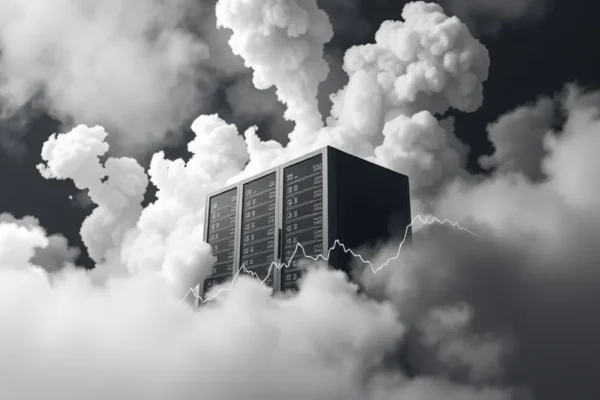
The AI Power Drain and the Natural Gas Puzzle
Artificial Intelligence (AI) is rapidly transforming our world, from how we work and play to how we solve complex global challenges. At the heart of this revolution are massive computing facilities known as AI data centers. These aren’t your typical server rooms; they are colossal structures humming with specialized hardware designed to process the immense amounts of data needed to train and run sophisticated AI models. Think of them as the giant brains powering our AI future. However, the very engines that drive AI innovation – the data centers – are voracious consumers of electricity. Recent projections about rising natural gas prices introduce a significant financial risk for the companies that build and operate these AI data centers, often referred to as hyperscalers. Hyperscalers, like Amazon Web Services (AWS), Microsoft Azure, and Google Cloud, are the backbone of the modern internet and the primary builders of these AI powerhouses. The escalating cost of natural gas, a primary fuel source for electricity generation in many regions, directly impacts their operational expenses. This isn’t a distant problem; it’s a present challenge shaping the economics of AI development and deployment.
How AI Data Centers Gobble Up Power
To understand the impact of natural gas prices, we first need to grasp how AI data centers consume electricity. Imagine a sprawling city filled with millions of tiny, super-fast calculators. That’s a simplified analogy for an AI data center. These “calculators” are specialized computer chips, primarily Graphics Processing Units (GPUs), which excel at the parallel processing needed for AI tasks. These GPUs, along with thousands of other components, generate an enormous amount of heat. To prevent overheating and ensure optimal performance, vast cooling systems are required. These systems, from chillers to massive air conditioning units, also demand substantial amounts of electricity.
The core mechanism is simple: more computing power equals more electricity consumption. As AI models become more complex and the demand for AI services grows – think of advanced chatbots, self-driving car algorithms, or sophisticated medical diagnostic tools – the number of GPUs and the intensity of their operation increase. This creates a snowball effect on power consumption. A single large AI data center can consume as much electricity as a small city. The primary source of this electricity often comes from the grid, which, in many parts of the world, relies heavily on natural gas power plants. When the cost of natural gas rises, so does the cost of electricity generated from it, directly affecting the bottom line of hyperscalers.
AI Data Centers in Action Today
AI data centers are not a future concept; they are foundational to the digital services we use daily. Companies like Nvidia, whose GPUs are the workhorses for many AI applications, are experiencing unprecedented demand. Hyperscalers like Microsoft Azure, Google Cloud, and AWS are investing billions in building new AI-optimized data centers and expanding existing ones to meet this demand. For example, Microsoft has announced significant investments in AI infrastructure, including plans to build new data centers in various locations, all of which will require substantial energy.
These facilities are currently enabling a wide range of real-world applications. They are used for training large language models like OpenAI’s GPT series, powering image and speech recognition services, facilitating complex scientific simulations, and enabling advanced analytics for businesses. The maturity level of these AI data centers is rapidly advancing from early adoption to mainstream deployment, with hyperscalers actively competing to offer the most robust and cost-effective AI computing resources. Availability is broad, with cloud-based AI services accessible to businesses and developers globally.
The Competitive Arena for AI Power
The hyperscalers are in a fierce race to capture the AI market, and their data center infrastructure is a critical battleground. Amazon Web Services (AWS), Microsoft Azure, and Google Cloud Platform (GCP) are the dominant players, each investing heavily in AI-specific hardware and data center expansion. Beyond these giants, specialized AI infrastructure providers and even large tech companies with significant internal AI needs are developing their own data center capabilities. For instance, Meta (Facebook) has its own custom-designed data centers optimized for AI workloads.
What differentiates them is not just the scale, but also the efficiency and the type of hardware deployed. While all rely on GPUs for AI processing, they are also exploring custom AI chips and more efficient cooling solutions to manage power consumption. For example, Google has developed its own Tensor Processing Units (TPUs) specifically for AI tasks, aiming for greater efficiency than general-purpose GPUs for certain workloads. Microsoft and AWS are also developing their own custom silicon. The advantage often lies with the hyperscalers due to their immense scale, existing infrastructure, and ability to negotiate favorable energy contracts. However, the rising energy prices are forcing everyone to re-evaluate their strategies.
The Ripple Effect of Rising Energy Costs
The escalating cost of natural gas, and consequently electricity, has profound implications for the tech industry and the broader economy. For hyperscalers, increased data center costs directly translate into higher operating expenses. This can lead to price increases for AI services, making advanced AI capabilities less accessible to smaller businesses and startups. It could also slow down the pace of AI innovation if companies become more hesitant to undertake computationally intensive research and development due to prohibitive energy bills.
The economic implications extend beyond the tech companies themselves. The reliance on natural gas for electricity generation means that fluctuations in gas prices can impact inflation and the cost of doing business across many sectors that depend on cloud computing and AI services. From e-commerce to healthcare, every industry that leverages AI will feel the pinch. Socially, this could exacerbate the digital divide, as access to cutting-edge AI tools becomes more expensive. On a more positive note, it could accelerate the adoption of renewable energy sources for data centers, a development with long-term environmental and economic benefits. The short-term impact is a squeeze on margins and potentially higher prices, while the long-term impact could be a more diversified and sustainable energy infrastructure for AI.
The Bottlenecks and Hurdles Ahead
Despite the rapid advancements, significant limitations and challenges persist for AI data centers, particularly concerning energy consumption and costs. One of the primary bottlenecks is the sheer power appetite of modern AI models. As models grow larger and more complex, their training and inference requirements surge, demanding ever more electricity. The availability of electricity itself is becoming a concern in some regions, with data center growth straining local grids.
Technical challenges include improving the energy efficiency of AI hardware and cooling systems. While progress is being made, current hardware still generates substantial heat, requiring energy-intensive cooling. The reliance on fossil fuels like natural gas for electricity generation presents a clear environmental challenge and a financial vulnerability. Adoption barriers include the high upfront cost of building these specialized facilities and securing reliable, affordable energy sources. Regulatory hurdles related to energy use and environmental impact can also slow down expansion plans. Many AI capabilities are still in early stages of deployment, and the long-term sustainability of their power needs remains an open question.
The Future Trajectory of AI Energy Consumption
The future trajectory for AI data centers is a complex interplay of increasing demand for AI capabilities and the urgent need for more sustainable and cost-effective energy solutions. We can expect to see continued innovation in energy-efficient AI hardware, including custom-designed chips that are optimized for specific AI tasks, as highlighted by ongoing research from companies like Intel and AMD alongside the major cloud providers.
Furthermore, hyperscalers are increasingly investing in and exploring renewable energy sources to power their data centers. This includes direct investments in solar and wind farms, as well as innovative approaches like using waste heat from data centers for local heating or exploring advanced cooling technologies that reduce energy demand. The development of more efficient AI algorithms themselves, which require less computational power to achieve similar results, is also a critical area of research. Over the next 3-5 years, expect to see a greater push towards hybrid energy solutions and a more aggressive decarbonization strategy driven by both environmental concerns and the financial pressures of energy price volatility.
Key Questions and Answers
What are hyperscalers and why are they concerned about natural gas prices?
Hyperscalers are large cloud computing providers like Amazon Web Services, Microsoft Azure, and Google Cloud. They build and operate massive data centers that power AI. They are concerned because these data centers consume vast amounts of electricity, and natural gas is a major fuel source for electricity generation, meaning its price directly impacts their energy costs for AI data centers.
How does AI data center energy consumption relate to natural gas?
AI data centers require enormous amounts of electricity to power their servers and cooling systems. In many regions, this electricity is generated by power plants that burn natural gas. Therefore, as natural gas prices increase, the cost of electricity for these data centers rises, impacting the tech companies that run them.
Are current AI data centers already impacted by rising energy prices?
Yes, the impact is already being felt. While hyperscalers often have long-term energy contracts, the rising cost of natural gas is putting upward pressure on electricity prices globally. This affects their operational expenses and could influence the pricing of AI services offered to customers.
What are the alternative energy sources being considered for AI data centers?
Companies are actively exploring and investing in renewable energy sources such as solar, wind, and geothermal power. They are also looking into improving energy efficiency through advanced hardware and cooling techniques, and exploring hydrogen as a future energy option.
How long until AI data centers are less reliant on fossil fuels?
A complete transition away from fossil fuels for all AI data centers will take considerable time, likely decades. However, we are seeing a significant and accelerating shift towards renewable energy procurement and on-site generation. Many hyperscalers aim to power their operations with 100% renewable energy in the coming years, though this doesn’t fully eliminate reliance on grid electricity which may still be generated from natural gas in some areas.
What are the long-term financial risks for tech companies due to energy costs?
The long-term financial risks include increased operating expenses, potential price hikes for AI services, reduced profit margins, and the possibility of constrained growth if energy availability or cost becomes a significant bottleneck. This also incentivizes investment in more energy-efficient technologies and renewable power solutions to mitigate these risks.
This article discusses emerging trends and projections. The technological landscape and energy markets are dynamic, and future developments may differ from current expectations. Specific financial implications will vary based on geographical location, energy contracts, and individual company strategies.











