

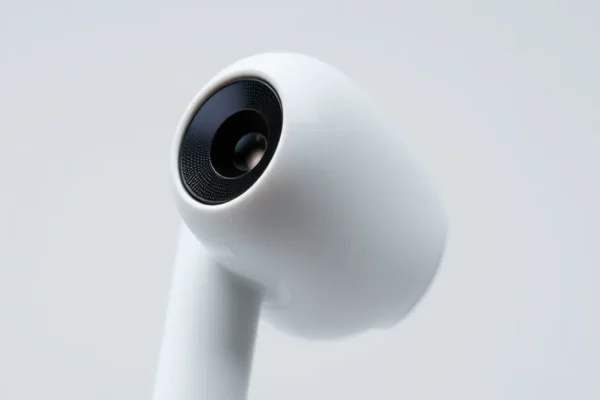
A New Era for AirPods: Cameras and the Privacy Puzzle
In the rapidly evolving world of wearable technology, Apple has often been at the forefront, blending innovative features with user-centric design. The latest buzz centers around a rumored development: Apple AirPods equipped with cameras. This isn’t just about enhanced audio tech; it’s a fascinating look at how emerging capabilities in consumer electronics can be balanced with paramount privacy concerns. The idea of tiny cameras embedded in our earbuds might sound like science fiction, or worse, a privacy nightmare. However, Apple’s approach, as suggested by patent filings and industry speculation, is reportedly focused on mitigating precisely those fears, aiming to prevent unauthorized photo and video recording by users.
The Innovation: More Than Just Listening
The core innovation here lies in integrating camera sensors into earbuds, a space traditionally reserved for microphones and audio components. This development, widely discussed in recent tech news and hinted at through Apple’s patent applications, represents a significant leap for wearable devices. The problem it aims to solve, or rather, the capabilities it seeks to unlock while preempting misuse, is multifaceted. Imagine AirPods that can provide context-aware audio experiences, perhaps by understanding the visual environment to tailor soundscapes or offer real-time information. This could involve anything from translating signs in a foreign language to augmenting reality experiences in entirely new ways. The significance of this announcement, or rather the strong indications from Apple’s R&D, is its potential to redefine what AI wearables can do, moving beyond passive listening to active environmental interaction. This is particularly relevant now as the market for sophisticated wearable devices continues to expand, with companies constantly seeking the next major differentiator.
How the Cameras Could Work (and Stay Private)
At its heart, the idea of camera AirPods is to leverage visual data without compromising user privacy. The proposed mechanism is ingenious and relies heavily on sophisticated on-device processing and strict operational limitations. Think of it like a highly intelligent security guard for your own device. The cameras, according to patent filings (e.g., Apple’s patent applications related to ear-based devices), are not designed for general-purpose photography or videography. Instead, their primary function is likely to be for highly specific, user-initiated, and contextually relevant tasks. For instance, they might be used for advanced gesture recognition, allowing users to control their AirPods or connected devices with subtle head movements or hand gestures near the ear. Another potential application could be advanced health monitoring, using the cameras to detect subtle physiological changes. Crucially, Apple’s strategy to prevent misuse appears to revolve around a few key principles. One is the concept of “optical sensors for environmental sensing,” suggesting the cameras are primarily for understanding the user’s surroundings rather than capturing images for storage or transmission. Another is a design that likely disables recording capabilities unless explicitly and intentionally activated for a very specific purpose, and even then, with clear on-screen or audio cues to the user. The goal is to make these cameras utility tools, not surveillance devices. The processing of any visual data would ideally happen directly on the AirPods or the connected iPhone, minimizing the need to send raw visual information to external servers, thus bolstering Apple privacy standards.
Current State and Real-World Applications
As of now, camera-equipped AirPods are not a commercially available product. This technology is firmly in the realm of research, development, and patent filings. Apple is known for its rigorous testing and development cycles, often filing numerous patents that may or may not translate into consumer products. Therefore, while the concept is generating excitement in the tech news cycle, there are no concrete consumer-facing applications or products on the market today. The closest we’ve seen in the broader consumer electronics space are smart glasses that incorporate cameras, but these are typically bulkier and have faced their own set of privacy debates. The potential real-world applications, once realized, could be far-reaching. Imagine AirPods assisting visually impaired individuals by describing their surroundings, or enabling seamless integration with augmented reality overlays. For professionals, it could mean hands-free information retrieval and task management in environments where carrying a phone or tablet is impractical.
The Competitive Landscape
While Apple is exploring this frontier, they are not alone in envisioning cameras in wearable devices. Companies like Google (with its past ventures in smart glasses) and Meta (exploring camera integration in its Ray-Ban Stories smart glasses) have already stepped into this space, though with different form factors and use cases. Google’s early attempts with Google Glass highlighted the significant privacy hurdles that cameras in personal devices face. Meta’s Ray-Ban Stories, while offering photo and video capture, have also been subject to scrutiny regarding their transparency and data handling. Apple’s differentiator, if this camera-equipped AirPods concept comes to fruition, would likely be its focus on privacy-by-design. Unlike smart glasses that are visibly worn and capture a wider field of view, earbuds are more discreet. Apple’s historical strength in building user trust around Apple privacy could give it an advantage if they can successfully demonstrate that these cameras are purely for functional enhancement and not for covert recording. The key will be the strict limitations on what the cameras can do and how data is processed.
Implications and Impact
The implications of successful camera-equipped AirPods are profound, potentially reshaping how we interact with technology and our environments. For industries, it could unlock new avenues for augmented reality applications, personalized user interfaces, and advanced health monitoring. Economically, it could spur further growth in the already booming wearable devices market, creating new jobs in hardware design, AI development, and data security. Socially, the benefits could include enhanced accessibility for individuals with disabilities, more intuitive ways to learn and work, and richer entertainment experiences. However, the potential for misuse remains a significant concern. The social implications also hinge on public acceptance and trust. If Apple can effectively navigate privacy concerns, these AirPods could become a mainstream consumer electronic, fundamentally changing our relationship with always-on, context-aware technology.
Limitations and Challenges Ahead
Despite the exciting possibilities, significant limitations and challenges stand in the way of camera-equipped AirPods becoming a reality. The most prominent is the technical hurdle of miniaturization. Fitting high-quality camera sensors, processors, and power sources into the small form factor of an earbud without compromising comfort or battery life is a formidable engineering task. Power consumption is another major concern; cameras, even low-power ones, are energy-intensive. Apple would need to develop extremely efficient camera systems and battery technology to ensure reasonable usage times. Furthermore, the privacy concerns are not merely theoretical; they are practical and deeply ingrained. Even with built-in safeguards, public perception can be a significant barrier. Regulatory bodies worldwide are increasingly scrutinizing wearable devices with recording capabilities, and Apple would need to navigate a complex web of laws and consumer expectations. Cost is also a factor; advanced technologies often come with a premium price tag, potentially limiting initial adoption to early adopters and professionals.
The Future Trajectory: What’s Next for AirPods?
The future trajectory for camera-equipped AirPods, if pursued, likely involves iterative development. We might first see these capabilities integrated into more advanced, perhaps niche, professional audio devices before they trickle down to consumer-grade AirPods. Key developments to watch will include breakthroughs in sensor miniaturization, on-device AI processing for visual data, and battery efficiency. Apple’s commitment to its ecosystem and its strong track record in balancing innovation with user experience suggest that if they decide to move forward, they will do so cautiously. Expert consensus suggests that the timeline for such a product to reach consumers is likely several years away, with initial versions focusing on very specific, non-recording functionalities like environmental sensing or advanced gesture control. The evolution towards more sophisticated visual interaction will depend on overcoming the significant technical and privacy hurdles.
Key Questions and Answers about Camera AirPods
What exactly are camera AirPods?
Camera AirPods refer to a hypothetical future version of Apple AirPods that would incorporate small camera sensors. These are not designed for general photo or video recording by users but rather for specific, context-aware functionalities, potentially related to environmental sensing or gesture control, as suggested by patent filings.
Will these camera AirPods record my photos and videos without me knowing?
Based on Apple’s known emphasis on Apple privacy and patent filings, the design intent is to prevent unauthorized photo and video recording. The cameras are expected to have strict operational limitations, with processing likely occurring on-device and clear user cues to ensure privacy.
How do these cameras differ from cameras on smart glasses?
Unlike smart glasses, which have a wider field of view and are more visibly worn, camera AirPods are designed to be discreet. Their envisioned purpose is less about capturing broad environmental scenes and more about specific, localized sensing or user interaction, aligning with the philosophy behind wearable devices.
When will camera AirPods be available?
There is no confirmed release date, and these devices are currently in the research and development phase. Industry speculation suggests that if launched, they are likely several years away, with early versions focusing on limited functionalities. This is a prime example of emerging future tech.
Who benefits from this technology?
Potential beneficiaries include users seeking enhanced augmented reality experiences, improved accessibility features for individuals with disabilities, and professionals requiring hands-free, context-aware information. It also represents a significant advancement in AI wearables and audio tech.
What are the main privacy risks associated with camera AirPods?
The primary risks involve potential misuse for covert surveillance, unauthorized recording, and the collection of sensitive visual data without explicit consent. Apple’s success will depend on demonstrating robust technical safeguards and clear user controls to mitigate these concerns, a crucial aspect of consumer electronics innovation.
This article discusses potential future developments based on patent filings and industry analysis. Specific features, capabilities, and release dates are subject to change and are not guaranteed.











