

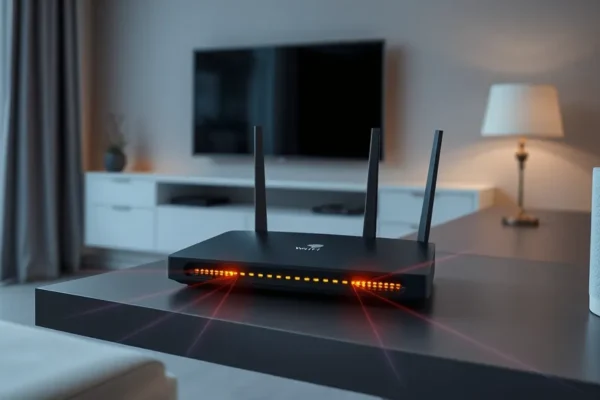
Xfinity Wi-Fi Motion Unveiled A New Way to Sense Your Home
Comcast, the leading broadband provider in the United States, has introduced a novel feature within its Xfinity Wi-Fi network called “Xfinity Wi-Fi Motion.” This innovation leverages existing Xfinity Gateways – the modems and routers that provide home internet access – to detect motion within a home. The core idea is to transform these everyday devices into sensors, potentially offering new insights into home activity without requiring dedicated cameras or other specialized smart home devices. Announced by Comcast in late 2023, this development marks a significant step in the evolution of home networking, moving beyond simple internet connectivity to offering environmental awareness.
How Xfinity Wi-Fi Motion Works
At its heart, Xfinity Wi-Fi Motion employs a form of “Wi-Fi sensing technology.” Unlike traditional motion detectors that use infrared or radar, this system analyzes disturbances in the Wi-Fi signal itself. Think of it like this: imagine a calm lake. If you throw a small pebble into the water, it creates ripples. These ripples are like the subtle changes that occur in Wi-Fi signals when something moves through the air.
The Xfinity Gateway emits Wi-Fi signals that bounce off surfaces and objects in the home, including people. When a person moves, these signals are subtly altered. The Gateway’s advanced processing capabilities can detect these minute changes in the Wi-Fi signal’s characteristics, such as its amplitude and phase. By analyzing patterns of these disturbances over time, the system can infer the presence and movement of objects or individuals within the range of the Wi-Fi network. Importantly, the technology is designed to detect motion, not to identify individuals or capture visual data. Comcast states that the system does not access video or audio feeds, focusing solely on the radio frequency disturbances created by movement.
Where Xfinity Wi-Fi Motion is Being Used
Currently, Xfinity Wi-Fi Motion is an opt-in feature for Xfinity internet customers in the United States who use compatible Xfinity Gateways. It is integrated into the Xfinity app, allowing users to set up motion alerts. For example, a user could receive a notification if motion is detected while they are away from home. This application taps into the growing market for smart home security and awareness. Beyond individual home use, Comcast has also explored potential applications in the commercial sector, envisioning its use in retail environments for foot traffic analysis or in businesses for monitoring activity within office spaces. The technology is presently in its early adoption phase, primarily targeting existing Xfinity subscribers seeking enhanced home monitoring capabilities.
Other Companies Exploring Wi-Fi Sensing
Comcast is not alone in exploring the potential of Wi-Fi sensing technology. Several research institutions and technology companies have been developing similar capabilities. For instance, researchers at the University of Washington have demonstrated Wi-Fi-based motion detection systems capable of tracking human movement and even identifying specific gestures. Companies like Apple have also explored Wi-Fi sensing in their devices, with patents suggesting its use for enhanced device interaction and environmental awareness.
The key differentiator for Xfinity Wi-Fi Motion is its integration directly into the home internet gateway, leveraging existing infrastructure. This approach aims for broad accessibility and ease of use for a large customer base. Competitors often rely on separate hardware, such as dedicated sensors or cameras, which can involve additional costs and setup complexities. Comcast’s advantage lies in its established network of Xfinity Gateways, allowing for a potentially seamless rollout to millions of households.
The Broader Impact of Motion Sensing Wi-Fi
The implications of Wi-Fi sensing technology like Xfinity Wi-Fi Motion are far-reaching. For consumers, it offers a more discreet and potentially more affordable way to enhance home security and monitor activity. This could be particularly appealing for those who are hesitant to install visible cameras or who have privacy concerns about traditional surveillance devices. In the broader smart home ecosystem, it could enable more responsive and intelligent automation, where lights or other devices could adjust based on detected presence without explicit user commands.
Economically, it could spur new services and business models around home awareness and security. It also presents an opportunity for internet service providers to offer value-added services beyond basic connectivity. Socially, while offering benefits in safety and convenience, it also raises questions about the increasing pervasiveness of sensing technologies within private spaces. The long-term impact could see a significant shift in how homes are monitored and managed, moving towards a more sensor-rich environment driven by existing network infrastructure.
Challenges and Limitations of Wi-Fi Motion Detection
Despite its innovative approach, Xfinity Wi-Fi Motion faces several limitations and challenges. One of the primary concerns, as raised by users and privacy advocates, revolves around data collection and privacy. While Comcast asserts that the system only detects motion and does not record video or audio, the fact that their equipment is sensing activity within a user’s home inevitably raises questions about what data is collected, how it is stored, and who has access to it. This is particularly sensitive given past controversies surrounding data privacy and surveillance.
Technically, Wi-Fi sensing is not infallible. Its accuracy can be affected by environmental factors such as signal interference from other devices, the layout of a home, and the number of objects that can reflect or absorb Wi-Fi signals. Distinguishing between intentional movements and accidental disturbances, like a pet moving or furniture shifting, can also be challenging. Furthermore, the effective range of detection is limited by the strength and reach of the Wi-Fi signal from the Gateway. For users with large homes or areas with weak Wi-Fi, the motion sensing capabilities may be significantly reduced. The reliance on specific Xfinity Gateway models also means that not all Xfinity customers can access this feature, creating a tiered experience.
The Future of Sensing with Your Internet Network
The trajectory of Wi-Fi sensing technology suggests a future where our internet networks become more integrated into the fabric of our daily lives, acting not just as conduits for information but also as passive observers of our environment. We can expect further refinements in the accuracy and granularity of motion detection. Research is ongoing to enable Wi-Fi sensing to differentiate between types of movement, detect vital signs like breathing, or even identify falls.
Comcast and other providers will likely continue to develop and expand the capabilities of these integrated sensing systems. Future iterations could offer more sophisticated analytics, allowing for better understanding of home occupancy patterns or more proactive security measures. The integration of AI and machine learning will be crucial in interpreting complex Wi-Fi signal variations and improving the reliability of motion detection. We may also see these technologies move beyond simple motion detection to more nuanced forms of environmental sensing.
Frequently Asked Questions About Xfinity Wi-Fi Motion
What exactly is Xfinity Wi-Fi Motion?
Xfinity Wi-Fi Motion is a feature offered by Comcast that uses your Xfinity Gateway’s Wi-Fi signals to detect movement within your home without the need for cameras.
Does Xfinity Wi-Fi Motion record video or audio?
No, Comcast states that Xfinity Wi-Fi Motion is designed to detect motion by analyzing disturbances in Wi-Fi signals only. It does not access or record video or audio feeds.
What are the main privacy concerns related to Xfinity Wi-Fi Motion?
Privacy concerns largely stem from the idea of a service provider’s equipment actively sensing activity within a private home, regardless of data type. Users are concerned about what data is collected, how it’s used, and who has access, even if it’s just motion data and not visual or audio. This relates to broader issues of internet privacy and consumer data rights.
How does this technology compare to other smart home motion sensors?
Unlike traditional motion sensors that use infrared or radar, Xfinity Wi-Fi Motion leverages existing Wi-Fi signals. This means no additional hardware purchase or installation is typically required for compatible gateways, making it potentially more convenient and cost-effective than some dedicated smart home surveillance systems.
Is Xfinity Wi-Fi Motion available to all Comcast customers?
No, availability is limited to Xfinity internet customers who use compatible Xfinity Gateways and choose to enable the feature through the Xfinity app.
What are the limitations of Wi-Fi sensing technology?
Limitations include potential inaccuracies due to signal interference, home layout, and the differentiating between various types of movement. The range is also dependent on Wi-Fi signal strength.
This article provides an overview of Xfinity Wi-Fi Motion, drawing on company announcements and general principles of Wi-Fi sensing technology. Further information on specific data collection policies and technical specifications can be found on Comcast’s official Xfinity website.











