

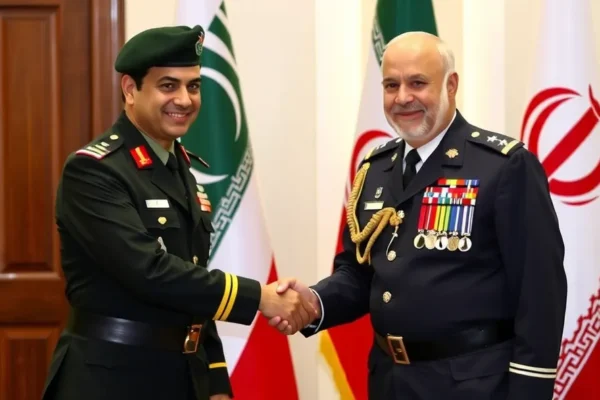
The Strategic Significance of the Pakistan Army Chief Visit
The recent high-level delegation led by Pakistan’s Chief of Army Staff (COAS) to Tehran marks a pivotal moment in South Asian and Middle Eastern statecraft. This visit represents a structured effort to stabilize one of the most volatile borders in the region. By engaging directly with Iranian military and political leadership, the Pakistani military establishment is attempting to transition from a period of reactive security measures to a strategy of proactive diplomatic and operational coordination.
According to official statements from the Inter-Services Public Relations (ISPR), the visit was triggered by a need to address long-standing security concerns along the shared 900-kilometer border. The Pakistan army chief visit is designed to move beyond mere rhetoric, aiming instead for standardized intelligence sharing and synchronized border patrolling. This development follows a period of heightened cross-border friction, signaling that both nations now view stability as a prerequisite for their own domestic economic objectives.
Why Tehran Talks Are Central to Security Strategy
The primary rationale behind this Iran Pakistan summit is the mitigation of persistent security threats that hinder economic development. In strategic terms, Pakistan is currently prioritizing the stabilization of its western borders to prevent the spillover of insurgent activities that threaten domestic infrastructure projects. By institutionalizing communication channels with Tehran, Pakistan seeks to reduce the cost of constant military mobilization along the border.
From a business-analyst perspective, this is a classic move to manage external risks. Just as a corporation might enter into a joint venture to share the costs of market entry, the Pakistani and Iranian security apparatuses are exploring a cooperative framework to share the burden of regional policing. The stated goal is to neutralize non-state actors who exploit the porous nature of the border, thereby creating a more predictable environment for cross-border trade and energy infrastructure development.
Competitive Dynamics and Regional Positioning
This engagement must be viewed within the context of intense regional competition. The geopolitical impact of this rapprochement is significant because it reshapes the balance of power in the wider neighborhood. While the U.S. and regional rivals like Saudi Arabia maintain complex, often competing relationships with both Tehran and Islamabad, this visit demonstrates that Pakistan is exercising its own strategic agency to address specific border vulnerabilities.
The primary beneficiaries of this move are the local business communities in Balochistan and Sistan-Baluchistan, who have long suffered from trade disruptions due to security volatility. Conversely, external powers that benefit from a divided or unstable Iran-Pakistan relationship may find this diplomatic alignment disruptive to their regional influence. The competitive positioning here is clear: both Islamabad and Tehran are prioritizing bilateral stability over the pressures of external geopolitical alignment, a shift that favors internal security consolidation.
Shifting Industry Trends in Border Security
The Iran Pakistan relations dynamic reflects a broader global shift in military diplomacy, where states are increasingly moving away from total reliance on global superpowers toward regional security blocs. This is not just a military move; it is a signal to regional investors that the border zones may become more accessible for infrastructure and energy transit projects in the future.
Industry peers, particularly in the energy and logistics sectors, are likely to monitor this progress closely. If this military-led diplomatic initiative succeeds, it could pave the way for the long-delayed Iran-Pakistan gas pipeline—a project that has been stalled for over a decade due to sanctions and security risks. For the logistics industry, a more secure border means lower insurance premiums and faster transit times, which would reshape the competitive landscape for regional supply chains.
Financial and Operational Implications
The financial implications of this summit are measured in cost avoidance. Maintaining military presence in high-conflict zones is a significant operational expense for the Pakistani state budget. Any successful reduction in localized violence allows for a potential reallocation of human and financial capital toward productive economic sectors.
In the short term, the financial impact is minimal and largely centered on diplomatic costs. However, in the long term, if the military-led bilateral relations lead to the formalization of border markets and the potential expansion of energy corridors, the positive revenue implications for the regional economy would be substantial. This is a classic “de-risking” strategy; by creating security certainty, the state attempts to lower the risk premium that currently keeps private investors away from cross-border ventures.
Execution Risks and Realistic Challenges
Investors and analysts must distinguish between the announced strategy and the actual execution risk. History shows that agreements of this nature often face significant hurdles. The biggest challenge lies in the decentralized nature of the actors on the ground. Even if the Pakistani and Iranian militaries reach a consensus at the top, the operational reality on the border is influenced by various tribal and non-state factions that may not be subject to central control.
Furthermore, external regulatory pressures—specifically international sanctions on Iran—create a hard ceiling on what this diplomatic engagement can achieve. No amount of military cooperation can bypass the banking and trade restrictions imposed by global financial systems. Therefore, while this visit is a positive step for regional security, it does not solve the fundamental trade barriers that exist due to global political tensions.
Stakeholder Implications and Cultural Shifts
The stakeholders in this process include regional security forces, local traders, and international investors watching from the sidelines. For the military, the success of this visit shifts their role from purely defensive combat units to regional security coordinators. This requires a cultural shift in how operational intelligence is handled, moving from a siloed approach to one of collaborative transparency.
For investors, this shift indicates a focus on long-term stability. While businesses are currently cautious, any evidence of sustained, lower-level conflict will improve market sentiment. The organizational challenge for both armies is to ensure that orders from the top are reflected in the day-to-day behavior of frontline units, where historically, misunderstanding and friction have occurred.
Outlook and Success Indicators
If this strategy succeeds, the next milestone will be the establishment of permanent, high-level intelligence-sharing centers and the expansion of legal border crossing points. The move should result in a measurable decrease in reports of cross-border skirmishes and a gradual increase in legal trade volumes between the two countries.
Key success indicators to watch include:
- The frequency and transparency of high-level ministerial or military follow-up meetings.
- The operationalization of new, regulated border markets.
- Any tangible progress on the energy infrastructure front, which would serve as a proxy for the success of bilateral security cooperation.
Strategic Q&A for Stakeholders
Will this army chief visit effectively secure the border?
It provides the necessary political and military framework for security, but the actual outcome depends on the execution on the ground. While it significantly reduces the likelihood of high-level misunderstandings, the presence of non-state actors remains a persistent variable that cannot be solved by diplomacy alone.
How does this impact Iran Pakistan relations in the long term?
The visit indicates a pivot toward prioritizing regional cooperation over external dependency. This suggests that both nations are moving toward a more pragmatic relationship focused on bilateral economic sustainability, provided they can manage their respective geopolitical constraints.
What is the most significant obstacle to success?
The primary obstacle is the global geopolitical environment, specifically the international sanctions regime against Iran. These sanctions place a strict limit on the level of economic integration that is possible, regardless of how successful the security cooperation becomes.
Why is this happening now?
The urgency is driven by internal economic pressures in both Pakistan and Iran. Both states require stable borders to manage their respective fiscal challenges, and there is a growing realization that prolonged security instability serves the interests of neither party.
What should investors look for next?
Investors should monitor the reopening of border trade terminals and the frequency of joint security patrols. These represent concrete, measurable steps that demonstrate whether the military diplomacy is translating into practical, real-world operational changes.
Business outcomes and geopolitical developments are subject to significant execution risk and external variables. Strategies mentioned in this analysis may be subject to change based on evolving regional security conditions, political instability, or shifts in international relations, and no specific business or economic success is guaranteed.











