

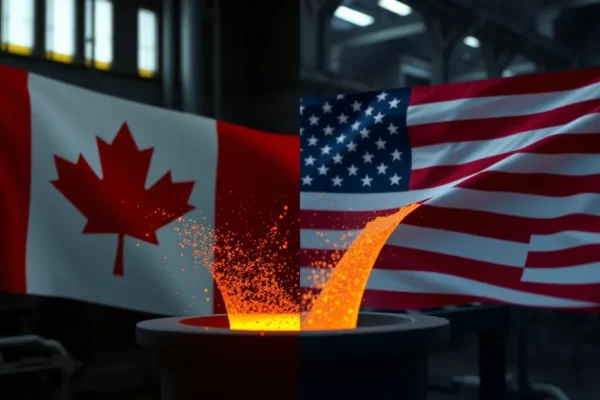
The Strategic Push for North American Aluminium Autonomy
In recent years, the geopolitical landscape has forced a fundamental shift in how the United States approaches raw material sourcing. The core development is a push to stabilize the North American supply chain, with Canada emerging as the primary partner for U.S. aluminium imports. This strategic realignment is not merely a diplomatic effort but a calculated business move to reduce dependence on overseas producers, particularly those in jurisdictions facing high tariffs or geopolitical friction.
The U.S. government and major industrial players have increasingly looked north to Canada, which currently accounts for over 50 percent of U.S. primary aluminium imports. According to data from the Aluminum Association, this relationship is anchored by integrated trade agreements like the USMCA, which ensures a level of regulatory and logistical stability that is difficult to replicate with offshore suppliers.
Why Canada is the Strategic Choice for the U.S.
The decision to lean into Canada as a primary supplier stems from both economic necessity and supply chain security. Businesses require consistent, reliable, and “clean” inputs to meet evolving environmental standards. Canada’s aluminium industry, dominated by players like Rio Tinto and Alcoa, benefits from an abundance of hydroelectric power, allowing the country to produce “low-carbon” aluminium. In a market where buyers are increasingly focused on Environmental, Social, and Governance (ESG) criteria, this is a distinct competitive advantage.
From a strategic standpoint, this move solves the problem of “supply chain volatility.” By shortening the distance between the source and the manufacturer, U.S. firms reduce shipping costs and exposure to global trade disputes. The strategic rationale is simple: replace high-risk, long-distance imports with a reliable, politically stable partner that integrates seamlessly into the existing North American industrial infrastructure.
Competitive Dynamics in the Aluminium Market
The rise of Canada as the premier source for U.S. aluminium imports places pressure on global competitors. Traditionally, countries like China and Russia have been dominant players in the global aluminium industry outlook. However, as the U.S. imposes stricter trade barriers and carbon-related levies, these international rivals face significant hurdles in maintaining their U.S. market share.
Domestic U.S. producers stand to gain from this shift, as it creates a more protected and predictable pricing environment. However, downstream manufacturers who rely on low-cost, subsidized aluminium from overseas may find their profit margins squeezed. The broader competitive positioning involves a move away from lowest-cost sourcing toward “friend-shoring,” where businesses prioritize trade with allies to ensure long-term availability of essential industrial metals.
Shifting Trends in the North American Supply Chain
This trend signals a broader transition in how the North American supply chain functions. We are witnessing a move from a globalized, just-in-time delivery model to one that emphasizes regional resilience. This shift suggests that industry peers will likely seek to formalize similar long-term procurement agreements with Canadian smelters to protect their operations from future global supply shocks.
Industry analysts expect this will lead to increased investment in Canadian metal production capacity. Companies are already exploring ways to modernize existing smelters to boost output without compromising on carbon footprints. The focus is no longer just on volume; it is on “sustainable volume” that satisfies both U.S. trade policy and the internal sustainability goals of large-scale manufacturing customers.
Financial and Operational Implications of the Shift
The financial impact of this transition is double-edged. For Canadian producers, the increased demand justifies capital expenditure on plant upgrades and expansion projects. Increased trade volume translates to stronger revenue projections and more favorable long-term contracts with U.S. automakers and aerospace companies.
Operationally, however, the structure of the business must change. Supply chains require more rigid integration between the two countries. This means increased spending on cross-border logistics and regulatory compliance. While this creates a more stable market, it also introduces a higher fixed-cost structure. Over the long term, investors should look for companies that can maintain these supply links while managing the inherent energy and labor costs associated with smelting operations in Canada.
Risks to the Canada-U.S. Aluminium Strategy
Despite the optimism, execution risk remains high. A primary concern is the physical constraint on metal production capacity. Expanding smelter capacity is an incredibly capital-intensive and slow process, often taking years to permit and construct. If demand from U.S. manufacturers spikes rapidly, Canada may struggle to scale its output to fill the gap left by international suppliers.
Furthermore, there is the risk of market volatility. If global aluminium prices drop significantly, the costs associated with producing higher-cost, lower-carbon Canadian aluminium may become difficult to justify for cost-sensitive buyers. Additionally, any shift in U.S. trade policy or a change in the political climate regarding North American trade agreements could quickly destabilize these supply chains. Management teams must remain agile enough to pivot if the cost-benefit analysis of sourcing from Canada shifts due to external economic factors.
Impact on Stakeholders and Investors
The impact of this strategy cascades across stakeholders. For employees in the Canadian aluminium industry, this development promises job security and growth. For investors, the strategy offers a play on industrial resilience and ESG-compliant growth. However, for U.S. customers in the construction and automotive sectors, it may mean higher input costs compared to the global market average.
Cultural shifts within companies will be necessary as they move from transactional, spot-market buying to long-term strategic partnerships. This requires greater transparency between suppliers and customers, as both parties become more reliant on each other for their respective operational success. Market sentiment will likely favor firms that can prove they have secured their supply chains through these North American channels.
The Road Ahead for North American Aluminium
Success in this strategy hinges on the ability to bridge the gap between policy intent and actual industrial capacity. The next milestones to watch include announcements regarding new smelter expansions, progress in trade negotiations that keep tariffs low for North American partners, and quarterly reports from key players like Rio Tinto that outline their commitment to the U.S. market.
Indicators of success will include a steady increase in the share of Canadian-sourced aluminium in the U.S. manufacturing mix, alongside stable or decreasing energy costs for Canadian smelters. If these factors align, the North American supply chain will become a case study for industrial integration in an era of global uncertainty.
Strategic Insights: Frequently Asked Questions
Is it truly feasible for Canada to be the sole supplier of U.S. aluminium imports?
While Canada is a vital partner, it is currently not feasible for them to be the sole supplier. The U.S. demand for metal production capacity far exceeds Canada’s current output levels, meaning a combination of domestic production, Canadian imports, and other trade partners remains a necessity for the foreseeable future.
How does the Canada aluminium supply impact the cost of consumer goods?
Because Canadian aluminium is often produced using cleaner, renewable energy, it is considered a premium product. While this helps companies reach sustainability goals, it can lead to higher raw material sourcing costs, which may eventually be passed down to consumers in the form of higher prices for vehicles or appliances.
What is the biggest threat to this North American trade relationship?
The biggest threat is regulatory and policy change. Shifts in U.S. trade policy or disagreements over how aluminium trade is managed within the North American supply chain could disrupt the flow of materials, forcing companies back to the volatile global market.
How long until we see the full effect of this strategic pivot?
Significant shifts in industrial supply chains are rarely immediate. We can expect to see the impact of this move unfold over the next five to ten years as companies finalize multi-year contracts and complete the necessary infrastructure expansions to increase regional production.
Why is there so much focus on the North American supply chain right now?
The focus is driven by the realization that global supply chains are fragile. Events like pandemic-related disruptions and geopolitical conflicts have pushed corporations to prioritize reliability and political proximity over the lowest possible cost.
Note: Business outcomes discussed in this analysis are subject to significant execution risk. Market dynamics, changes in trade policy, and fluctuating commodity prices may impact the feasibility and profitability of these strategies.











