

Why You Need to Understand How You Pay
Every time you walk into a store, buy an app, or pay for a streaming subscription, you are participating in a global financial system. As you start your journey into adulthood, the cards you keep in your wallet become your primary tools for navigating this system. If you do not understand the difference between a debit card and a credit card, you are essentially driving a car without knowing whether the gas tank is full or if you are running on a loan from a stranger.
Learning this now is a critical step in your financial literacy. It dictates whether you are spending money you already own or borrowing money that you will eventually have to pay back with interest. Understanding these tools will help you avoid debt, improve your personal finance habits, and eventually build a strong reputation with banks. This guide will answer the questions that every young adult should ask before they sign up for their first financial account.
The Simplest Way to Look at Your Wallet
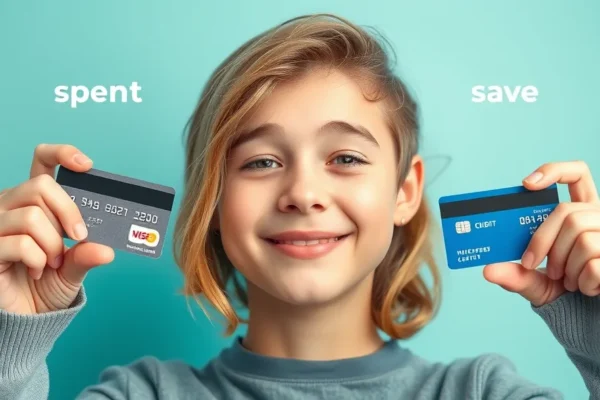
Think of your debit card as a digital version of a physical piggy bank that you carry with you. When you use it, you are taking money directly out of your piggy bank to pay for your snack. If the piggy bank is empty, the store will not let you take the item. Think of a credit card, on the other hand, as a short-term promise note. When you use it, the bank pays for your snack on your behalf, and you agree to pay the bank back at the end of the month. If you fail to pay them back on time, they charge you a fee for the privilege of borrowing that money.
Building Your Financial Foundation
To understand these cards, you first need to understand the concept of a bank account. When you open a bank account, you are depositing your hard-earned cash into a secure, digital vault managed by a financial institution. This institution tracks every penny that goes in and out.
Before you get a card, you need to understand three core concepts:
- Balance: This is the total amount of money you actually have in your account. It belongs to you.
- Transaction: This is any action where money moves, such as buying a pair of sneakers or depositing your paycheck.
- Interest: This is a fee charged by a bank for the service of lending you money. It is essentially the “rent” you pay on the money they let you borrow.
A debit card links directly to your existing balance. A credit card links to a “line of credit,” which is a pre-approved amount of money the bank is willing to let you borrow.
How Debit and Credit Cards Actually Work
Imagine you are buying a 20 dollar video game. Here is what happens behind the scenes with each card type.
Using a debit card: You insert your card into the machine. The bank instantly checks your “piggy bank” account. If you have 20 dollars or more, the bank moves that money from your account to the game store’s account. The transaction happens almost instantly, and your available balance goes down by 20 dollars. Because you used your own money, you owe nothing to anyone.
Using a credit card: You insert your card. The bank does not check your personal piggy bank. Instead, they check their own funds and pay the store the 20 dollars. The store is happy because they got paid. Now, you owe the bank 20 dollars. At the end of the month, the bank sends you a “statement,” which is like a report card showing everything you bought. You then have a choice: pay back the full 20 dollars, or pay back only a small part of it. If you do not pay the full amount, the bank starts charging you interest on the remaining balance.
The History and Logic of Lending
Credit systems have existed for thousands of years, but the modern credit card emerged in the mid-20th century. In 1950, the Diners Club card was introduced, allowing people to eat at restaurants and pay the bill later. This changed society because it shifted the focus from having physical cash in your pocket to having “creditworthiness”—a measure of your ability to pay back debt.
This system works because it encourages commerce. If people only spent the cash they had on hand, they might not buy larger, necessary items like computers or furniture. By allowing people to borrow, banks keep the economy moving. However, the bank takes a risk by lending you money. They believe you will pay them back because they have researched your spending habits and assigned you a “credit score.” Your credit score is a number that acts like a grade point average for your financial life. When you are a young adult, you start with no score, but using a credit card responsibly is one of the primary ways to build a high score.
Common Misconceptions About Spending
A major confusion for many teens is the belief that a credit card is “free money.” It is not. It is a loan. Another common mistake is thinking that using a debit card helps you build credit. In reality, because you are using your own money, the bank does not report your activity to credit bureaus. Using a debit card is great for keeping your spending habits under control, but it does absolutely nothing to help you build a credit score, which you will eventually need to rent an apartment or buy a car.
Another misconception is that you must carry a balance on a credit card to build credit. This is false. You can pay your credit card bill in full every single month and still build a stellar credit score. You do not need to pay interest to show the bank that you are a reliable borrower.
Real World Applications for Young Adults
In the real world, choosing a card depends on your goals. Banking for teens usually starts with a debit card because it prevents you from accidentally spending money you do not have. It acts as a guardrail.
However, once you are a young adult, you might consider getting a “secured credit card.” This is a special type of card where you give the bank a deposit, say 200 dollars, which becomes your limit. This is a safe way to start building your credit score without the risk of falling into massive debt. If you are shopping for your first card, always look for cards with no annual fees and ask your parents or a mentor for help reading the “Terms and Conditions,” which is the legal document explaining the card’s rules.
Connections to Your Broader Financial Future
Understanding debit and credit cards is just the first step in financial literacy. These tools connect to other important concepts like budgeting, saving, and investing. If you treat your credit card like a debit card—only spending what you have in your bank account—you will master the art of money management. If you fail to separate the two, you risk entering a cycle of debt that can take years to pay off.
Your financial choices today set the foundation for your future independence. By mastering these two types of cards, you are learning how to control your money rather than letting your money control you.
The Big Picture: Why This Matters
The system of debit and credit is the nervous system of our modern economy. It allows trust to flow between strangers, shops, and banks. For a teenager, mastering these tools is about more than just buying things; it is about developing the discipline to live within your means while learning how to use the banking system to your advantage. Whether you are choosing a card for your first job or preparing for college, remember that every transaction is an opportunity to prove your reliability and secure your financial future.
Key Takeaways and Common Questions
Which card is safer for a teenager? A debit card is generally safer because it limits you to the money you actually have. You cannot accidentally get into debt with a debit card.
Does a debit card build credit? No. Since you are using your own money, banks do not treat it as a loan, so they do not report your activity to credit agencies.
Is a credit card always a bad idea? Not at all. If you pay your balance in full every month, a credit card is an excellent tool for building a positive credit score, which you will need for your future life as an adult.
What happens if I forget to pay my credit card bill? You will likely be charged a late fee, and the bank will start adding interest to what you owe. This can make the things you bought much more expensive over time.
How do I choose the right card? Look for cards designed for young adults or students that offer no annual fees. Always read the fine print to understand the interest rates and any extra fees.
Are there exceptions to these rules? While these are the general rules, banks frequently change their programs. Always check the specific agreement provided by your bank to understand the nuances of your chosen card.
Further Learning: To continue your financial journey, look into topics such as “Understanding Credit Scores,” “How to Create Your First Monthly Budget,” and “The Basics of Savings and Compound Interest.” Many banks offer free educational resources specifically designed for young adults to learn about these topics.











