

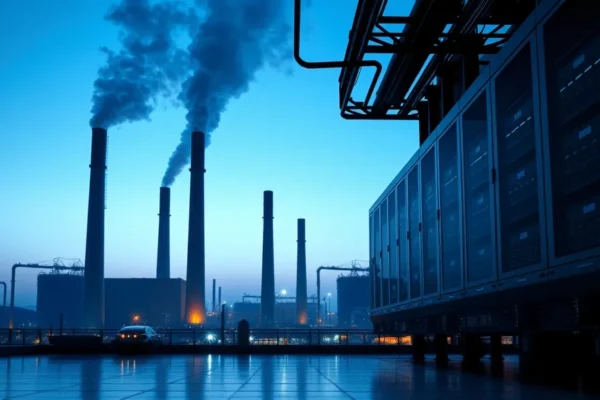
The New Power Hunger of the Digital Age
For the past decade, the technology sector has been synonymous with the transition to green energy. Tech giants like Google, Meta, and Microsoft set ambitious goals to become carbon-neutral, betting that wind, solar, and battery storage would power their massive data centers. However, the sudden and explosive growth of generative artificial intelligence has fundamentally altered this trajectory. Because training large AI models requires an unprecedented amount of computing power, data centers are consuming electricity at rates that exceed the speed at which renewable energy projects can be built.
This reality has triggered a resurgence in the use of natural gas. Across the United States and Europe, utility companies are delaying the retirement of coal and gas-fired power plants or building new gas infrastructure to meet the immediate electricity generation needs of AI infrastructure. This shift highlights a sharp conflict between the race for AI dominance and global climate goals. According to a 2024 report by the International Energy Agency, electricity consumption from data centers could double by 2026, forcing a reliance on the most reliable, high-capacity power source available: fossil fuels.
How Power Demands Are Rewriting Grid Rules
To understand the current tension, we must look at how a data center functions. Think of a data center like a massive, high-speed library that never closes. While a typical office building uses electricity for lights and climate control, a data center uses it for thousands of servers that perform billions of calculations per second. When these servers run AI models, they generate immense heat, requiring even more electricity for constant cooling.
The problem is the nature of the power grid. Renewable energy sources like wind and solar are variable; they only provide power when the wind blows or the sun shines. Data centers, however, require “baseload” power. This is a constant, steady stream of electricity that is available 24 hours a day, regardless of weather conditions. Because grid-scale battery storage is still too expensive and limited in duration to fill the gaps, utility demand is being met by natural gas power expansion. Gas turbines act like a faucet that can be turned on at a moment’s notice, providing the reliable electricity generation that AI models demand.
The Reality of Modern Data Center Operations
This trend is not a future possibility; it is happening right now. In regions like Northern Virginia, which hosts the world’s largest concentration of data centers, the local power grid is struggling to keep up with the pace of development. Companies like Amazon Web Services and Microsoft are now entering into direct negotiations with utility companies to secure power access. In some cases, these tech companies are effectively underwriting the construction of new gas-fired power plants to ensure their facilities have the necessary supply.
The maturity level of this pivot is in the early adoption phase, but it is moving quickly toward becoming the mainstream strategy for the industry. While tech companies continue to invest billions in renewable energy credits and off-site wind farms, their physical infrastructure is increasingly reliant on the immediate availability of the traditional power grid. This creates a dual reality where a company might claim to be “carbon neutral” on paper while their physical data center is drawing power from a newly built natural gas plant.
The Landscape of Energy Competition
The tech industry is not monolithic in how it handles energy. There is a clear divide in the competitive landscape between those pushing for cleaner grids and those prioritizing speed to market. Some, like Google, have doubled down on research into geothermal energy and advanced nuclear technology to provide the constant power they need without the carbon footprint of gas.
However, the advantage currently sits with companies that can secure reliable power, regardless of source. The race to build the next generation of AI models is seen as a strategic national and economic priority. Consequently, companies that move faster by utilizing traditional grid power gain an edge over those that wait for slower, cleaner, but currently less reliable renewable alternatives. The differentiation is clear: one side of the market is betting on long-term sustainability breakthroughs, while the other is betting on the immediate, fossil-fuel-reliant reality of the modern utility grid.
Implications for the Global Economy and Climate
The pivot back to gas has profound implications. Economically, the surge in data center construction is a massive boon for utility providers and regions that can offer cheap, reliable power. It is creating jobs and sparking infrastructure investment in areas that had previously seen little industrial growth. However, the social and environmental implications are more complex. As data centers consume a larger share of the local grid, electricity prices for residential consumers can rise if the utility must build expensive new plants to meet the increased load.
In the long term, this reliance on gas threatens to lock in high carbon emissions for decades. Power plants are designed to operate for 30 to 40 years. If the tech industry builds new natural gas capacity today to satisfy the energy consumption needs of current AI systems, it effectively creates a “carbon lock-in” that makes meeting international climate targets significantly more difficult. The short-term impact is a stable tech boom, but the long-term cost may be a significantly harder road toward total decarbonization.
Bottlenecks and Adoption Barriers
The biggest hurdle in this transition is the slow pace of grid modernization. Our current power grid was designed for a one-way flow of electricity from large, central plants to homes. It was not built to handle the hyper-localized, massive demands of modern AI infrastructure. Furthermore, regulatory hurdles represent a significant barrier; permitting for new high-voltage transmission lines can take years, even a decade, which is far too slow for the fast-moving tech sector.
Technical challenges also remain. Energy efficiency in AI chips is improving, but the raw demand for compute power is growing faster than the gains in efficiency. Until tech sustainability efforts, such as software that optimizes code to use less power, become standard practice, the physical demand will continue to strain the grid. The reality is that there is no “easy button” for this; it is a fundamental engineering and policy clash between the digital economy and physical grid constraints.
The Trajectory of Power and AI
Looking ahead, the next five years will be defined by how tech companies manage this “power wall.” The trajectory suggests a period of intensive experimentation. We should expect to see more tech giants becoming their own energy providers, investing directly in small modular nuclear reactors and large-scale battery storage systems. These are not yet mainstream, but they are clearly the next milestone in the industry’s roadmap to resolve the conflict between AI growth and climate commitments.
Key developments to watch include breakthroughs in energy-dense storage and policy changes that expedite the connection of renewable projects to the grid. The goal is to move from a system of reliance on natural gas power expansion to one where dedicated, clean micro-grids serve the most demanding data centers.
Common Questions About Tech Energy Consumption
Is the surge in gas-powered data centers a permanent shift?
It is currently the most viable short-term solution for maintaining the growth of AI infrastructure. While the industry is heavily investing in long-term renewable solutions, the physical constraints of the grid mean that natural gas remains a primary tool for meeting immediate electricity generation needs.
How does AI increase energy consumption compared to traditional internet usage?
Traditional internet usage, like browsing a website, requires relatively small amounts of power. AI, specifically generative models, requires millions of GPU hours to train, which consumes vast amounts of electricity for both the computations and the active cooling required to prevent the servers from overheating.
Who ultimately benefits from the expansion of gas-powered data centers?
Utility companies, regional economies that gain new infrastructure, and tech companies that need to secure a competitive advantage in AI development are the primary beneficiaries. However, the cost is often shared by the public through potentially higher utility rates and the collective impact of increased carbon emissions.
What are the biggest risks of relying on fossil fuels for tech growth?
The primary risks include failure to meet corporate and national climate goals, long-term carbon lock-in from new power plants, and the potential for public backlash as the tech sector’s footprint on the environment becomes more visible and significant.
When will renewables be able to fully replace fossil fuels for AI?
Expert consensus suggests that this is unlikely to happen until significant breakthroughs in long-duration energy storage and next-generation nuclear energy reach commercial scale. Most analysts estimate this transition is at least a decade away from being mainstream.
Note: This article is based on current market reports, IEA energy data, and public industry announcements as of late 2024. The energy sector and AI industry are evolving rapidly, and these observations represent the current trajectory of these technologies rather than guaranteed future outcomes.











