

The Hidden Life of Expired Cards
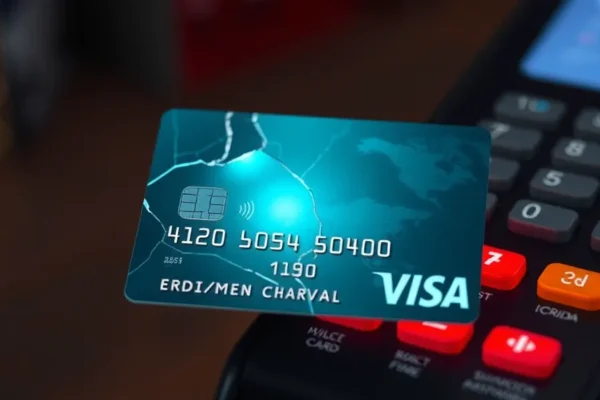
Most consumers believe that once a credit or debit card hits its expiration date, it becomes nothing more than a piece of useless plastic destined for the shredder. However, recent research suggests that an expired Visa card might still pose a security risk. This phenomenon, often referred to as a zombified card, occurs when payment systems continue to authorize transactions on cards that have officially passed their expiration dates.
This is not a feature designed for user convenience, but rather a byproduct of how payment networks and automated billing systems communicate. As contactless payments become the global standard for daily transactions, the ability of these old, seemingly defunct credentials to facilitate financial fraud has come under scrutiny. A study conducted by researchers at Newcastle University revealed that the vulnerabilities in the payment ecosystem allow these cards to remain active in specific scenarios, creating a new vector for cyber attack.
How Payment Networks Keep Dead Cards Alive
To understand the zombified card phenomenon, it helps to think of the payment system like a high-speed highway. When you tap your card for a contactless payment, your card acts as a passport. The payment terminal checks your credentials against a database to ensure you are who you say you are and that your account is valid.
The core issue lies in the way some systems handle what are known as continuous authority transactions. When a service provider, such as a streaming platform or a utility company, saves your card information for recurring payments, they use a token—a digital substitute for your actual card number. If the payment network supports account updater services, the expired Visa card is automatically linked to the new card issued by your bank. While this is meant to prevent service interruptions, researchers discovered that if an attacker manages to bypass the traditional validation checks, they can essentially keep an expired card’s “digital ghost” alive to perform fraudulent charges.
The mechanism relies on exploiting the fact that some merchant systems do not verify the expiration date or the CVV security code with the same level of rigor as others. By systematically brute-forcing the missing details—guessing the expiration date and security code through automated scripts—attackers can reactivate accounts that should have been decommissioned years ago.
Current State and Real World Threats
The use of expired cards for fraudulent purposes is currently a specialized area of cybercrime. We are not seeing massive, headline-grabbing data breaches caused solely by this method, but rather a persistent, low-level financial fraud that affects individual consumers and merchants alike. This is currently an issue of maturity in the payment infrastructure; as the transition to fully digitized, tokenized NFC payments continues, the gaps in legacy system logic become more apparent.
Financial institutions and payment processors are well aware of this risk. Companies like Visa and Mastercard utilize sophisticated fraud detection engines to monitor for unusual patterns, such as a high volume of transactions originating from an expired card. However, because the system is designed to prioritize seamless user experience, these fraud detectors sometimes allow a small window of grace for “expired” transactions to account for delays in card renewals, which attackers are currently exploiting.
Comparing Approaches to Payment Security
Visa security is frequently compared to the security models of rival networks like Mastercard and American Express. While all major card networks utilize the EMV standard—the global standard for chip-based payment security—each network has slightly different protocols for how they handle account updates and recurring billing.
The advantage in this landscape currently belongs to the networks that have implemented more rigid, mandatory verification for all types of contactless payments. Some newer digital wallets, such as Apple Pay and Google Pay, are inherently more resistant to this form of attack. Because these wallets use a unique device account number and require biometric authentication, they do not suffer from the same zombified card vulnerabilities as physical cards. The difference here is between static data, which can be stolen and reused, and dynamic data, which changes with every single transaction.
Implications for the Digital Economy
The existence of zombified cards carries significant weight for both consumers and the financial industry. For businesses, the primary concern is the potential for chargebacks—when a customer disputes a fraudulent charge—which can cost merchants billions of dollars in lost revenue annually. This shifts the focus toward better risk management and more aggressive data verification tools.
On a social level, this news reminds consumers that financial security is rarely absolute. The convenience of modern NFC payments has made “tapping” a frictionless habit, but it has also obscured the complexity of the underlying transactions. In the short term, we are likely to see tighter integration between banks and merchant systems, ensuring that once a card expires, all associated digital tokens are immediately invalidated across every platform simultaneously. Long-term, this will likely lead to the complete elimination of static card numbers in favor of one-time-use digital tokens for every single transaction.
Challenges and Limitations of Current Fixes
Addressing this issue is not as simple as flipping a switch. The biggest bottleneck is the massive scale of legacy infrastructure. Millions of point-of-sale terminals and merchant billing systems are running on outdated software that cannot communicate with modern, high-security authorization servers.
Furthermore, there is a fundamental tension between security and convenience. If banks made their verification processes too strict, legitimate transactions—like a monthly subscription payment—would be declined if there were a minor discrepancy in the data. Striking this balance is the primary challenge for Visa and other payment networks. Regulatory hurdles also play a role, as different jurisdictions have varying laws regarding how payment data can be stored and updated, making a global, uniform security patch extremely difficult to implement.
The Future of Transaction Security
The industry is moving toward a future where the physical plastic card is increasingly irrelevant. We are heading toward an ecosystem dominated by tokenization, where your actual card number is never shared with a merchant. Instead, a digital alias is created that is useless if stolen.
Key developments to watch in the coming years include the rise of passkeys and more advanced multi-factor authentication for recurring payments. Industry experts anticipate that within the next three to five years, the concept of a zombified card will become obsolete as the financial system shifts away from storing card numbers entirely. For now, the best defense is vigilance: monitoring your bank statements for small, unrecognizable charges and immediately reporting any irregularities to your financial institution.
Frequently Asked Questions
Is this technology mature enough to protect against all forms of fraud?
No system is immune to fraud. While payment security has improved significantly with tokenization and NFC payments, attackers constantly look for logic flaws in how merchants and banks communicate, meaning users should always monitor their accounts.
Who benefits most from the current payment security landscape?
Legitimate merchants and consumers benefit from the convenience of account updating services, which prevent the interruption of recurring payments. However, these systems also create the vulnerabilities that allow a zombified card to be exploited by malicious actors.
What are the risks of using a card for contactless payments?
The primary risk is not the NFC technology itself, but rather the data stored in the background systems of merchants. If a merchant suffers a data breach, your card details could be at risk, even if you only used it for a contactless transaction.
How long until these vulnerabilities are completely resolved?
Industry experts suggest that as systems migrate toward full tokenization, the window for this type of fraud will shrink. However, due to the global nature of payment infrastructure, it will likely take several years for legacy systems to be fully phased out.
What should I do if I suspect my expired Visa card was compromised?
If you see charges on a card that you believe is expired, contact your bank immediately. They can verify if the card is truly inactive and provide steps to secure your account, such as issuing a new card with a completely different number.
Note: This article is based on publicly available security research and industry reports regarding payment network infrastructure as of 2024. The nature of cybersecurity threats is dynamic, and individual financial institutions may have varying protocols to mitigate these risks.











