

Understanding the Economics of Long-Term Value
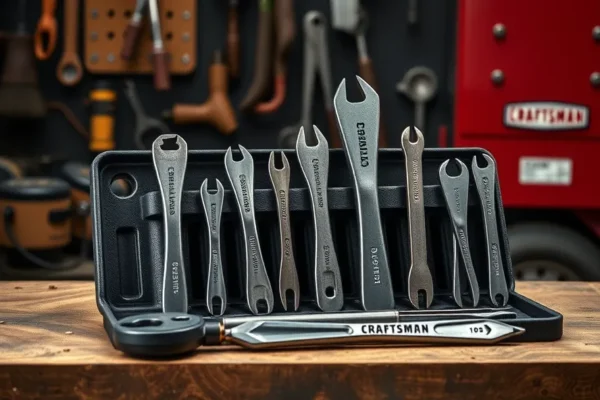
At its core, financial health is built on a simple premise: distinguishing between price and value. Price is the amount of money you exchange for a good or service today, while value is the utility, durability, and savings that item provides over your entire lifetime. When we look at everyday purchases, such as a Craftsman tool set, we are engaging in a micro-economic decision that reflects how we manage our personal capital.
Think of it like choosing between renting a home or buying one. Renting may seem cheaper in the short term because the immediate cost is lower, but buying allows you to build equity—the value of an asset minus what you owe on it. Similarly, buying a high-quality tool with a lifetime warranty is an investment in your personal infrastructure. It ensures that you do not have to repeatedly spend money to replace broken equipment, effectively lowering your cost of ownership over time.
How Lifetime Warranties Function as Financial Safeguards
To understand why a lifetime warranty is a significant financial feature, we must look at the mechanism of risk transfer. When a manufacturer offers a full lifetime warranty, they are essentially promising to absorb the cost of failure if the product does not perform as expected. This shifts the risk from you, the consumer, to the company.
Imagine two scenarios. In the first, you purchase a cheap, unbranded mechanics tool set for $10. After a few uses, the steel in a wrench snaps. Because there is no warranty, you must go back to the store and spend another $10 to replace it. Over five years, you might replace that set three times, totaling $30. In the second scenario, you purchase a Craftsman tool set for $15. It includes a full lifetime warranty. If a tool breaks, the manufacturer replaces it at no additional cost. By paying an extra $5 upfront, you have eliminated the future liability of replacement costs.
This is a classic example of reducing “Total Cost of Ownership,” which is the purchase price of an asset plus the costs of operation and maintenance. By selecting tools that are backed by a long-term guarantee, you are essentially securing a form of insurance that protects your initial capital expenditure.
Why Durability Matters for Your Financial Goals
Financial stability is often eroded by small, recurring expenses—often called “leaks” in your budget. If you are constantly replacing garage essentials because they are made of inferior materials, those small charges add up. By opting for higher-quality, durable steel tool kits, you keep more cash in your pocket to put toward savings or high-interest debt repayment.
From a broader economic perspective, this consumer behavior supports a more sustainable market. When individuals prioritize quality, companies are incentivized to invest in better materials and craftsmanship rather than racing to the bottom on price. This competition drives innovation and creates a market where value is measured by longevity rather than disposable convenience. Those who benefit most are the consumers who view purchases through the lens of long-term utility rather than immediate, short-term discounts.
Historical Context of Consumer Goods and Warranties
The concept of the lifetime warranty evolved significantly during the 20th century. In the post-war industrial boom, many American brands used the “guarantee” as a signal of trust and product quality to differentiate themselves in an increasingly crowded retail market. According to historical retail archives, brands that attached their name to a lifetime promise gained significant brand loyalty because they provided a hedge against inflation. Even as the cost of raw steel and manufacturing increased over decades, these warranties remained a constant anchor for consumer value.
In recent years, the rise of e-commerce and platforms like Amazon deals has made it easier to compare prices instantly. However, this has also flooded the market with unbranded goods that often lack formal support structures. Data from consumer protection agencies suggest that while price transparency is higher than ever, the “hidden cost” of disposable goods has become a silent drain on household budgets. Understanding the history of the Craftsman tool set, which has long been synonymous with DIY repair tools, helps explain why these items remain popular even when cheaper alternatives are just a click away.
Practical Implications for Your Financial Life
When you are managing your personal finances, it is helpful to apply the “Lifetime Rule” to your purchasing decisions. Before buying, ask yourself: Is this an item I will need to replace frequently, or is it a foundational tool? If it is a foundation item, paying a slight premium for a warranty or brand reputation is a rational financial move.
One common misconception is that all tools are essentially the same if they look similar. In reality, the metallurgy—the science of metals—varies wildly. A professional-grade set utilizes high-quality steel that resists torque stress and oxidation (rust) far better than generic alternatives. When you see a tool set sale, look past the price tag and verify the warranty terms. A $15 investment in a quality tool set is often a smarter allocation of resources than a $5 investment in a product that may fail under moderate pressure.
Actionable insights for your next purchase include:
- Calculate the cost per use: A $15 tool that lasts 20 years costs cents per year, whereas a $5 tool that lasts one month costs $60 per year if replaced constantly.
- Read the warranty fine print: Ensure the “lifetime” promise is backed by a reputable company that has a history of honoring its claims.
Connecting Tools to Broader Financial Concepts
Understanding the value of a quality tool set is closely related to the financial concept of Asset Management. Just as you maintain a car to prevent expensive engine repairs, you maintain a collection of tools to ensure you can perform DIY maintenance on your own assets, such as your home or vehicle. This is known as “DIY Finance,” where the ability to perform your own repairs acts as a hedge against the rising costs of professional service labor.
This topic also links to Inflation, as quality goods tend to hold their value and utility better during periods of rising prices. If you are interested in further reading, exploring concepts like “Depreciation” and “Return on Investment (ROI)” can provide a deeper framework for making everyday purchasing decisions.
Frequently Asked Questions About Tool Set Value
Why is a lifetime warranty important when buying a Craftsman tool set?
A lifetime warranty acts as a financial safeguard, ensuring that you do not have to pay for replacements if the tools fail. It effectively lowers the total cost of ownership by transferring the risk of manufacturing defects from you to the producer.
Are Amazon deals on cheaper tools always a better financial decision?
Not necessarily. While a lower price tag on a generic tool set may seem like a bargain, the lack of a lifetime warranty means you may end up spending more money in the long run on replacements. It is important to weigh the initial savings against the potential for recurring costs.
How does a quality steel tool kit help my personal budget?
Investing in durable, high-quality steel tools allows you to perform your own repairs, which saves you money on professional service fees. By avoiding frequent replacements, you keep your discretionary income available for other financial priorities.
What should I look for in a tool set sale to ensure I am getting real value?
Look for brand longevity, the inclusion of a comprehensive lifetime warranty, and positive reviews regarding the durability of the materials. A sale price of $15 for a reputable kit like the Craftsman 10-piece set represents excellent value compared to unbranded kits that lack support.
Can an individual control the long-term cost of their DIY repair tools?
Yes, by choosing high-quality items with guaranteed support, you take control of your long-term expenditures. This move away from “disposable consumption” is a key habit for anyone looking to optimize their household cash flow.
This article is provided for educational purposes only and does not constitute personal financial advice. Every individual’s financial situation is unique, and purchasing decisions should be made based on your specific budget and needs. For personalized guidance on managing your finances, please consult with a qualified financial advisor. Financial outcomes are not guaranteed and will vary based on individual circumstances.











