

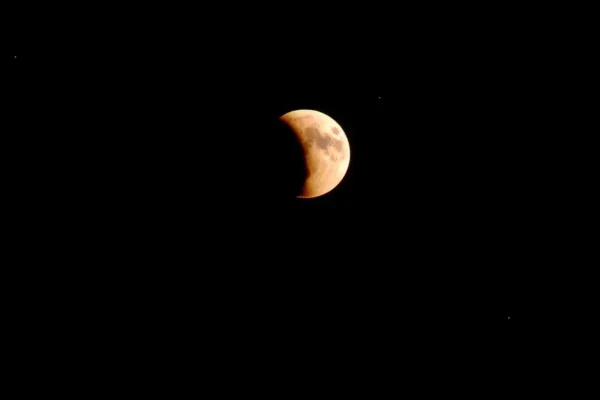
A Celestial Spectacle How to Witness the August 2026 Partial Lunar Eclipse and Blood Moon
Mark your calendars for August 2026, skywatchers! A captivating astronomical event is on the horizon: a spectacular partial lunar eclipse that will also feature a striking “blood moon” phase. This event, occurring on August 28, 2026, offers a fantastic opportunity for people across the globe to engage with the wonders of the cosmos. While not a total lunar eclipse, the near-complete obscuration of the Moon’s surface makes this a particularly noteworthy and visually impressive lunar eclipse 2026. This guide will help you understand what makes this august 2026 lunar eclipse so special, when and how to best view it, and what to expect from this mesmerizing celestial dance.
Understanding the August 2026 Lunar Eclipse
A lunar eclipse occurs when the Earth passes directly between the Sun and the Moon, casting a shadow on the Moon. There are three main types: total, partial, and penumbral. In a total lunar eclipse, the Earth’s shadow completely covers the Moon. In a partial lunar eclipse, only a portion of the Moon enters the Earth’s darkest shadow, known as the umbra. A penumbral lunar eclipse is much subtler, where the Moon passes through the Earth’s lighter outer shadow, the penumbra, causing a slight dimming that can be hard to detect.
The August 28, 2026, event is a partial lunar eclipse with an impressive 93 percent obscuration. This means that nearly the entire lunar disk will pass through the Earth’s umbra. The “blood moon” aspect refers to the reddish hue the Moon often takes on during a total or deep partial lunar eclipse. This color is not a change in the Moon itself but rather how sunlight filters through Earth’s atmosphere. As sunlight grazes the Earth, the atmosphere scatters blue light more effectively, allowing red light to pass through and refract onto the Moon’s surface, painting it with a coppery or blood-red color.
Peak Times and Viewing Tips for the August 2026 Lunar Eclipse
For those eager to witness the blood moon 2026, timing is crucial. The partial phase of the august 2026 lunar eclipse begins around 18:46 UTC on August 28th. The eclipse will reach its maximum totality, where the 93 percent obscuration occurs and the blood moon effect will be most pronounced, at approximately 20:25 UTC. The partial phase will conclude around 22:04 UTC. These times are based on astronomical calculations and may vary slightly depending on your specific location.
To maximize your lunar eclipse 2026 viewing experience, consider these tips:
- Find a Dark Location: Light pollution from cities can significantly diminish the view of celestial events. Try to find an open area away from bright lights, such as a park, rural area, or even a rooftop with a clear horizon.
- Check the Weather Forecast: Clouds are the arch-nemesis of any skywatching event. Keep an eye on the weather forecast in the days leading up to August 28th and have a backup plan if needed.
- Allow Your Eyes to Adjust: It takes about 20-30 minutes for your eyes to fully adapt to the dark. Avoid looking at bright lights, including your phone screen, once you are in your viewing spot. If you must use your phone, use a red-light filter or low brightness.
- No Special Equipment Needed: Unlike solar eclipses, lunar eclipses are perfectly safe to view with the naked eye. The subtle dimming and color changes of the moon’s surface during a partial eclipse are visible without any optical aids.
- Consider Binoculars or a Telescope: While not essential, binoculars or a telescope can enhance your experience. They will allow you to see the details of the lunar surface more clearly as the Earth’s shadow creeps across it, and can help appreciate the subtle color variations of the blood moon.
- Stay Patient: The beauty of a lunar eclipse unfolds gradually. Take your time, observe the progression of the shadow, and enjoy the evolving appearance of the Moon.
The best viewing times will be during the maximum obscuration phase when the Moon is deepest in Earth’s shadow and the blood moon effect is strongest. For many in Europe and Africa, the eclipse will be visible in the evening sky. Those in North and South America will experience it in the early morning hours of August 29th.
What Makes This Partial Lunar Eclipse Unique
While partial lunar eclipses occur multiple times a year, the August 2026 event stands out due to its near-total obscuration of 93 percent. This deep immersion into Earth’s umbra means the Moon will likely develop a much more dramatic and noticeable red hue, truly earning its “blood moon” moniker. This level of obscuration provides an experience far more visually striking than a shallower partial eclipse, where only a sliver of the Moon is shadowed. It offers a chance to witness a significant portion of the lunar disk transform into an eerie, reddish orb against the backdrop of the night sky. This celestial event promises a truly memorable display for any budding astronomer or casual observer of the night sky.
The Science Behind the Blood Moon
The “blood moon” phenomenon is a beautiful demonstration of optics and atmospheric science. When the Earth casts its shadow on the Moon, it’s not a solid black void. Sunlight from the Sun, which is much larger than Earth, still reaches the Earth’s limb (edge). As this sunlight passes through Earth’s atmosphere, it is refracted (bent) and filtered. The atmosphere scatters shorter wavelengths of light (like blue and violet) more effectively, a process that also makes our sky appear blue during the day. Longer wavelengths, such as red and orange, are less scattered and are bent towards the Moon. Think of Earth’s atmosphere acting like a lens, bending the sunlight and coloring it red. The exact color and intensity of the blood moon can vary depending on the conditions of Earth’s atmosphere at the time of the eclipse – things like dust particles, volcanic ash, or clouds can all influence the final appearance. This astronomy event highlights the dynamic nature of our planet’s atmosphere and its effect on celestial bodies.
Current State and Real-World Applications
While the concept of viewing a lunar eclipse is timeless, the way we observe and understand these events is evolving. Modern technology enhances our ability to predict these occurrences with pinpoint accuracy. Satellites and sophisticated astronomical software, like those developed by NASA and the European Space Agency (ESA), continuously monitor celestial bodies and calculate orbital paths, allowing for precise predictions of eclipse timings and visibility. Furthermore, advancements in astrophotography and live-streaming technology mean that even those unable to witness the eclipse firsthand due to weather or location can experience it through high-quality online broadcasts. Many universities and astronomy organizations offer these live feeds, making this celestial event accessible to a global audience.
Competitive Landscape
When it comes to predicting and observing celestial events like the lunar eclipse 2026, the landscape is dominated by major space agencies and astronomical institutions. NASA, ESA, and other national observatories globally utilize advanced computing power and observational data to forecast eclipses. In the realm of personal observation and engagement, companies producing telescopes and camera equipment, such as Celestron, Meade Instruments, and Sony (for astrophotography), are key players. There isn’t a direct “competitor” in the sense of a company trying to prevent or offer an alternative to a lunar eclipse. Instead, the “competition” lies in providing the best tools and information for the public to observe and appreciate these natural phenomena. Companies that offer clear, accurate eclipse prediction data, user-friendly viewing guides, and high-quality observational equipment tend to lead in this niche market.
Implications and Impact
The August 2026 partial lunar eclipse and blood moon, like all significant celestial events, can have several implications. On a personal level, it offers a rare opportunity for wonder and connection with the natural world. For educators, it’s a perfect teaching moment about the Earth-Moon-Sun system, gravity, and atmospheric optics. It can inspire a new generation of scientists and engineers, sparking curiosity about astronomy and space exploration. For communities, it can foster shared experiences and local gatherings for viewing parties, strengthening social bonds. Economically, while small, there can be a boost for local astronomy clubs, planetariums, and retailers selling telescopes or related merchandise. The lasting impact is often intangible, fostering a sense of awe and a greater appreciation for our place in the universe.
Limitations and Challenges
The primary limitation for viewing the august 2026 lunar eclipse is undeniably weather. A cloudy sky on the night of August 28th will obscure the view for anyone relying on direct observation. Geographic location is also a factor; while the eclipse will be visible across a large portion of the globe, its visibility and the specific timing of its phases will differ. For those in regions experiencing daylight during the eclipse, direct viewing will be impossible without advanced technology for capturing the event. Another challenge is the subjective nature of appreciating a partial eclipse. While 93% obscuration is significant, some may find it less dramatic than a full total lunar eclipse, potentially leading to lower engagement among casual observers. Furthermore, accurately predicting the precise color intensity of the blood moon is challenging due to unpredictable atmospheric conditions on Earth.
Future Trajectory
Looking ahead, the prediction and detailed analysis of lunar eclipses will continue to be refined by astronomical organizations. Future advances might involve even more precise real-time atmospheric modeling to predict the nuances of blood moon colors. The accessibility of these events is also likely to increase. We can expect more sophisticated live-streaming events, potentially with augmented reality overlays providing real-time data about the Moon’s features and the eclipse process. Furthermore, as personal telescope technology advances and becomes more affordable, the ability for individuals to capture high-quality images and videos of lunar eclipses will likely grow. The fundamental mechanics of lunar eclipses are well understood, so the “future trajectory” here is primarily about enhancing our ability to observe, share, and learn from these predictable, yet always awe-inspiring, celestial occurrences.
Key Questions and Answers
What is the primary keyword for this event?
The primary keyword for this event is lunar eclipse 2026, with related terms like blood moon 2026 and august 2026 lunar eclipse also being highly relevant for searches about this specific celestial spectacle.
How do I view the August 2026 partial lunar eclipse?
To view the august 2026 lunar eclipse, find a location with clear skies and minimal light pollution. While no special equipment is strictly necessary, binoculars or a telescope can enhance the view of the moon’s surface and the blood moon’s colors. Remember to let your eyes adjust to the dark.
Is this a total lunar eclipse?
No, the August 28, 2026, event is a partial lunar eclipse. However, with an obscuration of 93 percent, it will appear very close to a total eclipse and will exhibit significant “blood moon” characteristics.
What makes the August 2026 lunar eclipse a “blood moon”?
The “blood moon” appearance during this partial lunar eclipse is due to sunlight being filtered and refracted by Earth’s atmosphere. The atmosphere scatters blue light, allowing red light to pass through and illuminate the Moon, giving it a reddish hue.
When are the best viewing times for the lunar eclipse 2026?
The best viewing times for the maximum effect of the blood moon 2026 will be around 20:25 UTC on August 28th, when the Moon reaches its deepest penetration into Earth’s shadow, displaying 93 percent obscuration.
Is viewing a lunar eclipse safe?
Yes, viewing a lunar eclipse is completely safe for your eyes. Unlike solar eclipses, you do not need any special protective eyewear to observe a lunar eclipse, making it an accessible skywatching activity for everyone.
Note: This article provides information based on current astronomical predictions and general knowledge of celestial events. Actual viewing conditions and the precise appearance of the blood moon can be influenced by real-time atmospheric conditions and your specific geographic location.











