

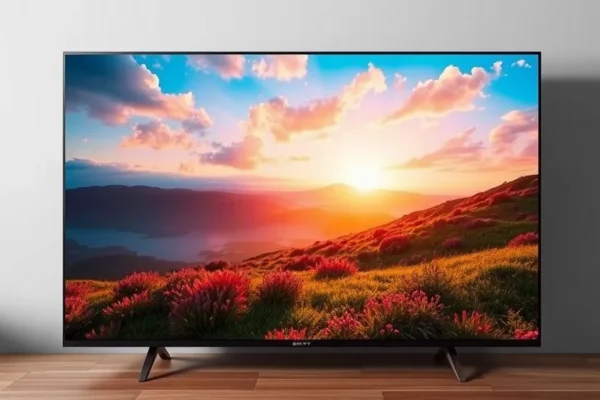
Sony Enters the Midrange OLED Arena with the Bravia 6
Sony, a name long synonymous with premium television experiences, is making a significant move into a more accessible price bracket with the recent announcement of its Sony Bravia 6 OLED TV. This new model aims to bring the stunning picture quality of OLED technology to a wider audience, directly challenging established players like Samsung and LG in the competitive midrange OLED market. The company’s strategy with the Bravia 6 is clear: offer a compelling blend of OLED performance and smart features at a price point that makes it a serious contender for many households.
Understanding the Magic of OLED Technology
Before diving into the specifics of the Sony Bravia 6, it’s crucial to understand what makes OLED (Organic Light Emitting Diode) displays so special. Unlike traditional LED TVs that rely on a backlight to illuminate pixels, each pixel in an OLED panel generates its own light. Think of it like a massive grid of tiny, individual light bulbs, each capable of turning on, off, or dimming independently. This fundamental difference is what allows OLED TVs to achieve true black by completely switching off pixels in dark areas, resulting in an incredibly high contrast ratio. This means that the difference between the brightest whites and the darkest blacks is far more pronounced, leading to images that pop with depth and realism. For the viewer, this translates into incredibly vivid colors, exceptional detail in both bright and dark scenes, and viewing angles that remain consistent no matter where you’re sitting. The problem OLED solves is the inherent limitation of backlights in LED TVs, which can cause “blooming” or a halo effect around bright objects on dark backgrounds and prevent true black. The significance of this new offering lies in Sony’s move to democratize this superior display technology.
What the Sony Bravia 6 Brings to Your Living Room
The Sony Bravia 6 OLED TV is built around Sony’s core display technologies, designed to deliver a refined viewing experience. At its heart is the promise of pure OLED picture quality, meaning you can expect those deep blacks and vibrant colors that OLED is known for. Sony’s proprietary Cognitive Processor XR is also a key feature, which the company explains works by understanding how humans perceive the world. Instead of simply processing picture elements individually, it analyzes and optimizes them in conjunction, much like our brains do, for more natural and realistic images. This processor is designed to enhance color, contrast, and detail, aiming for a picture that feels truly lifelike.
For gamers and action movie enthusiasts, the Bravia 6 includes a 120Hz OLED panel, ensuring smooth motion clarity. A 120Hz refresh rate means the screen can update its image 120 times per second, which is crucial for reducing motion blur in fast-paced scenes. This is supported by HDMI 2.1 ports, the latest standard for video connections, which allows for higher resolutions, faster frame rates, and features like Variable Refresh Rate (VRR) and Auto Low Latency Mode (ALLM). VRR synchronizes the TV’s refresh rate with the gaming console or PC’s output to eliminate screen tearing, while ALLM automatically switches the TV to its game mode when a console is detected, minimizing input lag for a more responsive gaming experience. The TV also runs on the Google TV platform, enhanced with Gemini, Google’s advanced AI. This integration aims to provide a more intuitive and personalized smart TV experience, with features like intelligent content recommendations and improved voice search capabilities. This is all packed into a design that Sony typically excels at, likely featuring slim bezels for an immersive viewing experience.
Where You Can Experience the Sony Bravia 6 Now
The Sony Bravia 6 OLED TV is positioned as a midrange OLED TV, with Sony announcing its availability starting in Spring 2024 in North America and Europe. Specific pricing details are still emerging, but initial reports and Sony’s positioning suggest it will be one of the more affordable OLED options from a major manufacturer. This makes it accessible to a broader range of consumers who have been waiting for a more budget-friendly entry into the premium OLED market. While it’s too early to see widespread adoption in industries, its core technologies like 120Hz OLED panels and HDMI 2.1 are already standard in high-end gaming setups and professional video editing suites, demonstrating the practical applications of its features.
The Competitive Landscape of Midrange OLEDs
Sony’s entry with the Bravia 6 intensifies the competition in the midrange OLED segment, where LG and Samsung have long been dominant forces. LG, with its extensive experience in OLED panel manufacturing, has traditionally offered some of the most compelling value in this space. Models like the LG C series (e.g., the popular LG C3, and upcoming LG C4) are direct rivals, often praised for their bright panels and excellent gaming features. Samsung, particularly with its QD-OLED technology, offers a different approach. Samsung’s QD-OLED panels, found in models like the S90D and S95D, combine OLED’s perfect blacks with Quantum Dot technology for enhanced color volume and brightness, though they typically command a higher price point, placing them slightly above the target for a “cheaper OLED TV” like the Bravia 6 aims to be.
Sony’s traditional strength has been its picture processing and color accuracy, often favored by cinephiles. The Bravia 6 aims to leverage this reputation while undercutting the premium pricing of its own higher-end models like the Sony Bravia 8 and the flagship Sony Bravia 9. The key differentiator for the Bravia 6 will be Sony’s unique image processing, the integration of Google TV with Gemini for a smart experience, and its competitive pricing. While LG might offer slightly brighter panels in some configurations and Samsung’s QD-OLED provides a distinct color advantage, Sony’s focus on natural image reproduction and its established brand loyalty could be strong advantages. The challenge for Sony is to convince consumers that its processing prowess justifies its presence in a segment often dominated by LG’s panel leadership and Samsung’s innovative QD-OLED.
Potential Impact on Home Entertainment and Beyond
The arrival of a cheaper OLED TV like the Sony Bravia 6 has the potential to significantly reshape the home entertainment market. By making OLED technology more accessible, Sony could accelerate the transition away from traditional LED TVs for many consumers. This means more households will benefit from superior contrast, richer colors, and better viewing angles, leading to a more immersive experience for movies, sports, and gaming. For the gaming industry, the widespread adoption of 120Hz OLED TVs with HDMI 2.1 support, driven by more affordable options, will encourage game developers to push the boundaries of visual fidelity and responsiveness.
Economically, this could stimulate competition, potentially driving down prices further across the entire OLED market and creating opportunities for manufacturers specializing in components and software for these advanced displays. Socially, it means that the premium visual experience previously reserved for high-end buyers is now within reach for a much larger demographic, democratizing access to high-quality visual content. The short-term impact will be increased consumer choice and potentially price wars in the midrange segment. In the long term, it could cement OLED as the dominant display technology for premium home viewing, similar to how LED replaced plasma.
Acknowledging the Hurdles and Limitations
Despite the excitement, the Sony Bravia 6 OLED TV, like any new technology, faces limitations and challenges. While Sony’s processors are highly regarded, the Bravia 6 is a midrange model, meaning some of the most advanced processing and brightest peak brightness found in their flagship models (like the Sony Bravia 9) may not be present. Achieving true parity with premium OLEDs often comes down to panel technology and processing power, and compromises are inevitable at lower price points.
One historical concern with OLED technology, though significantly improved in recent years, has been the potential for burn-in, where static on-screen elements can leave a permanent ghost image. While manufacturers have implemented various mitigation techniques, it remains a consideration for users who frequently display static content for extended periods. Furthermore, while the integration of Google TV with Gemini is promising, the effectiveness of AI in enhancing the user experience will depend on its implementation and the quality of content Google curates. The ultimate performance and long-term reliability of the Bravia 6 will only be fully understood through real-world testing and reviews after its release. Cost is also a factor; while positioned as “cheaper,” OLED technology is still inherently more expensive to produce than LED, meaning “midrange OLED” is still likely to be a significant investment for many consumers compared to entry-level LED TVs.
The Road Ahead for Sony and OLED
The trajectory for Sony’s OLED offerings, with the Bravia 6 now firmly planted in the midrange, suggests a strategic push to capture a larger share of the television market. We can expect Sony to continue refining its Cognitive Processor XR and its integration with Google TV. Future iterations might see improvements in peak brightness and color volume, potentially bringing more flagship features to more affordable models. The success of the Bravia 6 could also encourage competitors to further innovate in the midrange segment, perhaps by introducing their own budget-friendly versions of advanced technologies like Quantum Dot OLED or micro-LED.
Sony’s commitment to HDMI 2.1 and 120Hz panels in this model indicates a focus on future-proofing for gamers and media enthusiasts. As AI integration in smart TVs evolves, we might see Gemini become even more sophisticated, offering truly predictive and personalized content discovery. The timeline for widespread adoption of these advanced features at lower price points is generally tied to advancements in manufacturing efficiency and panel yields. Expert consensus suggests that over the next 2-3 years, we will see OLED technology continue to permeate more budget-conscious segments of the market, with Sony playing a key role.
Frequently Asked Questions about the Sony Bravia 6 OLED TV
What makes the Sony Bravia 6 a “cheaper OLED TV”?
The Sony Bravia 6 OLED TV is positioned as a more affordable entry into Sony’s OLED lineup, aiming to offer core OLED benefits at a competitive price point that makes it accessible to a wider audience than their premium models.
How does the Sony Bravia 6 compare to LG and Samsung OLED TVs?
It directly competes with LG’s midrange OLEDs, offering Sony’s renowned image processing, while positioned to be more affordable than Samsung’s QD-OLED models, providing a different blend of features and picture quality at a compelling price.
Is the Sony Bravia 6 good for gaming?
Yes, with its 120Hz OLED panel and HDMI 2.1 ports, the Sony Bravia 6 OLED TV supports features like VRR and ALLM, making it well-suited for modern gaming consoles and PCs.
What is Google TV with Gemini and how does it enhance the TV experience?
Google TV with Gemini is an advanced AI integration designed to make the smart TV interface more intuitive and personalized, offering smarter content recommendations and improved voice search capabilities for a smoother user experience.
When will the Sony Bravia 6 be available?
Sony has announced that the Sony Bravia 6 OLED TV is expected to launch in Spring 2024 in North America and Europe.
What are the potential downsides of this midrange OLED TV?
While offering great value, it may not achieve the absolute peak brightness or feature the most advanced processing found in Sony’s higher-end models, and like all OLEDs, potential burn-in with static content, though mitigated, remains a factor to consider.
This article provides an overview based on Sony’s initial announcements. Final performance and user experience will be subject to in-depth reviews upon product availability.











