

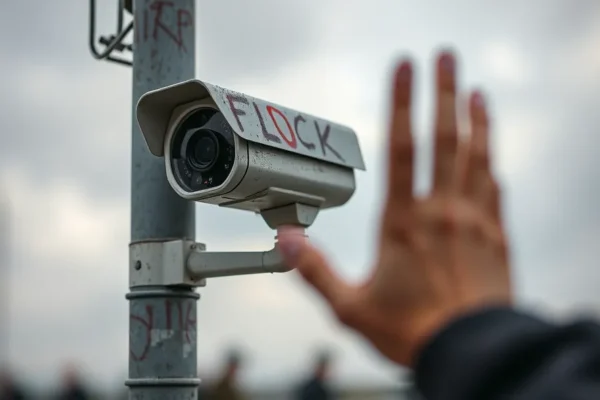
The Rise of the Digital Vigilantes Targeting Flock Cameras
In communities across the globe, a new form of digital dissent is emerging, centered around the ubiquitous presence of surveillance cameras, particularly those from companies like Flock. These privately owned smart cameras, often deployed by homeowners’ associations or individual residents for security, are increasingly becoming targets of what can be described as a rising vigilante movement. This movement, fueled by growing privacy concerns, seeks to disrupt and disable these surveillance devices, sparking a debate about community safety versus individual liberties in an era of pervasive monitoring.
Understanding Flock Cameras and Their Role
Flock cameras, also known as Flock Safety cameras, are a type of license plate reader (LPR) camera designed for residential neighborhoods and private communities. They work by capturing images of vehicles entering and leaving an area and then reading their license plates. This data is then used to create a searchable database, which can be shared with law enforcement agencies to help solve crimes, such as stolen vehicles or burglaries. The primary problem these cameras aim to solve is enhancing neighborhood security and providing a tool for faster crime resolution by giving law enforcement access to vehicle data. Their significance has grown as the adoption of private surveillance technology has surged in recent years, with companies like Flock Safety becoming prominent players in this market. Flock Safety, founded in 2017, has rapidly expanded its reach, with thousands of communities deploying their devices across the United States.
How Flock Cameras Capture and Process Data
At their core, Flock cameras are sophisticated imaging devices equipped with advanced optical and processing capabilities. When a vehicle passes in front of a Flock camera, it captures a high-resolution image. This image is then processed by the camera’s internal software to identify and read the license plate characters. Think of it like a highly advanced OCR (Optical Character Recognition) system, similar to what might be used to scan documents, but specifically tuned for the unique shapes and fonts of license plates, often under challenging lighting conditions.
Once the license plate is read, the information, along with a timestamp and a snapshot of the vehicle, is transmitted to Flock Safety’s cloud-based platform. Here, the data is stored and can be accessed by authorized users, typically community administrators and local law enforcement through a secure portal. This system allows for quick searches. For example, if a car is reported stolen, law enforcement can query the Flock system for any sightings of that plate within a specific timeframe and geographic area, akin to using a digital breadcrumb trail. The system’s effectiveness relies on a network effect; the more cameras in an area, the more comprehensive the data collection and the higher the probability of capturing relevant vehicle information.
Current Use and Real-World Applications
Flock cameras are currently deployed in a wide array of residential settings, including single-family neighborhoods, homeowner associations (HOAs), apartment complexes, and gated communities. Their primary use case revolves around improving neighborhood safety and assisting in criminal investigations. For instance, law enforcement agencies partnered with Flock Safety have reported successes in apprehending suspects and recovering stolen vehicles through the use of this technology. The cameras are considered to be in the early to mainstream adoption phase within these specific community security markets. Availability is through direct sales to HOAs, property management companies, and law enforcement partnerships, typically on a subscription basis.
The Growing Resistance and Methods of Disruption
Despite their intended benefits, Flock cameras have become a focal point for growing public sentiment against what some perceive as pervasive surveillance. This sentiment has given rise to what is being termed a “vigilante movement,” where individuals or groups engage in acts to disrupt or disable these cameras. The methods vary, ranging from simple acts of protest to more direct forms of vandalism. Some common tactics include:
- Obscuring Lenses: This involves physically covering the camera lens with paint, tape, stickers, or other materials, rendering it unable to capture clear images.
- Physical Damage: More aggressive acts include breaking the camera housing, cutting wires, or otherwise causing irreparable damage to the device.
- Jamming or Signal Interference: While more technically sophisticated and less common, there are concerns that sophisticated actors might attempt to jam the camera’s wireless communication signals, preventing data transmission.
- Covert Photography/Documentation: In some instances, activists document the locations and operational status of cameras, sharing this information online to raise awareness and coordinate further action.
These actions are often framed by participants as a form of surveillance protest or civil disobedience, aiming to push back against what they view as an encroachment on privacy. The motivations behind this community resistance are varied, but a significant driver is the concern over the continuous monitoring of private citizens’ movements and the potential for misuse of the collected data, even if collected by private entities.
The Competitive Landscape in Surveillance Technology
Flock Safety operates in a competitive market for surveillance and smart city technologies. While Flock specializes in residential LPR cameras, other companies offer a range of solutions. Competitors include:
- Ring (Amazon): Known for its doorbell cameras and a broader network of neighborhood security cameras, Ring also offers some LPR capabilities through its commercial offerings and partnerships.
- Axis Communications: A major player in professional surveillance, Axis offers a wide range of high-resolution cameras, including LPR solutions for enterprise and public sector applications.
- Neology, Inc.: This company is a significant provider of LPR technology and software, often used by law enforcement and for traffic management.
- Various AI and Analytics Companies: Numerous firms are developing advanced analytics platforms that can integrate with various camera systems, offering more sophisticated ways to interpret surveillance data.
Flock’s competitive advantage lies in its focus on the residential market, ease of deployment, and a specific business model that partners with homeowners’ associations and local law enforcement. This targeted approach has allowed for rapid penetration in certain neighborhoods. However, larger, more established players in professional surveillance may offer more robust hardware and integration capabilities for broader, city-wide deployments.
Implications and Societal Impact
The rise of the anti-surveillance movement targeting Flock cameras and similar technologies has several significant implications.
On one hand, the privacy concerns highlighted by this movement are valid and resonate with a broader public unease about data collection. The expansion of surveillance, even for ostensibly good reasons like crime prevention, can lead to a chilling effect on public life and a normalization of being constantly watched. This could reshape user behavior, with individuals becoming more cautious about their movements and associations, potentially impacting social interactions and public discourse.
Economically, the increased adoption of private surveillance systems represents a growing market for security technology companies. However, acts of vandalism and protest can lead to significant costs for communities through camera replacement and increased security measures. The debate also spurs development in more secure or privacy-preserving surveillance technologies.
Socially, the conflict pits the desire for community safety against fundamental rights to privacy. It forces communities to grapple with questions of who controls data, how it is used, and what level of surveillance is acceptable. This can lead to increased civic engagement, but also to division and conflict within neighborhoods. In the short term, we may see more localized protests and targeted vandalism. In the long term, this could push for stronger regulations on private surveillance or drive innovation towards less intrusive security solutions.
Limitations and Challenges for Both Sides
The effectiveness of Flock cameras and the viability of the vigilante protests against them face significant limitations and challenges.
For Flock cameras, a key limitation is their reliance on clear visibility and proper installation. Factors like poor lighting, weather conditions, or obstructions can degrade the quality of license plate reads. Furthermore, the system’s effectiveness is heavily dependent on the cooperation of law enforcement and the density of camera coverage. If a vehicle is not captured by a camera, its trail goes cold. The cost of installation and ongoing subscription fees can also be a barrier for some communities.
On the other side, the vigilante movement faces its own set of challenges. Camera vandalism can lead to legal repercussions, including fines and criminal charges. The effectiveness of such protests is also debated; while they might cause localized disruption, they often do not address the underlying issues of surveillance or data privacy on a broader scale. Moreover, as more sophisticated and resilient surveillance technologies emerge, simple methods of disruption may become less effective. The inherent challenge for the anti-surveillance movement is to translate public sentiment into policy change rather than isolated acts of defiance.
The Future Trajectory of Surveillance and Resistance
The trajectory of surveillance technology and the accompanying resistance is likely to become more complex. We can expect Flock cameras and similar LPR systems to become more advanced, with improved image quality, wider coverage, and potentially integration with other smart city sensors. Companies will likely focus on enhancing data security and offering more transparent data usage policies to address privacy concerns.
Conversely, the anti-surveillance movement is likely to evolve. While physical disruption may continue, we may see a greater emphasis on political advocacy, legal challenges, and the development of privacy-enhancing technologies for citizens. This could include tools for anonymization, decentralized data storage, or “privacy by design” in new surveillance systems. The ongoing dialogue between the need for security and the right to privacy will continue to shape the landscape, pushing for a more balanced approach to public safety in the digital age. It is also possible that competing approaches to community safety, such as enhanced community watch programs or better lighting, may see renewed interest as alternatives to widespread camera deployment.
Key Questions and Answers
What are Flock cameras used for?
Flock cameras are primarily used by homeowners’ associations and private communities to enhance security by capturing license plates of vehicles entering and leaving the area, aiding law enforcement in solving crimes.
Why are people protesting against Flock cameras?
Protests stem from significant privacy concerns, with many individuals worried about constant monitoring of their movements and the potential misuse of collected data by private entities and law enforcement.
Is damaging surveillance cameras legal?
No, damaging surveillance cameras, including Flock cameras, is considered vandalism and can result in legal penalties such as fines and criminal charges.
What are the main concerns of the anti-surveillance movement?
The movement’s core concerns revolve around mass surveillance, the erosion of personal privacy, the potential for data breaches, and the creation of a surveillance state where citizens are constantly monitored.
How mature is the technology behind Flock cameras?
Flock cameras utilize mature license plate recognition (LPR) technology, which has been developed and refined over many years, but continuous advancements are being made in AI and image processing for improved accuracy.
What are the alternatives to Flock cameras for community security?
Alternatives include traditional security patrols, neighborhood watch programs, improved lighting, and other forms of CCTV surveillance that may not focus on license plate data.
This article provides an overview of the current situation regarding Flock cameras and the emerging vigilante movement. It is important to note that information on the specifics of any ongoing protests or vandalism efforts may be limited or anecdotal, and capabilities of surveillance technology are constantly evolving. Readers are encouraged to consult company statements and local news for the most up-to-date information.











