

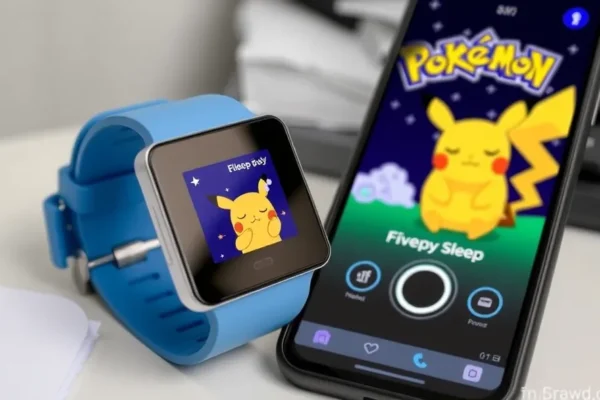
A Touch of Pikachu on Your Wrist The New Google Fitbit Air Special Edition
In a delightful crossover that blends fitness tracking with beloved pop culture, Google’s Fitbit has unveiled a special edition wearable: the Google Fitbit Air, inspired by the world of Pokémon Sleep. This new smart band, dubbed the “Sleepy Blue” edition, features a vibrant blue band adorned with the iconic Pikachu, celebrating both the upcoming 30th anniversary of Pokémon and the growing interest in understanding our sleep patterns. This launch taps into a powerful trend of gamification and personalization within the wearable tech market.
What is the Pokémon Sleep Fitbit Air?
The innovation here isn’t a revolutionary leap in wearable sensor technology, but rather a clever integration of existing capabilities with a highly appealing theme. The Pokémon Sleep Fitbit Air is essentially a Google Fitbit Air fitness tracker, enhanced with a unique aesthetic and software elements designed to resonate with fans of Pokémon. The core problem it aims to solve, or rather enhance, is the engagement with personal health data, specifically sleep. By linking the familiar and comforting presence of Pikachu with the often-abstract goal of improving sleep, Google Fitbit is making sleep tracking more accessible and enjoyable.
This special edition builds upon the foundation of the Google Fitbit Air, a device designed to monitor various aspects of physical activity and sleep. The inspiration drawn from Pokémon Sleep, a mobile application that aims to turn sleep into entertainment, suggests a move towards more lifestyle-integrated health tech. This announcement, made by Google Fitbit, signifies a strategic effort to capture a broader audience by leveraging established entertainment franchises.
Understanding How This Special Edition Works
At its heart, the Pokémon Sleep Fitbit Air operates on the same principles as other advanced fitness trackers. The device uses a combination of sensors to gather data about your body’s signals throughout the day and, crucially, during the night. Think of these sensors like tiny detectives constantly observing what your body is doing.
The primary sensor is an accelerometer, which detects motion. This is how the Fitbit knows when you’re walking, running, or even just tossing and turning in bed. By analyzing the patterns and intensity of your movements, it can estimate your activity levels and distinguish between different sleep stages. More advanced models, including likely the Fitbit Air, also incorporate a photoplethysmography (PPG) sensor. This sensor uses light to detect changes in your blood volume, which can then be used to measure your heart rate. Your heart rate changes throughout the different stages of sleep, providing another valuable data point for analysis.
The “Pokémon Sleep” aspect comes into play through the data it collects and how it might be interpreted or presented. While the core tracking technology is standard for a modern fitness tracker, the integration likely involves software that uses your sleep data to interact with or draw parallels to the Pokémon Sleep app’s mechanics. For instance, your sleep quality might be translated into a “sleep score” or even influence virtual Pokémon encountered in the companion app, creating a loop of motivation and engagement. The “Sleepy Blue” band with Pikachu is a direct visual cue, making the connection tangible for the user.
Current State and Real-World Use
The Google Fitbit Air, as a product line, is designed for mainstream consumer use, focusing on general health and fitness tracking. Its application extends across various demographics, from individuals looking to increase their daily steps to those aiming to understand and improve their sleep habits. The integration with the Pokémon Sleep theme suggests a more niche, yet potentially very large, segment of the market: fans of the Pokémon franchise who are also interested in technology and personal wellness.
This special edition is being launched with a clear availability window, aligning with the broader Pokémon anniversary celebrations. According to Google Fitbit’s announcement, the Pokémon Sleep Fitbit Air will be available starting on a specific date, likely through Google’s online store and select retail partners. It’s important to note that this is a special edition, meaning its availability might be limited in quantity and time. Compatibility is key; the wearable tech will seamlessly integrate with the existing Google Fitbit ecosystem, and by extension, the Pokémon Sleep mobile application, allowing users to sync their sleep data for a more comprehensive experience. This collaborative approach between a tech giant and a beloved entertainment IP is becoming increasingly common in the wearable tech space.
The Competitive Landscape
The market for fitness trackers and smartwatches is fiercely competitive, with numerous players vying for consumer attention. Google, through its acquisition of Fitbit, is a major force in this arena. However, competitors like Apple, Samsung, and Garmin also offer sophisticated wearables with advanced sleep tracking capabilities. Apple’s Apple Watch, for example, provides detailed sleep stage analysis and integrates with Apple Health. Samsung’s Galaxy Watch series also boasts robust sleep monitoring features, often including snoring detection and sleep coaching. Garmin devices are particularly popular among athletes and fitness enthusiasts for their in-depth performance metrics, which include comprehensive sleep analysis.
What differentiates the Pokémon Sleep Fitbit Air is its unique thematic appeal and its direct connection to the Pokémon Sleep app. While other companies focus on pure performance or comprehensive health metrics, this special edition leverages brand loyalty and the appeal of gamification. This strategy is not entirely new; many tech companies have released special editions of their products themed around popular movies, games, or characters. However, the direct integration with a specific sleep-focused application like Pokémon Sleep is a novel approach. Google Fitbit’s advantage lies in its established reputation for reliable sleep tracking within the Fitbit brand, combined with the immense global popularity of Pokémon. This allows them to target a specific, highly engaged audience that might not otherwise be drawn to a traditional fitness tracker.
Implications and Impact
The launch of the Pokémon Sleep Fitbit Air has several implications, particularly in how it blurs the lines between entertainment and health technology. Firstly, it signals a growing trend towards “playful wellness,” where health tracking is made more engaging through gamification and appealing aesthetics. This could encourage individuals, especially younger demographics or those who find traditional health tracking uninspiring, to adopt wearable technology and become more mindful of their sleep. This could lead to improved public health outcomes as more people gain insights into their sleep, a critical component of overall well-being. For the Pokémon franchise, it represents another avenue to expand its universe and monetize its brand in the burgeoning wearable tech market.
Economically, such collaborations can create new revenue streams for both tech companies and entertainment IP holders. It also drives innovation in how data is presented and utilized, potentially leading to more personalized and motivating health experiences. Socially, this could foster a greater awareness of sleep hygiene. However, it also raises questions about data privacy and the potential for over-reliance on technology for well-being. The short-term impact will likely be a surge in interest among Pokémon fans, driving sales of this special edition. Long-term, it could influence how other health tech companies approach user engagement, pushing for more creative and thematic integrations.
Limitations and Challenges
Despite the excitement, it’s important to acknowledge the limitations. The Pokémon Sleep Fitbit Air, while aesthetically pleasing and thematically relevant, is fundamentally a Fitbit Air device. Its sleep tracking capabilities, while generally considered accurate for consumer-grade devices, are not medical-grade and should not be used for diagnosing sleep disorders. The accuracy of any wearable sleep tracker can be affected by factors like individual physiology, movement during sleep, and the fit of the device. The primary function of this special edition is to enhance engagement and motivation, not necessarily to provide a more scientifically precise measurement than other Fitbit models.
A significant challenge for such themed editions is market saturation. While Pokémon has a vast fanbase, not all fans are necessarily interested in wearable tech, or they may already own a device. Furthermore, the reliance on the Pokémon Sleep app means that the full benefit is only realized when both are used in conjunction. If the Pokémon Sleep app itself faces technical issues or a decline in user engagement, it could impact the perceived value of the Fitbit. The cost of special editions can also be a barrier, as they often come at a premium compared to standard models. Additionally, the long-term support and software updates for the Pokémon-specific features will depend on the ongoing commitment from both Google Fitbit and The Pokémon Company.
Future Trajectory
The trajectory for this type of product lies in the continued convergence of technology, entertainment, and health. We can expect to see more partnerships between major tech firms and popular entertainment franchises, moving beyond simple aesthetic collaborations to deeper integrations. For Google Fitbit, this could mean further exploration of gamified health experiences that leverage AI to provide more personalized insights and motivational tools. The focus will likely remain on making health tracking more accessible and enjoyable, particularly for younger generations who are digital natives.
Future developments might include more advanced sensors that can non-invasively monitor a wider range of health metrics, which could then be translated into engaging game mechanics. The success of the Pokémon Sleep Fitbit Air could pave the way for other brands to experiment with similar thematic integrations, potentially leading to a more diverse and personalized wearable tech market. The key milestones to watch will be user adoption rates for this special edition and the continued evolution of the Pokémon Sleep application and its integration capabilities. Experts anticipate that the trend of “connected entertainment for wellness” will only grow stronger.
Key Questions and Answers
What is the primary function of the Pokémon Sleep Fitbit Air?
The Pokémon Sleep Fitbit Air is a special edition Google Fitbit Air fitness tracker designed to monitor daily activity and sleep patterns. Its unique “Sleepy Blue” band with Pikachu and its connection to Pokémon Sleep aim to make sleep tracking more engaging and fun.
How does this special edition compare to a standard Fitbit Air?
The core tracking technology is likely identical to a standard Google Fitbit Air. The main differences are the exclusive “Sleepy Blue” band featuring Pikachu, and the intended integration with the Pokémon Sleep mobile application, offering a themed experience.
Is this technology truly innovative or just a cosmetic change?
The innovation lies in the strategic integration of existing wearable technology with a beloved entertainment franchise and a gamified approach to sleep. While the sensor technology is not new, the way it’s being packaged and utilized to increase user engagement with health is a notable development in wearable tech.
Who benefits most from the Pokémon Sleep Fitbit Air?
Fans of Pokémon who are also interested in improving their sleep and fitness are the primary beneficiaries. It appeals to those who might find traditional fitness trackers less motivating and are looking for a more personalized and engaging experience.
When is the Pokémon Sleep Fitbit Air available and where can I buy it?
The release date and availability details were announced by Google Fitbit. It is expected to be available through Google’s official online store and select retail partners around the time of the Pokémon anniversary celebrations. Specific dates should be confirmed on Google Fitbit’s official channels.
What are the risks or limitations of this special edition?
The primary limitation is that it’s a consumer-grade device, not a medical diagnostic tool for sleep disorders. Its effectiveness is also tied to the Pokémon Sleep app, and the premium pricing for a special edition might be a barrier for some. Data privacy concerns inherent to all wearable tech also apply.
This article provides an overview of the Pokémon Sleep Fitbit Air special edition based on publicly available information. Specific technical specifications, pricing, and availability may vary and are subject to change by Google Fitbit. For the most accurate and up-to-date information, please refer to official announcements from Google Fitbit and The Pokémon Company.











