

The Economics of Virtual Speed Bumps
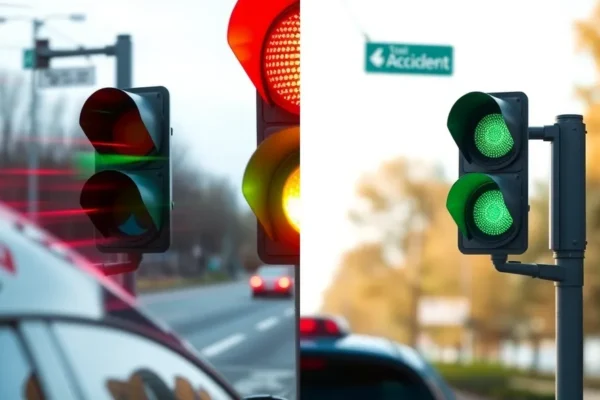
When we think about traffic, we often imagine it as a problem of engineering or city planning. However, traffic management is fundamentally an economic challenge regarding the allocation of resources. A road is a limited resource, and the time we spend on it has a direct monetary value. Virtual speed bumps are a smart city technology designed to manage this resource more efficiently. By rewarding slower drivers with more green lights, cities are essentially using traffic signals as an incentive mechanism to improve flow and safety.
Think of it like a loyalty program at a grocery store. If you shop during off-peak hours or buy certain items, you get a reward. In this case, if you drive at a consistent, moderate speed, the road rewards you with a green light. The goal is to move as many people as possible through a corridor without the stop-and-go pattern that causes congestion and accidents. Understanding this concept is important because efficient traffic flow reduces fuel consumption, lowers vehicle maintenance costs, and minimizes the public expense of dealing with traffic accidents.
How Virtual Speed Bumps Change Traffic Behavior
The mechanism behind virtual speed bumps is based on sensors and real-time data processing. Instead of a timer that switches lights regardless of the cars present, smart traffic lights communicate with one another to create a “green wave.”
Imagine you are driving down a main street in a city. A sensor detects your vehicle’s speed as you approach the first intersection. If you are driving within the speed limit, the system calculates exactly when you will reach the next light. If the next light is red, the system proactively adjusts its timing to turn green just as you arrive. If you drive too fast, you hit the red light as a penalty. This forces you to slow down if you want to keep moving.
This system provides a practical way to reduce crashes because it prevents the aggressive acceleration-braking cycle that characterizes urban driving. In a case study from cities implementing adaptive signal control, such as those analyzed by the Federal Highway Administration, systems that moderate speed through light timing have demonstrated significant decreases in rear-end collisions. It turns the act of driving into a cooperative game where the “prize” for following the rules is a seamless commute.
Why Traffic Efficiency Impacts Your Wallet
You might wonder how a traffic light affects your personal finances. The impact is felt through the “hidden” costs of driving. When a city uses technology to reduce crashes, the aggregate savings for the public are substantial. Traffic accidents cost the U.S. economy billions of dollars annually in property damage, emergency services, and lost productivity, according to the National Highway Traffic Safety Administration (NHTSA). When accidents drop, insurance premiums can stabilize, and municipalities have more tax revenue to spend on infrastructure rather than clean-up and repair.
On a personal level, smoother traffic flow equates to better fuel economy. Frequent stopping and starting—the kind caused by poorly timed lights—consumes significantly more fuel than maintaining a steady pace. By encouraging drivers to slow down to match the “green wave,” these systems reduce fuel consumption and wear and tear on brakes and transmissions. While it might feel like a minor change to your daily commute, the cumulative effect of hundreds of trips per year can lead to measurable savings on vehicle maintenance and gas costs.
The Evolution of Smart City Infrastructure
The concept of traffic management has evolved from simple mechanical timers to sophisticated artificial intelligence. For decades, city planners relied on “fixed-time” signals that operated on a rigid loop. This was inefficient because it did not account for fluctuating demand throughout the day. The current interest in virtual speed bumps and adaptive signal control was triggered by the rapid advancement of sensor technology and the increasing need to manage urban congestion without building more roads, which is often cost-prohibitive.
According to the U.S. Department of Transportation, the integration of smart city technology has moved from pilot programs to city-wide mandates in several metropolitan areas. The shift is driven by the data-backed reality that high-speed enforcement via tickets is reactive, whereas virtual speed bumps are proactive. By shaping driver behavior before an accident occurs, cities are shifting their focus from punishing rule-breakers to engineering environments that encourage safer, more economical habits.
Practical Implications for Your Daily Commute
To navigate these systems effectively, drivers should shift their mindset from “getting there as fast as possible” to “getting there as steadily as possible.” A common misconception is that speeding will save you significant time. In reality, in a dense urban environment with multiple lights, speeding often just leads to waiting longer at a red light. Constant acceleration increases your fuel consumption and puts unnecessary strain on your vehicle, both of which are avoidable expenses.
When you encounter a city with adaptive traffic signaling, try to observe the flow rather than fighting the lights. If you maintain the speed limit, you will often find that you catch a string of green lights, whereas aggressive drivers are forced to stop. Watching for these patterns can turn a stressful commute into a more predictable and cost-effective experience. Remember that this technology is a tool to optimize the public utility of the road, not to track individuals for profit.
Connecting Traffic Economics to Other Financial Concepts
The use of smart technology to manage public assets is closely linked to the concept of externalities. An externality is a side effect of an activity that affects other parties without being reflected in the price. A car crash is a “negative externality”—it creates costs for emergency services, traffic delays for others, and potential medical bills. By using virtual speed bumps to reduce crashes, the city is effectively internalizing this cost by discouraging the behavior that leads to the accident.
This is similar to how “congestion pricing” works in some major cities, where drivers pay a fee to enter busy areas during peak times to reduce traffic volume. Both concepts are examples of modern urban economics, where the goal is to use data to align individual behavior with the collective good. Understanding how your environment is engineered to influence your choices—like choosing a steady speed—is a foundational skill in navigating modern financial and urban systems.
Common Questions About Virtual Speed Bumps
How do virtual speed bumps reduce crashes?
By forcing drivers to maintain a consistent, lower speed to “catch” a green light, these systems prevent aggressive acceleration and panic braking. This steady flow minimizes the conditions that frequently lead to rear-end collisions and intersection-related traffic accidents.
Can individuals control their exposure to these traffic systems?
Yes, by choosing to drive at the speed limit, you gain control over your own traffic experience. Instead of reacting to red lights, you align your speed with the green light pattern, which improves your fuel efficiency and reduces wear and tear on your vehicle.
Are these systems expensive to implement?
While the initial cost of installing sensors and software is high, the long-term economic benefits include reduced accident response costs and improved transit efficiency. Cities often justify the expenditure by calculating the total savings in public resources over the lifespan of the infrastructure.
Does this smart city technology lead to more traffic tickets?
Virtual speed bumps are primarily a traffic flow management tool rather than a speed enforcement device. Their goal is to adjust the signal timing to reward behavior, not to automatically trigger tickets for speeding, though local regulations vary by jurisdiction.
What are the potential downsides of this technology?
The main risk is technical failure or software glitches, which could potentially cause unexpected traffic delays. Additionally, some drivers may find the “game” of timing the lights frustrating if they are used to traditional, high-speed driving styles.
Disclaimer: This article is provided for educational purposes only and does not constitute financial, legal, or professional advice. Financial situations are unique to every individual, and decisions regarding transportation and vehicle expenses should be made based on your own circumstances. Please consult with a qualified financial advisor or transportation expert for personalized guidance.











