

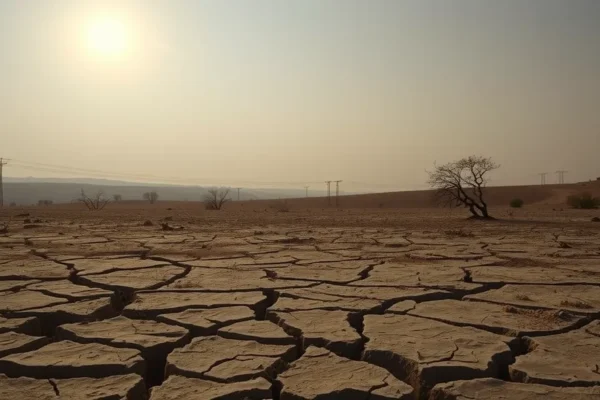
Understanding Financial Impacts of a Europe Drought and Desertification
When we talk about finances, we often focus on things like stock markets, interest rates, and personal budgets. But the world around us, including the weather, has a significant, often overlooked, impact on our money. Today, we’ll explore a pressing issue: the Europe drought and the growing threat of desertification. While it might sound like an environmental problem, it has deep ties to our economic stability and personal finances.
Think of the global economy like a giant interconnected farm. If one part of the farm experiences a severe drought, it affects the entire harvest, not just the crops in that specific field. Similarly, an extreme drought in a major economic region like Europe can disrupt supply chains, raise prices, and influence investment decisions. Understanding these connections helps us make better financial decisions.
The Financial Concept of Resource Scarcity and Its Economic Ripple Effect
At its core, this topic relates to the financial concept of resource scarcity. Scarcity means that there isn’t enough of something to satisfy everyone’s wants or needs. In economics, this is a fundamental problem because it forces choices. Water, in the context of a drought, is a prime example of a scarce resource. When water becomes scarce, its price tends to go up, and its availability affects industries that rely on it.
Imagine your household budget. If the price of your electricity doubles overnight because of a shortage (perhaps due to a drought impacting hydropower), you have to make a choice: use less electricity, or spend more of your budget on it, meaning less money for other things like groceries or entertainment. The economy works on a similar principle, but on a much larger scale. When water scarcity hits, it’s not just about drinking water; it impacts agriculture, energy production, manufacturing, and transportation, all of which have financial consequences.
Understanding resource scarcity helps us appreciate why events like a Europe drought are not just environmental news but also economic indicators that can affect everything from the price of food to the stability of jobs.
How Extreme Drought and Desertification Impact Financial Systems
Let’s break down how a prolonged Europe drought, potentially leading to desertification, works its way through our financial systems. It’s a chain reaction.
- Agricultural Impact: This is the most direct impact. Crops need water to grow. When there’s an extreme drought, yields decrease significantly. For instance, in Hungary, where 99% of the country is facing severe drought conditions as reported by various climate monitoring agencies, farmers are struggling. This means less food is produced.
- Rising Food Prices (Inflation): When less food is available, prices tend to rise. This is basic supply and demand. If there are fewer tomatoes available from Europe, the tomatoes that are available will cost more. This contributes to inflation, which is the general increase in prices and decrease in the purchasing value of money.
- Water Scarcity for Industries: Many industries rely on water not just for their products but for their operations. For example, power plants (especially those using cooling systems) and manufacturing facilities need consistent water supplies. If this supply is cut off or restricted due to the Europe drought, production can slow down or stop.
- Disruption to European Rivers: Many of Europe’s major rivers, like the Rhine and the Danube, are vital for transporting goods. Low water levels due to drought can make these rivers unnavigable for large cargo ships. This disrupts trade, increases shipping costs (as smaller vessels or alternative transport might be needed), and delays deliveries, affecting businesses and consumers.
- Energy Production Issues: Hydropower, a significant source of renewable energy in Europe, is directly dependent on water levels. Low reservoirs mean less electricity can be generated. This can lead to increased reliance on other, potentially more expensive or polluting, energy sources, further impacting energy prices and contributing to an ecological crisis.
- Desertification and Long-Term Economic Costs: Desertification is the process where fertile land becomes desert, typically as a result of drought, deforestation, or inappropriate agriculture. Once land becomes desertified, it’s incredibly difficult and expensive to restore. This means long-term loss of agricultural land, decreased biodiversity, and increased costs for adaptation and mitigation efforts related to water scarcity.
Think of it like a household. If your washing machine breaks (analogous to a river drying up), you can’t do laundry. You might have to pay more to use a laundromat (higher shipping costs), or you might have to buy fewer clothes (reduced economic activity). The impact spreads.
For example, during past droughts in Europe, shipping on the Rhine River has been severely hampered, leading to significant delays and increased costs for transporting goods like coal, chemicals, and grains. This directly impacts the prices consumers pay for a wide range of products.
Why the Europe Drought and Desertification Matter for Your Money
This environmental challenge, the Europe drought and the looming threat of desertification, has tangible effects on personal and global finances.
Personal Financial Impact
On a personal level, the most immediate impact of an extreme drought and subsequent water scarcity is felt through your wallet:
- Higher Food Prices: As agricultural output declines, expect to pay more for staples like bread, fruits, vegetables, and meat. This reduces your purchasing power, meaning your money doesn’t go as far.
- Increased Energy Bills: Reduced hydropower capacity can lead to higher electricity prices, especially if fossil fuels need to be used more extensively.
- Potential for Job Losses: Industries heavily reliant on water or agriculture, such as farming, food processing, and certain types of manufacturing, could face slowdowns or closures, leading to job losses in affected regions.
- Impact on Tourism and Recreation: Droughts can affect summer tourism, impacting businesses in those areas and the jobs they provide.
Economic and Market Impact
Globally and regionally, the economic consequences are far-reaching:
- Inflationary Pressures: A widespread drought across a major economic bloc like Europe can contribute significantly to global inflation, affecting economies worldwide.
- Supply Chain Disruptions: The inability to transport goods via crucial waterways like European rivers creates bottlenecks in global supply chains, leading to delays and increased costs for businesses.
- Reduced Economic Growth: Lower agricultural yields, disrupted trade, and industrial slowdowns can dampen overall economic growth in affected countries and the wider region.
- Investment Shifts: Investors might shift capital away from sectors heavily impacted by water scarcity and towards more resilient industries or those focused on climate adaptation solutions.
- Increased Government Spending: Governments may need to spend more on disaster relief, water infrastructure improvements, and supporting affected industries and populations.
Who benefits? Companies that provide water management solutions, drought-resistant crops, or alternative energy sources might see increased demand. Insurance companies that cover agricultural losses might also see business, though claims could be substantial.
Who is affected negatively? Farmers, food producers, consumers facing higher prices, and businesses reliant on stable transportation and water resources are among those most negatively impacted.
Historical Context of Droughts and Economic Crises
Droughts are not new phenomena; they have shaped human history and economies for millennia. However, the scale, frequency, and intensity of droughts are being exacerbated by climate change, a key driver behind the current Europe drought concerns.
Historically, severe droughts have often led to significant economic hardship, migration, and even societal collapse. For example, the Dust Bowl in the United States during the 1930s, a period of severe dust storms and farm failures caused by drought and poor farming practices, had a devastating economic and social impact, contributing to the Great Depression.
In recent decades, scientific understanding of climate change has deepened, highlighting its role in intensifying weather events. The current situation in Hungary, with 99% of its territory facing severe drought, is a stark indicator of how modern extreme weather events are linked to global warming. The Intergovernmental Panel on Climate Change (IPCC) has consistently reported that global warming is increasing the frequency and intensity of heatwaves and droughts in many regions, including Europe.
What triggers current interest is not just the occurrence of drought, but its persistence, its geographic spread across continents, and its connection to the broader ecological crisis and the growing concern over desertification. This isn’t just a localized dry spell; it’s a symptom of a larger environmental and economic challenge.
Practical Financial Thinking in Times of Europe Drought and Desertification
Given the increasing frequency of extreme weather events like the Europe drought, it’s wise to incorporate an awareness of these issues into our financial thinking.
Personal Financial Preparedness
- Budget for Volatility: Understand that prices for certain goods, especially food and energy, can become more volatile. Having a small buffer in your budget can help absorb unexpected price increases.
- Diversify Your Spending: If food prices rise significantly, having a broader range of dietary options that are less affected can be helpful. Similarly, explore different energy-saving methods at home.
- Stay Informed: Keep an eye on news related to extreme weather and its impact on supply chains and commodity prices. This can help you anticipate potential changes.
Common Misconceptions
A common misconception is that these are purely environmental issues with no immediate financial relevance. The reality is that the environmental threat of drought and water scarcity translates directly into economic costs.
Another misconception is that such impacts are only felt by farmers or people in affected regions. However, in our interconnected global economy, price hikes and supply disruptions ripple outwards, affecting consumers and businesses everywhere.
What to Watch For
When you see headlines about an extreme drought in major agricultural or industrial regions like Europe:
- Note the specific commodities or industries mentioned as being impacted.
- Look for reports on how this is affecting transportation and logistics.
- Consider how these factors might influence inflation reports or central bank policy decisions (e.g., interest rates).
Actionable Insight: Consider building greater resilience into your personal finances by reducing debt and increasing savings. This provides a cushion during times of economic uncertainty, which can be amplified by climate-related events.
Related Financial Concepts
Understanding the financial implications of a Europe drought and desertification connects to several other important financial ideas:
- Inflation and Purchasing Power: As discussed, scarcity drives up prices, eroding the value of your money. Understanding inflation is crucial for long-term financial planning.
- Commodity Markets: Droughts directly impact the prices of commodities like grains, corn, and even energy (hydropower). Keeping an eye on commodity markets can provide insights into future price movements.
- Supply Chain Management: The disruption of European rivers as transport routes highlights the fragility of global supply chains. Businesses and investors need to understand these risks.
- Risk Management: For individuals and businesses, understanding and preparing for risks, including those posed by climate change and resource scarcity, is a key aspect of financial stability.
- Sustainable Investing (ESG): Growing awareness of issues like drought and water scarcity is driving interest in environmental, social, and governance (ESG) factors, influencing investment decisions.
Understanding concepts like climate change‘s impact on economic stability helps provide a broader picture of the financial world.
Common Questions About Europe Drought and Desertification’s Financial Impact
How does a Europe drought affect inflation?
A Europe drought, especially if severe and widespread, can lead to reduced agricultural yields. This scarcity of food products increases their prices, contributing to broader inflationary pressures in the economy as food is a major component of consumer spending.
Can individuals truly control or influence desertification?
While individual actions like water conservation and sustainable consumption can help, addressing large-scale desertification requires collective action, policy changes, and global cooperation to combat climate change and adopt sustainable land management practices.
What are the financial risks of water scarcity in Europe?
The financial risks include higher food and energy prices, disruptions to trade via European rivers, reduced industrial output, and potential job losses in sectors reliant on water, all of which can lead to economic instability.
How does this extreme drought impact global food security and prices?
When a major food-producing region like Europe experiences an extreme drought, it reduces the global supply of agricultural products. This can lead to higher food prices worldwide and exacerbate food insecurity in vulnerable populations.
Is desertification a growing environmental threat with financial consequences?
Yes, desertification is a significant environmental threat because it degrades productive land, leading to reduced agricultural output, loss of biodiversity, and increased costs for adaptation and mitigation, all of which have direct financial implications.
What is the connection between climate change and the current Europe drought?
Scientific consensus, supported by organizations like the IPCC, indicates that climate change is increasing the frequency and intensity of heatwaves and droughts in many regions, including Europe, making events like the current Europe drought more likely.
This is educational content and not financial advice. Financial situations are unique, and it is always recommended to consult with a qualified financial professional for personalized advice.











