

A New Direction for Campus Computing
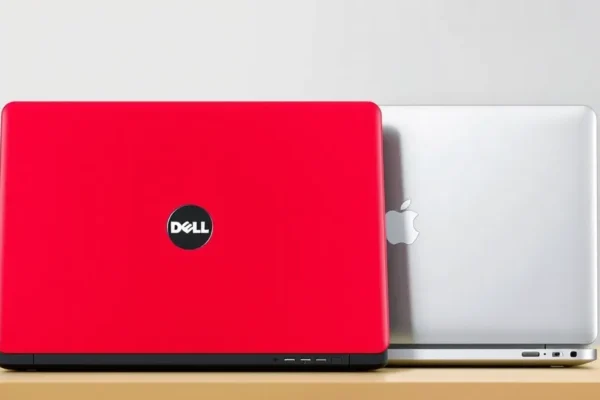
For years, the student laptop market has been dominated by a rigid aesthetic: brushed aluminum, grey finishes, and a focus on professional minimalism. However, the landscape shifted during IFA 2026, the premier global trade show for consumer electronics held in Berlin. Dell introduced the Dell 14S student laptop, signaling a clear departure from the industrial design philosophy seen in the premium Dell XPS 13 series. This new machine focuses on self-expression and accessibility, offering a suite of vibrant laptop colors that aim to make technology feel more personal.
The Dell 14S is significant because it addresses a long-standing disconnect between student needs and manufacturer offerings. While flagship devices often prioritize thinness at the cost of repairability or budget-friendliness, the 14S is built to solve the “budget-versus-utility” dilemma. By focusing on essential specifications that handle modern academic workloads without the premium price tag associated with professional-grade workstations, Dell is positioning this device as the primary choice for students who need reliability, portability, and style.
Understanding the Internal Engine
To understand the performance of the Dell 14S, it is helpful to think of the computer as a kitchen workspace. The processor acts as the chef, while the RAM, or Random Access Memory, serves as the countertop where the chef lays out ingredients for immediate use. A larger countertop allows the chef to prepare multiple complex meals—like browser tabs, document editors, and video conferencing software—at the same time without needing to run back and forth to the pantry.
The Dell 14S offers flexible configurations. Entry-level models start with 8GB RAM and 256GB storage, which is sufficient for light note-taking and web research. However, power users can upgrade to 16GB RAM and a 512GB SSD or a 1TB SSD. The Solid State Drive, or SSD, is essentially a digital filing cabinet. Unlike traditional hard drives that use spinning disks, an SSD uses flash memory to access files almost instantly. By providing these scalable options, Dell ensures that the student can choose a machine that matches their specific academic intensity, whether they are writing simple essays or working on data-heavy research projects.
Real World Applications for Students
The Dell 14S is currently entering the market as a mainstream productivity tool designed for the rigors of university life. In practice, this means the laptop is built to handle the constant transitions of a student schedule, from lecture hall note-taking to late-night library study sessions. Because it is optimized for battery efficiency rather than raw graphical rendering power, it is well-suited for students in humanities, social sciences, and general undergraduate programs.
Availability is currently rolling out across major global retailers following its debut at IFA 2026. Companies are increasingly integrating these mid-range laptops into campus bookstore ecosystems, recognizing that students prioritize devices that combine reliable performance with the aesthetic appeal of customizable laptop colors. Unlike high-end creative machines, the 14S is engineered for the 90 percent of students whose work happens within web browsers and office applications.
The Battle of the Student Laptops
The competition in this space is fierce, particularly with the arrival of the MacBook Neo. The MacBook Neo represents Apple’s attempt to capture the budget-conscious student market without diluting its brand value. While the Dell 14S focuses on hardware modularity and color choice, the MacBook Neo relies on its high-efficiency proprietary chip architecture and long-standing brand loyalty.
When comparing the two, the Dell 14S has a distinct advantage in terms of initial cost and configuration flexibility. While both offer 8GB RAM and 16GB RAM tiers, the Dell allows for more straightforward storage upgrades. Furthermore, the Dell XPS 13 remains the “big brother” to the 14S, catering to those who require higher-end materials and build quality. For a student, the choice often comes down to the operating system ecosystem and whether they prioritize the wide range of peripheral compatibility found on a Windows machine versus the vertical integration offered by the MacBook Neo.
Broader Implications for Education and Technology
The rise of devices like the Dell 14S signals a broader shift toward “democratized design.” For years, students had to choose between “cheap and boring” or “expensive and beautiful.” The industry is now realizing that students view their laptops as an extension of their personal style, similar to their phone cases or bags. This shift encourages manufacturers to view affordable laptops not just as stripped-down versions of professional gear, but as distinct products that require their own research and development cycles.
Economically, this benefits the student market by keeping prices competitive. As companies like Dell and Apple fight for the “student dollar,” the feature sets at lower price points are improving. We are seeing technologies that were previously reserved for luxury devices, such as high-quality displays and faster SSD speeds, trickling down into the sub-one-thousand-dollar category. This accelerates the digital transformation of education by ensuring that high-performance computing is not gated behind prohibitive price walls.
Limitations and Remaining Bottlenecks
Despite its strengths, the Dell 14S is not without limitations. Because it is designed to be affordable, it lacks the advanced cooling systems found in high-end workstations. This means that if a student attempts to engage in heavy 3D rendering or professional video editing, the system will eventually throttle, or slow down, to prevent the internal components from overheating.
Furthermore, while the colorful design is a major selling point, the materials used to achieve these vibrant shades are often plastic-based rather than the premium metals found in the Dell XPS 13 or MacBook Neo. This trade-off is necessary to keep costs low, but it does mean the device may be more susceptible to surface scratches and wear over a four-year degree program. Students must balance their desire for aesthetics with the reality of long-term durability.
The Future of Student Computing
Looking forward, the trajectory for student laptops is clear: more power, more personalization, and better energy efficiency. Experts expect that as battery technology improves, the line between “student laptops” and “professional laptops” will continue to blur. We are likely to see increased use of recycled materials in the chassis of these affordable machines, responding to the growing demand for sustainability among Generation Z and Alpha students.
The next major milestone for the Dell 14S and its competitors will be the integration of more robust on-device artificial intelligence features. As these machines become more capable of processing tasks locally rather than in the cloud, the value proposition for the student will increase, allowing for faster research and better organization tools that don’t rely on constant internet connectivity.
Common Questions about the Dell 14S
Is the Dell 14S considered a premium machine?
No, the Dell 14S is positioned as an affordable laptop. It prioritizes practical utility and aesthetic expression over the premium materials and high-end processing power found in the Dell XPS 13 or pro-level devices.
How does the Dell 14S compare to the MacBook Neo?
The MacBook Neo typically uses proprietary chips and a closed software ecosystem, whereas the Dell 14S offers a familiar Windows experience with more flexibility in storage upgrades and a broader selection of laptop colors.
Does 8GB RAM provide enough power for a student?
For standard academic work like web browsing, writing papers, and video calls, 8GB RAM is adequate. However, students who multitask heavily or run demanding applications should consider the 16GB RAM configuration.
Is the Dell 14S available now?
Following its announcement at IFA 2026, the device is currently in the process of reaching global retail channels. Availability may vary by region and specific retail partner.
What is the main benefit of an SSD over older storage types?
An SSD (Solid State Drive) uses flash memory, making it significantly faster at opening programs and booting up the computer compared to older, spinning mechanical hard drives. It also makes the laptop more resistant to physical shock, which is a major benefit for students on the move.
Research note: Technical specifications cited here are based on the product announcement from the IFA 2026 trade show. As with all early consumer technology, individual performance may vary based on usage patterns and software optimization updates released after the product launch.











