

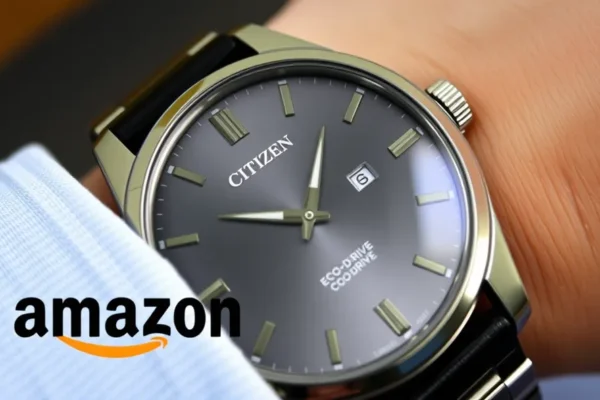
The Citizen Eco-Drive watch on sale for $175 at Amazon presents an interesting case study in how consumers evaluate value, particularly when it comes to personal finance decisions involving durable goods. Understanding the principles behind such purchasing decisions can offer broader insights into managing personal finances and making informed choices.
Understanding Value for Money
Value for money is a financial concept that describes the relationship between the benefits received from a product or service and the price paid for it. Essentially, it’s about getting the most “bang for your buck.” When we talk about value for money, we’re not just looking at the lowest price. Instead, we consider the quality, durability, features, and long-term costs compared to what we spend. Think of it like choosing between two umbrellas. One might be cheaper but flimsy, breaking in the first strong wind. The other might cost a bit more but is sturdy and keeps you dry for years. The second umbrella offers better value for money because its longevity and reliability outweigh its higher initial cost.
Understanding value for money is crucial for personal financial health because it guides how we allocate our limited resources. By consistently seeking good value, individuals can make their money go further, save more, and avoid unnecessary expenses that can derail financial goals, like saving for a down payment on a home or building an emergency fund. It’s a cornerstone of making smart spending decisions rather than impulsive ones.
How Citizen Eco-Drive Watches Work
The Citizen Eco-Drive watch is a specific type of timepiece that uses a unique technology to power its movement. At its core, it’s a quartz watch, meaning it uses a battery and a crystal to keep time, which is generally very accurate. The “Eco-Drive” part is where it gets interesting. Instead of needing to replace the battery periodically, these watches harness light energy, either from natural sunlight or artificial indoor light, to power themselves.
Here’s a simplified breakdown:
- Light Capture: A translucent dial or photovoltaic cell under the dial captures light.
- Energy Conversion: This captured light energy is converted into electrical energy.
- Storage: The electrical energy is stored in a rechargeable power cell, similar to a small rechargeable battery.
- Powering the Watch: This stored energy then powers the watch’s movement and functions.
Imagine if your smartphone could charge itself simply by being exposed to your room’s lighting. That’s conceptually similar to how the Eco-Drive works, eliminating the need for frequent battery changes. This mechanism means that for a user, the ongoing cost of ownership is significantly reduced, as they don’t need to factor in battery replacement expenses or trips to a jeweler for this service. This feature contributes directly to its perceived value for money.
Why This Matters for Your Finances
The Citizen Eco-Drive watch deal, priced at $175 on Amazon, highlights how consumers evaluate purchases that blend price, features, and long-term benefits. For an individual, understanding this concept helps in making informed decisions about purchases that might seem like simple luxuries but have lasting financial implications.
Personal Impact: When considering a purchase like this, a consumer might weigh the $175 price against the cost and inconvenience of battery replacements for a traditional watch over, say, five or ten years. If a battery replacement costs $20 and needs to happen every two years, that’s $50 over ten years, plus the time and effort involved. The Eco-Drive, by eliminating this recurring cost, offers immediate savings and convenience, enhancing its value proposition. This is part of budgeting and long-term financial planning – considering not just the upfront cost but the total cost of ownership. Making smart choices on durable goods frees up money that can be directed towards savings, investments, or paying down debt, which are fundamental to achieving financial security.
Economic Impact: On a larger scale, the popularity of products offering good value for money influences consumer spending and manufacturing trends. Companies that can deliver innovative features (like self-charging movements) at accessible price points tend to gain market share. This can put pressure on competitors to innovate or lower prices. It also indicates a consumer preference for durable, long-lasting goods, which can, in the long run, contribute to a more sustainable economy by reducing waste associated with disposable or frequently replaced items. The demand for such items can spur innovation in manufacturing and materials science.
Who Benefits: Consumers benefit directly through savings on maintenance and the satisfaction of owning a reliable product. The manufacturer, Citizen, benefits from sales and brand loyalty. Retailers like Amazon benefit from transaction volume. Those who might be negatively affected are traditional watch manufacturers who rely heavily on battery replacement services, or perhaps lower-cost watch brands that cannot compete on technology or durability at similar price points.
Historical and Current Context
The concept of watches as timekeeping devices has a long history, evolving from intricate mechanical clocks to simpler pocket watches and eventually to wristwatches. The quartz revolution in the 1970s drastically changed the watch industry by introducing greater accuracy and affordability compared to traditional mechanical watches. Citizen introduced its first light-powered watch in 1976 and developed the Eco-Drive technology further, making it a mainstream feature in the 1990s.
The current interest in products like the Citizen Eco-Drive watch stems from several factors. Firstly, there’s a growing consumer demand for products that offer value for money and longevity, especially in an era of economic uncertainty. People are looking for purchases that provide lasting utility rather than fleeting satisfaction. Secondly, there’s an increasing awareness of sustainability and the desire to reduce waste, making the battery-free aspect of Eco-Drive particularly appealing.
For instance, according to a 2023 report by Statista, the global watch market is projected to continue its growth, indicating a sustained consumer interest in timepieces. Within this market, watches offering technological innovation and practical benefits at competitive prices, like the Citizen Eco-Drive, are well-positioned. The average price point for many traditional luxury watch brands can be in the thousands of dollars, making a well-reviewed timepiece for $175 a significant draw for those seeking affordable luxury or a smart watch alternative that focuses purely on timekeeping and style.
Practical Implications for Financial Decisions
When you see a deal like the Citizen Eco-Drive watch on Amazon for $175, consider it an opportunity to practice your financial decision-making skills. It’s not just about the immediate price tag; it’s about the broader financial picture.
- Total Cost of Ownership: Always think beyond the initial purchase price. For electronics, consider battery life and replacement costs. For clothing, think about durability and how many wears you’ll get. For a car, factor in fuel, insurance, and maintenance. The Eco-Drive’s benefit here is clear: zero battery replacement costs.
- Needs vs. Wants: A watch can be a functional item, a fashion accessory, or a statement piece. A smartwatch offers connectivity, while a Citizen Eco-Drive offers reliable timekeeping powered by light. Aligning your purchase with your actual needs and desires helps prevent impulse buys that you might later regret. If you just need to tell time accurately and reliably without fuss, the Eco-Drive excels.
- Research and Reviews: The prompt mentions buyer reviews for timekeeping and value. This is a critical step. Before buying, especially online, check what other users say. Are customers consistently praising its accuracy? Do they feel it represents good value for money? This is akin to conducting due diligence before making any significant financial commitment. For this specific watch, buyer reviews often highlight its accuracy and the convenience of its light-powered technology as major positives.
Common Misconceptions: One misconception might be that because it’s on sale, it’s automatically a good deal regardless of need. Another is assuming that all watches in a similar price range offer the same long-term value. Not all affordable watches have the same build quality or innovative features like Eco-Drive.
What to Watch For: When this kind of deal appears, look at the original price to understand the extent of the discount. Also, consider the seller’s reputation on platforms like Amazon. A sale is most beneficial when it applies to a product that genuinely fits your needs and offers superior long-term value compared to alternatives.
Related Concepts
Understanding the value proposition of a Citizen Eco-Drive watch on sale connects to several other important financial concepts. Recognizing its durability and low maintenance costs relates to the idea of long-term asset management and understanding the total cost of ownership for any significant purchase.
The appeal of this watch as an affordable luxury or a sophisticated smart watch alternative touches upon consumer psychology and the perception of value beyond pure utility. It links to concepts in behavioral economics, where factors like brand reputation, perceived quality, and innovation influence purchasing decisions, even at lower price points. Furthermore, making such a purchase wisely contributes to sound personal financial planning by ensuring that funds are allocated to items that provide lasting satisfaction and utility, rather than depleting resources on non-essential or short-lived goods. Understanding consumer electronics value cycles can also be helpful when evaluating such purchases.
Common Questions
What is the primary financial benefit of a Citizen Eco-Drive watch?
The primary financial benefit is the elimination of recurring battery replacement costs. This contributes to a lower total cost of ownership over the lifespan of the watch and provides convenience, saving both money and time.
How does the Citizen Eco-Drive watch sale on Amazon impact my decision-making process for other purchases?
It highlights the importance of considering the total cost of ownership and long-term value beyond the initial sale price. It encourages looking at reviews for features like durability and reliability, much like you would for other significant purchases, making it a good timepiece or fashion accessory choice.
Is a Citizen Eco-Drive watch considered an investment?
Generally, watches like the Citizen Eco-Drive are considered durable goods and personal assets, not typically financial investments that are expected to appreciate significantly in value. Their value lies in their utility, durability, and the enjoyment they provide.
What are the pros and cons of choosing a Citizen Eco-Drive watch over a smartwatch?
Pros include its long battery life (powered by light), lower maintenance, potentially greater durability, and often a more classic aesthetic. Cons are that it lacks the smart features (notifications, apps, fitness tracking) that smartwatches offer.
How does the $175 price point relate to the overall value for money for this type of watch?
The $175 price, especially when compared to traditional luxury watches or even some basic quartz watches that require battery changes, often positions the Citizen Eco-Drive as excellent value for money, given its unique light-powered technology and reliable timekeeping, making it a popular men’s watch or women’s watch option.
Are there any risks associated with buying a Citizen Eco-Drive watch on sale at Amazon?
Risks are generally low for established brands like Citizen. Potential downsides could include ensuring you are buying from a reputable seller on Amazon to guarantee authenticity and warranty, and that the specific model meets all your needs as a timepiece or fashion accessory.
This content is for educational purposes only and does not constitute financial advice. Financial situations vary greatly, and individual circumstances should be discussed with a qualified financial professional before making any decisions. Investing and purchasing decisions carry risks, and outcomes are not guaranteed.











