

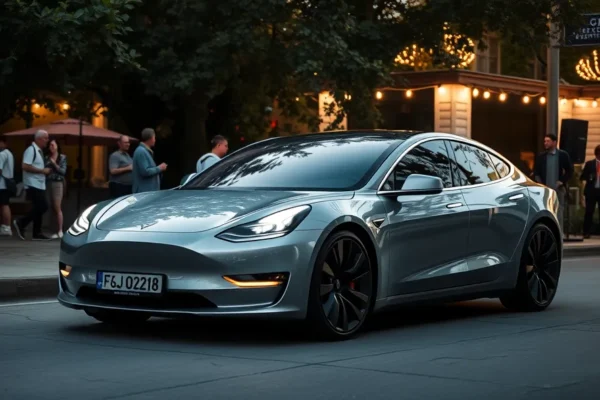
Tesla’s Cybercab, their much-anticipated robotaxi, has had a quiet debut. Instead of a flashy global announcement, Tesla held an invite-only event in Austin, Texas, giving a select group of fans and press a peek at this ambitious project. This isn’t just another car; it’s a glimpse into Elon Musk’s vision for the future of mobility, and it carries “make-or-break” stakes for the company. For those keeping tabs on electric car news and the future of autonomous vehicles, this reveal is significant, hinting at a major shift in how we might use self-driving technology in our daily lives.
What is Tesla’s Cybercab?
Think of Tesla’s Cybercab as a car designed from the ground up to be driven by a computer, not a human. It’s a purpose-built robotaxi, meaning its main job is to pick you up, take you where you need to go, and then go pick up someone else, all without a driver. The goal is to create a service that’s cheaper and more convenient than current ride-sharing options or owning a car. Tesla envisions a future where you can summon a Cybercab with your phone, hop in, and relax while it navigates the roads autonomously.
How Does the Cybercab Work in the Real World?
The Cybercab is all about making transportation effortless. Imagine this: you’re running late for a meeting across town. Instead of hailing a ride or finding parking, you pull out your phone, tap an app, and a Cybercab arrives at your doorstep. You get in, confirm your destination on a screen inside, and the vehicle smoothly takes you there. It’s designed to handle city driving, highway commutes, and everything in between, all thanks to its advanced self-driving technology.
Here are a few scenarios:
- If you travel frequently: Instead of dealing with expensive airport taxis or rental cars, you could use a Cybercab to get to and from the airport, and even to explore a new city once you arrive. It promises a potentially more affordable and accessible way to get around.
- If you manage a busy household: Need to get the kids to soccer practice while you’re stuck on a work call? A Cybercab could be the solution, offering an extra pair of “hands” (or rather, wheels) to handle those time-crunched errands.
- If you’re looking to reduce personal car expenses: The idea behind the Cybercab is to offer a service that’s cheaper than owning and maintaining a car. If it lives up to its promise, it could be a compelling alternative for many urban dwellers who only need a car occasionally.
Who is the Tesla Cybercab For?
Best For: Early adopters who are excited about the future of autonomous driving, ride-sharing companies looking for a scalable and potentially cost-effective fleet, and consumers in select urban areas who prioritize convenience and cost savings over personal car ownership. It’s for people who trust advanced technology to handle their transportation needs.
Good For: Anyone who currently uses ride-sharing services and is looking for a more affordable or consistent option. It could also appeal to businesses that need efficient transportation for employees or clients.
Skip If: You value the control and freedom of driving yourself, live in areas where autonomous vehicle technology might not yet be fully functional or approved, or if you are skeptical about relying solely on self-driving technology for your travel. If you need a vehicle for unpredictable terrains or off-road adventures, this isn’t it.
How Does the Cybercab Compare to Alternatives?
Right now, the most direct alternatives to Tesla’s Cybercab are traditional ride-sharing services like Uber and Lyft, and the concept of owning a car. While Uber and Lyft use human drivers, they are Tesla’s closest competitors in offering on-demand transportation. The Cybercab aims to be cheaper than these services because it eliminates the cost of paying a human driver. The key difference is the autonomy. Other automakers are also developing self-driving technology, but Tesla’s integrated approach with its own vehicles and software puts it in a unique position.
Price Comparison: While the exact pricing for the Cybercab service hasn’t been fully revealed, Elon Musk has indicated it’s designed to be cheaper than human-driven ride-sharing. Owning a Tesla vehicle that could eventually be part of a robotaxi network would likely involve a significant upfront investment, comparable to or higher than current high-end Tesla vehicles, but with the potential to offset costs through fleet participation.
Setup, Ease of Use, and Learning Curve
For the end-user, the Cybercab is designed for extreme ease of use. The learning curve should be practically non-existent. You’ll likely interact with it through a smartphone app, similar to how you use Uber or Lyft today. Requesting a ride, setting your destination, and paying would all be managed through a user-friendly interface. The vehicle itself is expected to have minimal controls for passengers, focusing on comfort and entertainment while the self-driving technology does all the work. Setup for an individual user is as simple as downloading an app and creating an account. For fleet operators, the setup and integration would be more complex, involving managing vehicle maintenance, charging, and software updates.
Real-World Pros of the Cybercab
- Potential for Lower Costs: By removing the human driver, the Cybercab promises to significantly reduce the cost per mile compared to traditional ride-sharing or car ownership. This could make transportation more accessible for many.
- Increased Convenience: Imagine a world where hailing a ride is always available, reliable, and on-demand, 24/7, without worrying about driver availability or surge pricing during peak hours.
- Enhanced Safety (Potential): Tesla claims its self-driving technology, powered by extensive data from its existing fleet of Tesla vehicles, is designed to be safer than human drivers by reducing human error, fatigue, and distraction.
- Environmental Benefits: As with all Tesla vehicles, the Cybercab is electric, contributing to reduced emissions and a smaller carbon footprint compared to gasoline-powered alternatives.
- A Glimpse into the Future: For enthusiasts, it represents a tangible step towards a futuristic mode of transportation, a core part of Elon Musk’s vision for future mobility.
Real-World Cons and Limitations
- Dependence on Technology and Infrastructure: The Cybercab’s operation relies heavily on sophisticated self-driving technology and reliable connectivity. Performance can be affected by severe weather, complex road conditions, or system glitches.
- Regulatory Hurdles and Public Acceptance: Widespread deployment of fully autonomous vehicles faces significant regulatory hurdles and requires broad public trust and acceptance, which is still developing.
- Limited Service Area (Initially): Like most new technologies, the Cybercab service will likely launch in very limited, geo-fenced areas, especially in cities like Austin where testing is underway. It won’t be available everywhere immediately.
- Potential for “Edge Cases”: While Tesla has accumulated vast amounts of driving data, truly unpredictable scenarios, or “edge cases,” can still challenge even the most advanced autonomous systems, potentially leading to unexpected behavior or a need for human intervention (if a remote operator is available).
Price, Value, and Affordability
The exact pricing model for using the Cybercab service is not yet finalized. However, Elon Musk has stated the goal is for it to be cheaper than human-driven ride-sharing. If this holds true, the value proposition is enormous for consumers. For those considering purchasing a Tesla vehicle that could potentially be part of a robotaxi network, the initial cost would likely be in line with current premium Tesla models, perhaps starting in the $40,000-$60,000 range or higher, depending on the specific model and capabilities. The long-term value would depend on its reliability, lifespan, and the potential for it to generate income if used in a fleet.
Verdict and Who Should Buy It
The Tesla Cybercab represents a bold leap into the future of transportation. For tech enthusiasts and early adopters eager to experience cutting-edge autonomous driving, the invite-only events and eventual public rollout will be exciting. If Tesla can deliver on its promise of a safe, reliable, and affordable robotaxi service, it could revolutionize urban mobility.
Who Should Buy It: Consumers and businesses in areas where the Cybercab service is launched and who are comfortable with autonomous technology. It’s for those looking for a potentially cost-effective, convenient, and futuristic alternative to car ownership or traditional ride-sharing.
Who Should Wait or Look Elsewhere: Anyone who needs guaranteed personal control of their vehicle, lives in areas with limited autonomous vehicle infrastructure or regulations, or is hesitant about the current state of self-driving technology. If you require a vehicle for diverse or off-road use, this is not the solution.
Is it worth your time and money? For the early pioneers, the potential rewards of convenience and cost savings are high. For the broader public, it’s likely best to wait and see how the service rolls out, how reliable it proves to be in real-world conditions, and how regulatory bodies adapt.
Common Questions and Answers
What is the Tesla Cybercab?
The Tesla Cybercab is a purpose-built, fully autonomous vehicle designed to operate as a robotaxi service, meaning it can transport passengers without a human driver.
When will the Tesla Cybercab be available to the public?
While an invite-only event has taken place, a specific public launch date has not been announced. Availability will likely be phased, starting in select cities.
How much will the Tesla Cybercab cost to use?
Tesla has indicated that the goal is for the Cybercab service to be cheaper than current human-driven ride-sharing options, but exact pricing is still pending.
Is the Cybercab truly self-driving?
Yes, the Cybercab is designed to operate using Tesla’s advanced self-driving technology, aiming for Level 4 or Level 5 autonomy, meaning it can handle all driving tasks in its operational design domain without human intervention.
Where can I see the Cybercab or learn more?
Details about the Cybercab have been shared at Tesla events and through official Tesla communications. Keep an eye on Tesla’s website and reputable electric car news sources for updates.
What are the main benefits of a robotaxi like the Cybercab?
The primary benefits include potentially lower costs for transportation, increased convenience through on-demand availability, and the promise of enhanced safety through the elimination of human error in driving.
Product prices and availability vary by region. Verify current pricing before purchase.











