

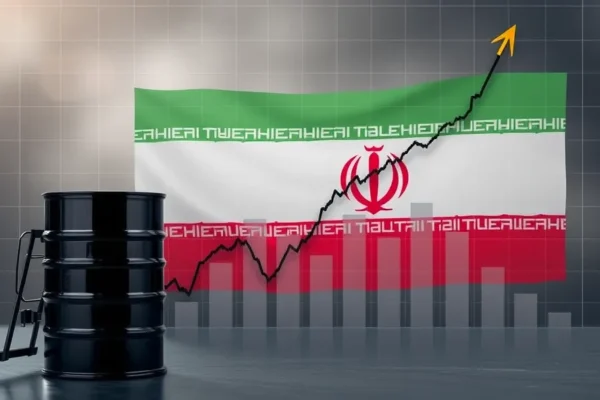
European Stocks Face Pressure as Crude Oil Prices Rise Amid Geopolitical Uncertainty
The European equity landscape is currently navigating a period of heightened volatility. Recent trading sessions have seen a notable downward trend in major indices, as investors react to shifting dynamics in the energy sector and escalating tensions in the Middle East. Specifically, European stocks have faced significant headwinds following a sudden oil advance that has raised concerns regarding global inflation and supply chain stability.
According to recent market data from major European exchanges, the STOXX Europe 600 index has experienced a downward correction, dropping approximately 1.8% over the last several trading days. This market fall coincides with a sharp rise in crude oil prices, as Brent crude surged toward the $88 per barrel mark. As energy costs represent a significant portion of industrial input for European corporations, this shift has triggered a broader sense of caution among institutional and retail investors alike.
What Is Driving the Current Market Volatility?
The immediate catalyst for this movement is a combination of rising commodities prices and intensifying geopolitical risk. The primary driver is the renewed focus on Iran threats, which have created uncertainty regarding the stability of oil transit routes in the Strait of Hormuz. When geopolitical tensions rise in oil-producing regions, the market typically prices in a “risk premium,” leading to an immediate oil advance.
Recent reports from international energy agencies and financial news outlets suggest that the threat of supply disruptions has moved from a theoretical concern to a primary market driver. This escalation has prompted a shift in investor sentiment from “risk-on” (seeking growth) to “risk-off” (seeking safety). In this environment, European stocks, which are often sensitive to energy import costs, have borne the brunt of the sell-off. The correlation between rising energy costs and the cooling of the stock market is becoming increasingly evident as traders move capital away from sectors sensitive to fuel prices.
The Financial Context of Energy Dependency in Europe
To understand why crude oil prices have such a profound impact on the European stock market, it is necessary to look at the structural fundamentals of the Eurozone economy. Unlike some energy-exporting nations, much of Europe remains a net importer of fossil fuels. This means that an increase in the price of commodities like oil acts as a functional tax on both consumers and manufacturers.
Historically, European industrial giants in sectors such as automotive manufacturing and chemical production have maintained tight margins that rely on predictable energy pricing. For example, according to recent sectoral reports, energy costs can account for up to 15-20% of the total operating expenses for heavy industrial firms in Germany and France. When prices spike due to geopolitical risk, these companies face immediate pressure on their profit margins.
Furthermore, the relationship between oil and inflation remains a critical metric for investors. When crude oil prices rise, it often leads to higher transportation and production costs, which are eventually passed on to consumers. This upward pressure on inflation complicates the mandate of the European Central Bank (ECB). If inflation stays elevated due to energy costs, the ECB may be forced to maintain higher interest rates for longer, which generally creates a challenging environment for investing in equities.
Analyzing the Impact of Geopolitical Risk on Sector Performance
The current market movement signals a significant divergence between different sectors of the European economy. A technical and fundamental analysis suggests that we are seeing a “decoupling” of energy-related stocks from the broader market trend.
The Energy Sector Advantage
While the broader market experiences a market fall, companies involved in the production and refining of oil often see their valuations increase. For instance, major players like Shell (SHEL) and TotalEnergies (TTE) often see revenue growth when crude oil prices climb. For these firms, the oil advance directly translates to higher realized prices for their core products, providing a natural hedge against geopolitical risk.
The Vulnerability of Consumer and Industrial Sectors
Conversely, the fundamental outlook for the consumer discretionary and industrial sectors appears more strained. Key metrics to watch include:
- Operating Margins: As input costs rise, investors are closely monitoring whether companies can pass costs to consumers without lowering sales volume.
- Debt-to-Equity Ratios: In a high-interest-rate environment driven by energy-led inflation, companies with high debt loads are viewed as higher risk.
- Consumer Sentiment Indices: Rising fuel prices often reduce the disposable income of households, signaling potential weakness in retail sectors.
Current market sentiment indicates that investors are increasingly prioritizing “quality” stocks—those with strong cash flows and low debt—as a way to navigate the uncertainty caused by Iran threats.
Related Opportunities and Sector Shifts
As the market recalibrates to the reality of higher energy costs, certain sectors may present different dynamics for those interested in investing. The shift in commodities pricing does not affect all industries equally, creating a landscape of winners and losers.
Defensive Sectors
During periods of high geopolitical risk, defensive sectors such as utilities and healthcare often show more resilience. These sectors provide essential services that consumers continue to use regardless of energy price fluctuations. While they may not offer the rapid growth seen in tech sectors, they often provide more stability during a market fall.
The Transport and Logistics Challenge
The logistics and aviation sectors, such as Lufthansa (LHA), are particularly sensitive to crude oil prices. Fuel is one of the largest variable costs for airlines. Therefore, any significant oil advance typically leads to immediate pressure on their earnings guidance. Investors in these sectors are closely watching fuel hedging strategies as a way to mitigate the impact of price volatility.
The Renewable Transition
Interestingly, sustained high oil prices can act as a long-term catalyst for the renewable energy sector. As fossil fuel volatility increases, the economic argument for investing in wind, solar, and hydrogen infrastructure becomes more compelling. This creates a long-term thematic shift that may eventually decouple European industrial growth from oil price cycles.
Future Outlook: What to Watch Next
The trajectory for European stocks over the coming months will likely be determined by three primary factors. Investors should monitor these developments closely to understand potential shifts in the market trend.
1. Geopolitical De-escalation or Escalation
The most significant variable remains the situation regarding Iran threats. Any diplomatic breakthroughs or a reduction in regional tensions could lead to a rapid decline in the risk premium, potentially triggering a relief rally in European stocks. Conversely, any direct military involvement could lead to a further spike in commodities.
2. Central Bank Policy and Inflation Data
The upcoming inflation printouts from the Eurozone will be vital. If energy-driven inflation begins to subside, it may give the ECB more room to consider interest rate cuts, which is generally a positive signal for the stock market. If inflation remains “sticky” due to high oil costs, the market may brace for a prolonged period of restrictive monetary policy.
3. OPEC+ Supply Decisions
Decisions made by the OPEC+ alliance regarding production quotas will directly influence the direction of crude oil prices. A decision to extend production cuts would support the current oil advance, while an increase in supply could help cool the energy markets.
While the current environment is characterized by uncertainty, markets have historically navigated periods of high energy volatility. The key for investors is to focus on fundamental strength and sector-specific resilience rather than attempting to time the exact bottom of a market cycle.
Past performance does not guarantee future results. Markets are volatile. Readers should consult with a qualified financial advisor before making any investment decisions.
Frequently Asked Questions
How do crude oil prices affect European stocks?
Rising crude oil prices typically act as a headwind for the broader European stocks market because higher energy costs increase production and transportation expenses. This can lead to lower corporate profit margins and higher inflation. However, energy-producing companies like Shell may see increased revenues during an oil advance.
What are the main Iran threats to the stock market?
The primary geopolitical risk involves potential disruptions to oil supply routes, particularly in the Strait of Hormuz. Iran threats create uncertainty regarding the continuous flow of commodities, which leads to a spike in oil prices and increased market volatility. This uncertainty often causes investors to move capital out of equities and into safer assets.
Is the energy sector a good hedge against geopolitical risk?
Investing in the energy sector can serve as a partial hedge because companies in this sector often benefit financially from an oil advance. When crude oil prices rise due to supply concerns, the increased revenue for oil producers can offset losses in other parts of a diversified portfolio. However, these stocks are still subject to their own unique regulatory and political risks.
How does an oil advance impact European inflation?
An oil advance contributes to inflation by increasing the cost of manufacturing goods and transporting products across the continent. This “cost-push” inflation can lead to higher consumer prices for everything from groceries to fuel. For investing purposes, this is important because higher inflation often leads to higher interest rates from the ECB.
What are the risks of investing in European stocks right now?
The main risks include continued geopolitical risk in the Middle East, which could drive energy costs even higher, and the possibility of prolonged high interest rates. Additionally, if the market fall continues, it could signal a broader economic slowdown in the Eurozone. Investors should look at individual company fundamentals and debt levels to manage these risks.











