

Understanding Record Billionaire Wealth and Concentration
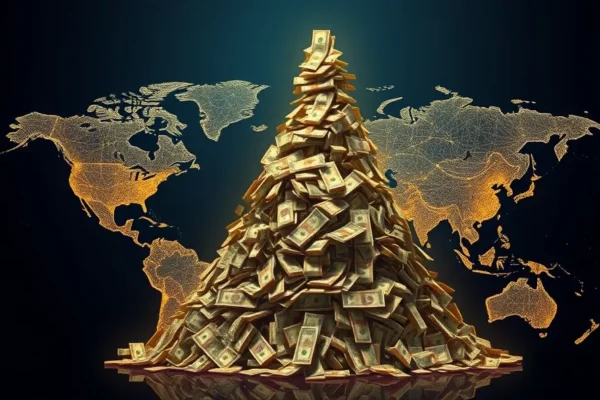
Let’s talk about something you might see in the news a lot: the immense wealth held by the world’s billionaires. When we talk about billionaire wealth, we’re referring to the net worth of individuals who possess assets valued at one billion dollars or more. This isn’t just a lot of money; it’s an astronomical sum. Recently, we’ve seen reports of record billionaire wealth globally, reaching an astonishing $15.1 trillion. What’s also noteworthy is how this wealth is increasingly concentrated, meaning a smaller group of individuals holds a much larger share of this enormous pie. This concept, known as wealth concentration, is crucial for understanding how our global economy functions and how it affects everyone, not just the richest people.
Think of it like a school bake sale. Imagine there are 100 cookies to sell, and the total money raised is $100. If everyone bought cookies at $1 each, each person would have one cookie and $100 in total sales. But what if one person bought 90 cookies for $90, leaving only 10 cookies and $10 for everyone else? That single person has a massive share of the cookies and the money raised. This is a simplified way to visualize wealth concentration. Understanding this helps us grasp the scale of the financial landscape and how resources are distributed.
How Billionaire Wealth Accumulates and Concentrates
The accumulation of billionaire wealth is a complex process, often involving successful businesses, investments, and inheritances. When individuals build highly profitable companies, their ownership stakes can become incredibly valuable. For instance, the founders of major tech companies often see their personal fortunes soar as their businesses grow and their stock prices increase. This is wealth accumulation in action.
Wealth concentration happens when this accumulation disproportionately benefits a few. Imagine a situation where a few individuals own a majority of the shares in a booming global industry. As that industry grows, their wealth expands exponentially. This can be amplified by factors like tax policies, investment returns, and the ability to leverage existing wealth to make more money. Recent financial data often highlights that a small percentage of global billionaires control a vast percentage of the total billionaire wealth. For example, a report by Forbes in 2023 indicated that while the number of billionaires and their total wealth fluctuated, the trend of significant wealth held by a relatively small group persisted.
Consider the tech industry. A few early investors and founders in highly successful tech companies, like Amazon or Microsoft, have seen their net worth grow to hundreds of billions of dollars. This isn’t just because they made good initial investments; it’s because the companies they founded became dominant global players, making their equity incredibly valuable. This leads to a situation where a handful of superbillionaires, individuals with fortunes exceeding $10 billion, can hold a significant portion of the total billionaire wealth.
Why Record Billionaire Wealth Matters to Everyone
The existence of vast billionaire wealth and its increasing concentration, as evidenced by record figures, has significant implications for the global economy and individuals alike. On a personal level, it can influence perceptions of opportunity and fairness. When people see extreme wealth at the top, it can impact their own financial planning and aspirations. For instance, if the perceived path to significant wealth seems exclusively for a tiny elite, it might influence career choices or investment strategies.
Economically, this level of wealth concentration can affect everything from consumer spending patterns to tax revenue and investment flows. Some argue that when a small group holds so much wealth, it can lead to less overall economic demand if that wealth isn’t circulated back into the economy through spending or investment in job-creating ventures. Others suggest that this wealth fuels innovation and venture capital, driving economic growth. The US economy impact, for example, can be seen in discussions about capital gains taxes, inheritance taxes, and how tax policies might affect the incentives for the richest people to invest and expand businesses. Economic inequality is a closely related concept that describes the uneven distribution of wealth and income, and the extreme concentration of billionaire wealth is a significant factor in this broader issue.
Those who benefit directly are, of course, the billionaires themselves and the industries and investments they control. Those who are negatively affected could include those at the lower end of the wealth distribution, who may experience slower wage growth, fewer opportunities for upward mobility, or increased costs for goods and services if wealth concentration leads to market power abuses. Understanding these dynamics is crucial for informed civic participation and personal financial literacy.
The Historical Context of Billionaire Wealth
The concept of extreme wealth isn’t new. Throughout history, there have been individuals who amassed fortunes far beyond those of their peers, from ancient rulers to industrial magnates of the 19th and 20th centuries. However, the scale and speed of wealth accumulation in the modern era, particularly in the digital age, are unprecedented. This has been fueled by globalization, technological advancements, and financial market structures that can amplify returns.
The current interest in billionaire wealth and its concentration has been amplified by readily available financial data and increased public awareness of economic inequality. Organizations like Oxfam and institutions that track wealth, such as Forbes and Bloomberg, regularly publish reports highlighting these trends. For instance, reports have shown how the wealth of the richest individuals often grows at a faster rate than that of the general population, especially during periods of economic disruption like the COVID-19 pandemic, where certain sectors saw explosive growth.
The discussion around record billionaire wealth is a contemporary manifestation of ongoing debates about capitalism, taxation, and social mobility. Unlike previous eras where wealth might have been more tied to land or industrial empires, today’s fortunes are often built on intangible assets like intellectual property and global digital platforms, allowing for rapid and vast expansion. This shift has intensified scrutiny on how such wealth is generated and its societal impact.
Thinking About Billionaire Wealth in Your Financial Life
While directly accumulating billionaire wealth is an aspiration for very few, understanding its dynamics can inform your own financial thinking. It’s important to distinguish between general understanding and personal financial advice. For instance, seeing how superbillionaires diversify their investments or leverage their capital can offer abstract lessons in long-term financial strategy, though their scale is incomparable.
A common misconception is that extreme wealth is solely a result of luck. While luck can play a role, sustained wealth creation often involves strategic business building, smart investing, and astute financial management, albeit at a level far beyond the average individual. When you see headlines about record wealth, consider the underlying economic forces at play and how they might differ from the factors influencing your own financial journey.
What to watch for includes understanding how global economic trends, driven in part by large capital flows, can affect markets you participate in. This could mean noticing how major investment decisions by ultra-rich individuals or large corporations influence stock prices or the availability of credit. An actionable insight is to focus on building a diversified portfolio for your own financial goals, understanding that the strategies for extreme wealth accumulation are distinct from sensible personal investing for most people.
Connecting Billionaire Wealth to Other Financial Concepts
The topic of billionaire wealth and its concentration is interconnected with numerous other financial concepts. Understanding wealth distribution is key to grasping the broader picture of economic inequality. Discussions about taxation, including income tax, capital gains tax, and estate tax, are directly relevant, as these are tools governments use to address wealth concentration and fund public services.
Furthermore, the role of financial markets, corporate governance, and the impact of technological innovation on business empires are all tied to how this wealth is generated and managed. Learning about wealth accumulation strategies, even at a much smaller scale, can provide insights into investing principles. Similarly, understanding the global economy and how capital flows across borders is essential to appreciating the forces that shape the fortunes of the richest people worldwide.
Frequently Asked Questions About Billionaire Wealth
What does $15.1 trillion in billionaire wealth represent?
This figure represents the total estimated net worth of all billionaires globally, encompassing all their assets like stocks, real estate, and other holdings. It’s a measure of the extreme concentration of financial resources at the very top of the economic ladder.
How does wealth concentration among billionaires affect the US economy impact?
High wealth concentration can influence consumer demand, investment patterns, and tax revenues. It can also lead to debates about market power and the fairness of economic opportunities within the US economy.
Are all billionaires self-made, or is wealth often inherited?
While many billionaires have built their fortunes through entrepreneurship and investment, a significant portion of billionaire wealth is also inherited, contributing to intergenerational wealth concentration.
Can individuals directly influence or control the trend of billionaire wealth concentration?
Individuals can influence this trend indirectly through their participation in the economy, their voting decisions on economic policies, and their support for businesses and initiatives that promote broader wealth distribution.
What are the potential risks associated with extreme wealth concentration for the global economy?
Risks include increased economic inequality, potential for market manipulation, reduced social mobility, and political influence that may not serve the broader public interest.
How does the accumulation of billionaire wealth relate to global economic inequality?
The record wealth and increasing concentration among global billionaires are direct indicators and drivers of widening global economic inequality, where a small segment of the population holds a disproportionately large share of global resources.
This information is for educational purposes only and should not be considered financial advice. Financial situations vary greatly from person to person, and it is always recommended to consult with a qualified financial professional for personalized guidance based on your individual circumstances and goals. Investment outcomes are not guaranteed and may involve risks.











